

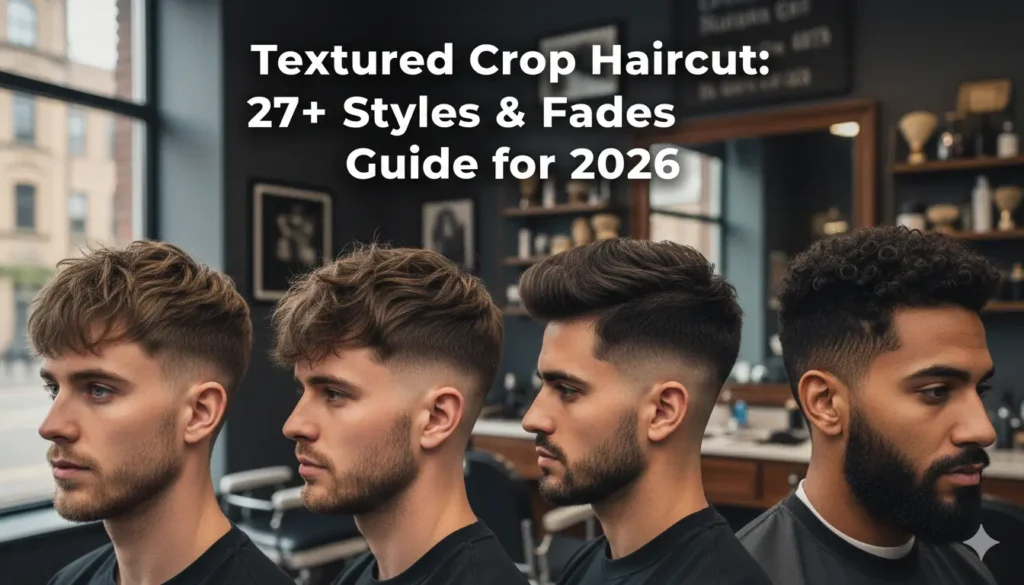
A textured crop is a modern men’s haircut featuring short faded sides with a longer, choppy layered top and forward fringe. This versatile style creates natural texture, movement, and volume while requiring minimal daily maintenance. The textured crop haircut suits most face shapes and hair types, making it one of the most requested cuts in barbershops for both casual and professional settings.
Quick Picks: Find Your Textured Crop in 10 Seconds
Best for Thin/Fine Hair:
- Short Textured Crop (#11)
- Textured Crop Low Fade (#2)
- Textured Crop Skin Fade (#5)
Best for Curly Hair:
- Curly Textured Crop (#21)
- Textured Crop Burst Fade (#10)
- Messy Textured Crop (#14)
Lowest Maintenance (2-3 min daily):
- Short Textured Crop (#11)
- Classic Textured Crop (#17)
- Textured Crop Low Taper (#7)
Most Professional/Office-Ready:
- Classic Textured Crop (#17)
- Textured Crop Taper Fade (#6)
- Textured Crop Low Fade (#2)
Trending Right Now:
- Messy Textured Crop (#14)
- Textured Crop Skin Fade (#5)
- Modern Textured Crop (#18)
What Is a Textured Crop Haircut?
A textured crop haircut is a short men’s hairstyle combining faded or tapered sides with a longer, layered top featuring choppy texture and a forward-styled fringe. The cut emphasizes natural movement and volume through point-cutting and layering techniques. It delivers a relaxed yet sharp finish that works across casual, professional, and formal settings.
Key Features That Define the Cut
The textured crop stands apart from similar styles through these defining characteristics:
- Choppy, layered top — Hair on the crown is cut with point-cutting or razor techniques to create uneven, textured layers
- Forward-styled fringe — The front section falls naturally toward the forehead rather than being swept back
- Faded or tapered sides — The sides and back are cut shorter than the top, typically with a low, mid, or high fade
- Natural movement — The layering creates volume and flow without heavy product dependence
- Matte finish — Typically styled with clay or paste for a natural, non-shiny appearance
History and Evolution
The textured crop emerged in European barbershops during the mid-2010s as a modern alternative to the classic French crop. British and Scandinavian barbers pioneered the choppy, lived-in aesthetic that distinguished it from the neater, blunt-fringed French crop.
The style gained mainstream popularity around 2017-2018 and has evolved continuously since. Early versions featured a more uniform texture. Today’s 2026 iterations embrace messier, more relaxed finishes with greater variation in fringe length and fade styles.
Why It’s Trending in 2026
The textured crop dominates barbershop requests in 2026 for several reasons:
Low maintenance appeal — Men increasingly want cuts that look good without extensive daily styling. The textured crop delivers a put-together appearance in 2-5 minutes.
Versatility across settings — The same cut works for job interviews, gym sessions, and nights out. No need for multiple hairstyles.
Suits most face shapes and hair types — Unlike some cuts that require specific features, the textured crop adapts to virtually anyone through variation adjustments.
Natural aesthetic trend — 2026 favors cuts that look effortless rather than over-styled. The textured crop’s lived-in finish aligns perfectly with this preference.
27 Best Textured Crop Variations for 2026
Fade Variations
1. Textured Crop Fade
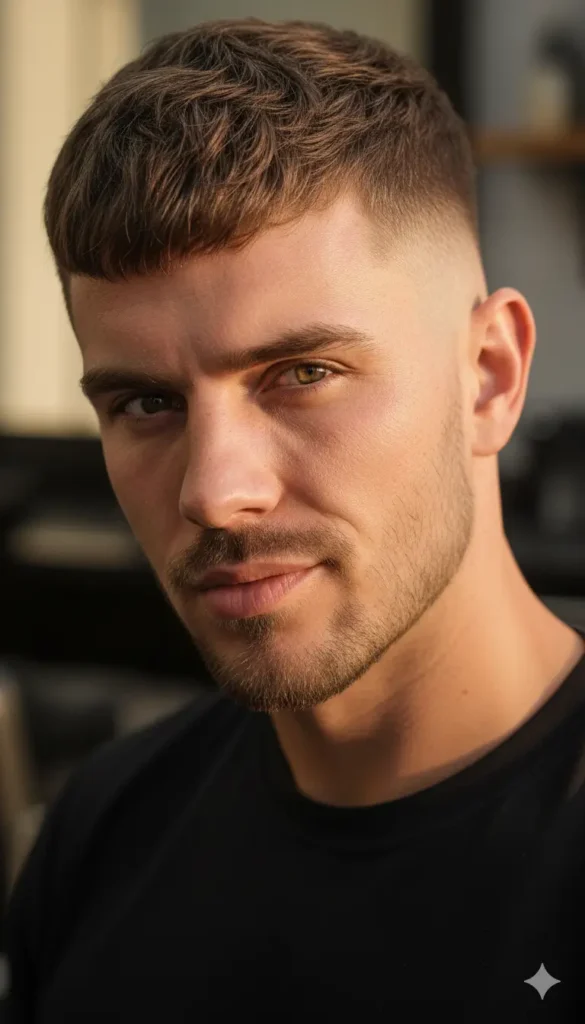
The textured crop fade combines choppy layered hair on top with a clean graduated fade on the sides and back. This variation creates bold contrast between the textured crown and sharp sides. The fade can start at various heights depending on preference, making it adaptable to different face shapes and professional requirements.
2026 Status: ✓ Timeless Classic
| Quick Facts | |
| Face Shapes | All shapes |
| Hair Types | Straight, Wavy, Thick |
| Styling Time | 4 minutes daily |
| Trim Frequency | Every 3-4 weeks |
| Maintenance | Medium |
| Office Ready | ✓ |
Celebrity Reference: Tom Hardy has frequently worn variations of the textured crop fade throughout 2025-2026, showcasing its rugged versatility.
What to Tell Your Barber:
“I’d like a textured crop with a mid fade on the sides. Keep about 2-3 inches on top with choppy layers and point-cutting. Style the fringe forward.”
How to Style:
- Towel-dry hair until slightly damp
- Apply a small amount of texture clay to fingers
- Work through the top section, pushing forward and creating separation
Pro Tip: Blow-dry upward while shaping with your fingers before applying product for extra volume and a more defined texture.
Best Product: Texture Clay for strong hold with matte finish
2. Textured Crop Low Fade
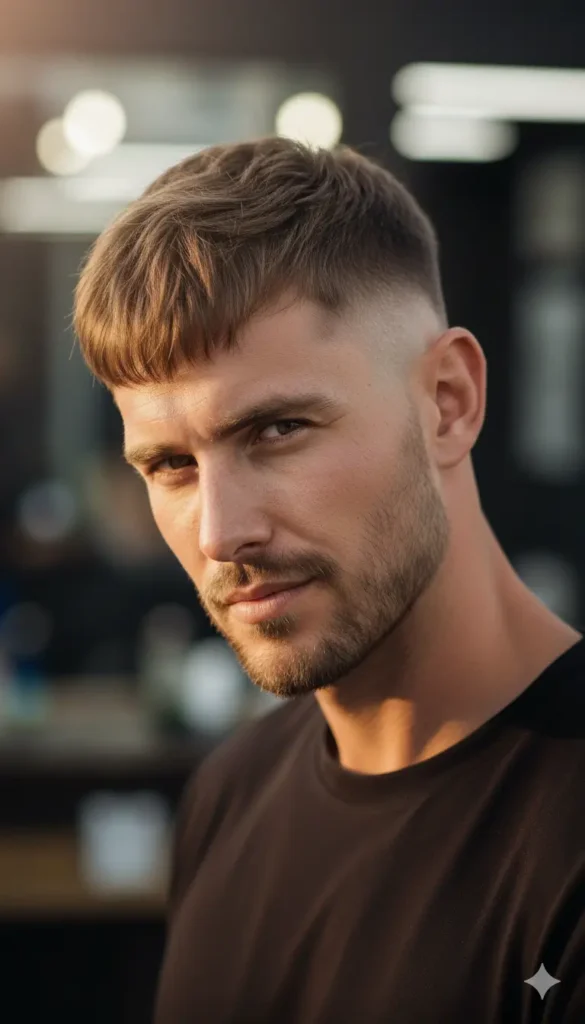
The textured crop low fade features a subtle gradient that sits low around the ears and neckline, keeping more length on the sides while maintaining the signature choppy top. This variation looks less dramatic than higher fades, making it ideal for professional environments or men preferring a softer transition.
2026 Status: ✓ Timeless Classic
| Quick Facts | |
| Face Shapes | Oval, Heart, Diamond |
| Hair Types | All types |
| Styling Time | 3 minutes daily |
| Trim Frequency | Every 3-4 weeks |
| Maintenance | Low |
| Office Ready | ✓ |
What to Tell Your Barber:
“Textured crop with a low fade starting just above my ear. Keep the top choppy with natural texture and the fringe falling forward.”
How to Style:
- Apply sea salt spray to damp hair for grip
- Blow-dry forward while finger-shaping
- Finish with a small amount of molding paste for definition
Pro Tip: The low fade grows out more gracefully than higher fades, extending the time between barber visits to 3-4 weeks without looking unkempt.
Best Product: Molding Paste for flexible, natural hold
3. Textured Crop Mid Fade
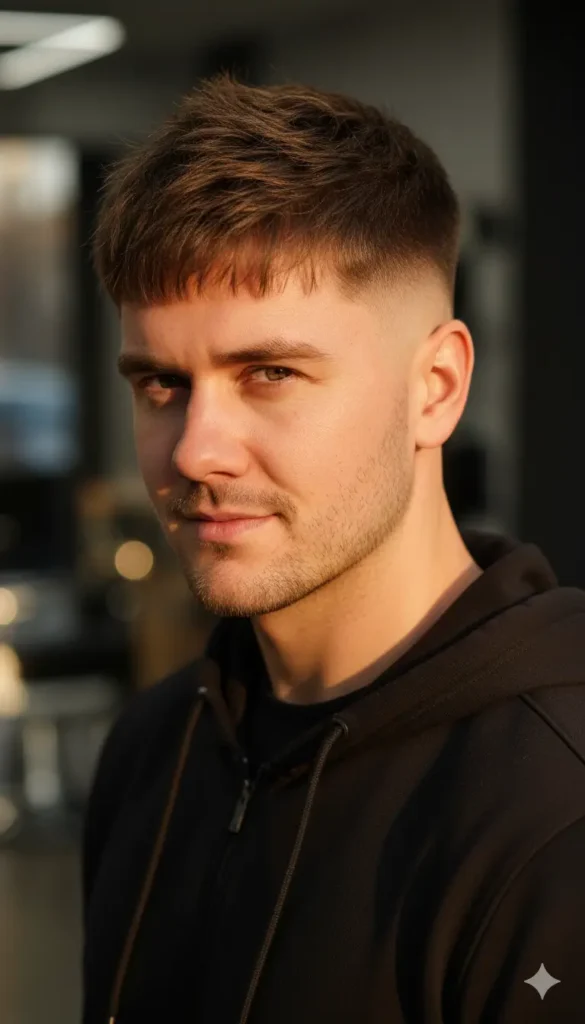
The textured crop mid fade positions the gradient at temple level, creating balanced contrast that’s noticeable without being extreme. This variation hits the sweet spot between subtlety and boldness, making it the most versatile fade option for the textured crop.
2026 Status: 🔥 Hot Now
| Quick Facts | |
| Face Shapes | All shapes |
| Hair Types | Straight, Wavy |
| Styling Time | 4 minutes daily |
| Trim Frequency | Every 2-3 weeks |
| Maintenance | Medium |
| Office Ready | ✓ |
What to Tell Your Barber:
“Mid fade textured crop—fade starting around my temples. Choppy texture on top with point-cutting, fringe styled forward.”
How to Style:
- Blow-dry hair forward and upward for volume
- Rub texture clay between palms until warm
- Work through the top with fingers, creating messy separation
Pro Tip: The mid fade works well with both textured and slightly slicked-back styling, giving you options for different occasions.
Best Product: Texture Clay for definition and all-day hold
4. Textured Crop High Fade
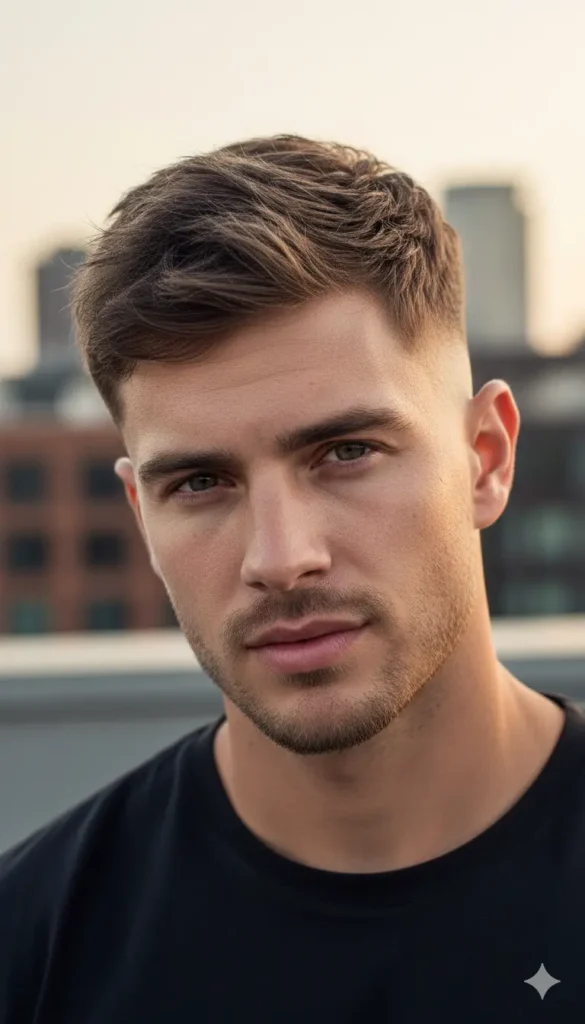
The textured crop high fade creates maximum contrast with the gradient starting well above the temples, almost at the crown line. This bold variation dramatically emphasizes the textured top while keeping the sides ultra-clean. It’s the most striking fade option but requires more frequent maintenance.
2026 Status: ↗ Rising Trend
| Quick Facts | |
| Face Shapes | Oval, Square, Diamond |
| Hair Types | All types |
| Styling Time | 4 minutes daily |
| Trim Frequency | Every 2 weeks |
| Maintenance | High |
| Office Ready | Depends on the workplace |
What to Tell Your Barber:
“High fade textured crop—I want strong contrast. Fade starting high, almost at the crown. Choppy, edgy texture on top with a sharp fringe.”
How to Style:
- Blow-dry upward while shaping with fingers
- Apply texture clay throughout the top
- Push forward and create a visible separation in the fringe
Pro Tip: The high fade grows out quickly and can look unkempt within 10-14 days. Budget for bi-weekly barber visits to maintain the sharp contrast.
Best Product: Texture Clay for strong definition
5. Textured Crop Skin Fade
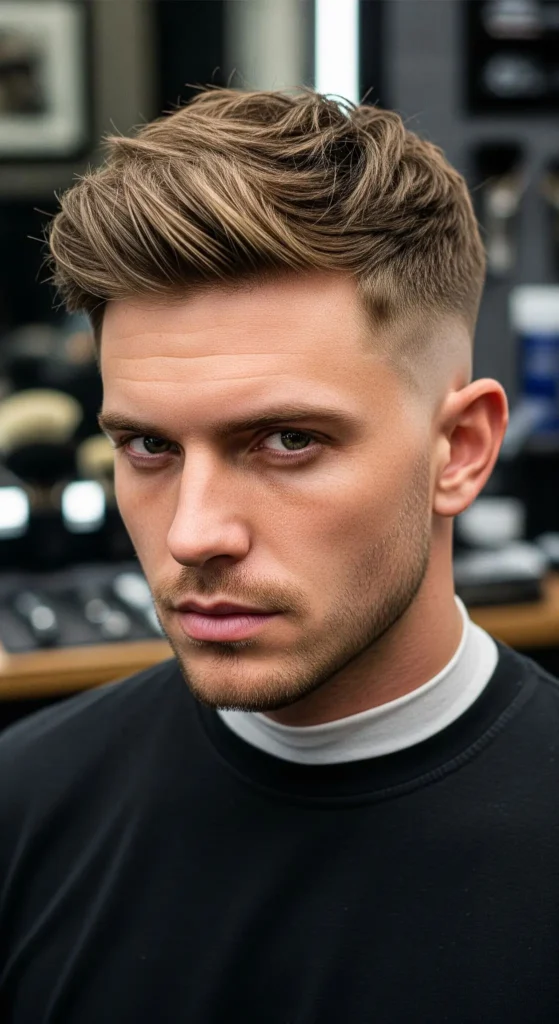
The textured crop skin fade takes contrast to the extreme by fading the sides down to bare skin. The dramatic transition from skin to textured hair creates an ultra-modern, edgy appearance. This variation demands precision from your barber and frequent maintenance to keep the fade sharp.
2026 Status: 🔥 Hot Now
| Quick Facts | |
| Face Shapes | Oval, Square |
| Hair Types | All types, especially Thick |
| Styling Time | 4 minutes daily |
| Trim Frequency | Every 2 weeks |
| Maintenance | High |
| Office Ready | Depends on the workplace |
What to Tell Your Barber:
“Textured crop with skin fade—bald at the temples, fading up into the texture. Keep the top rough and choppy with a low fringe.”
How to Style:
- Blow-dry forward while shaping
- Apply texture clay to the top section only
- Create a defined separation in the layers
Pro Tip: Skin fades expose your scalp to the sun and elements. Apply SPF to the faded areas during sunny days to prevent sunburn.
Best Product: Texture Clay or Molding Paste
6. Textured Crop Taper Fade
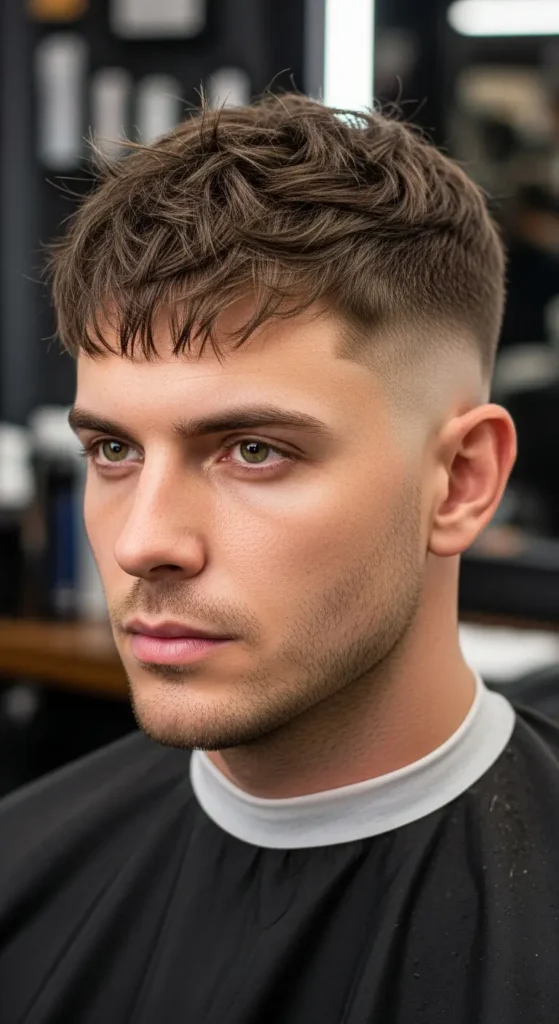
The textured crop taper fade combines the classic taper with modern texture on top. Rather than a dramatic fade, the sides gradually taper shorter without reaching the skin. This creates a softer, more traditional look while maintaining the contemporary textured finish.
2026 Status: ✓ Timeless Classic
| Quick Facts | |
| Face Shapes | All shapes |
| Hair Types | Straight, Wavy |
| Styling Time | 3 minutes daily |
| Trim Frequency | Every 3-4 weeks |
| Maintenance | Low |
| Office Ready | ✓ |
What to Tell Your Barber:
“Textured crop with a classic taper—not a skin fade, just a gradual taper on the sides. Textured, layered top with a soft fringe.”
How to Style:
- Towel-dry and apply light styling cream
- Use fingers to push hair forward
- Add texture clay for definition if needed
Pro Tip: The taper fade is the most conservative option for professional environments. It maintains the textured crop aesthetic while appearing more traditional.
Best Product: Styling Cream for natural, flexible hold
7. Textured Crop Low Taper
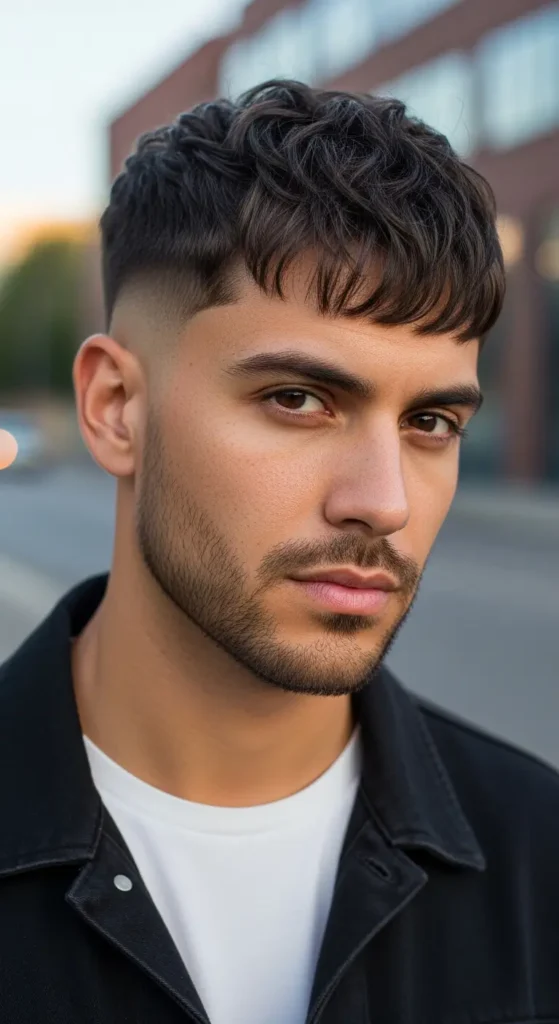
The textured crop low taper positions the taper line around the ears and neckline, preserving maximum length on the sides while still creating a clean finish. This subtle variation suits men who want the textured top without aggressive side contrast.
2026 Status: ✓ Timeless Classic
| Quick Facts | |
| Face Shapes | Oval, Rectangle, Heart |
| Hair Types | All types |
| Styling Time | 3 minutes daily |
| Trim Frequency | Every 4-5 weeks |
| Maintenance | Very Low |
| Office Ready | ✓ |
What to Tell Your Barber:
“Low taper textured crop—keep the sides longer with just a subtle taper at the neckline and ears. Textured, forward-styled top.”
How to Style:
- Apply sea salt spray to damp hair
- Blow-dry forward
- Finish with minimal texture clay for separation
Pro Tip: The low taper is the lowest-maintenance fade variation. It grows out gracefully and can go 4-5 weeks between cuts without looking overgrown.
Best Product: Sea Salt Spray + light Texture Clay
8. Textured Crop Mid Taper
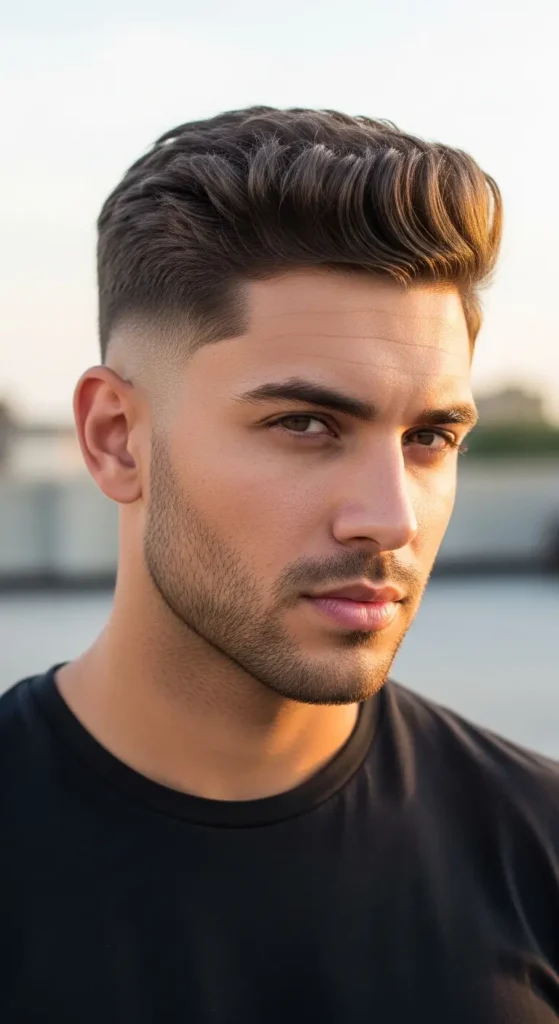
The textured crop mid taper balances the gradual taper at temple height, creating moderate contrast without the sharpness of a skin fade. This variation offers a refined, balanced appearance that works in virtually any setting.
2026 Status: ✓ Timeless Classic
| Quick Facts | |
| Face Shapes | All shapes |
| Hair Types | All types |
| Styling Time | 3 minutes daily |
| Trim Frequency | Every 3-4 weeks |
| Maintenance | Low-Medium |
| Office Ready | ✓ |
What to Tell Your Barber:
“Mid taper textured crop—taper starting at the temples, gradual blend into the textured top. Forward fringe, choppy layers.”
How to Style:
- Blow-dry forward with fingers
- Apply molding paste to create shape
- Refine texture with fingers
Pro Tip: The mid taper is the most versatile choice if you’re unsure which taper height suits you. It can be adjusted higher or lower on subsequent visits.
Best Product: Molding Paste for pliable hold
9. Textured Crop Drop Fade
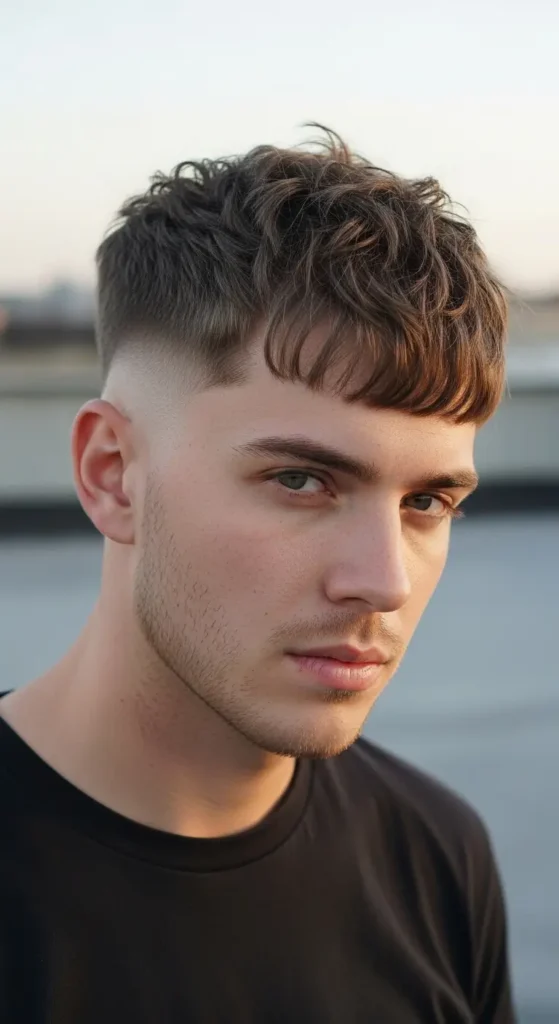
The textured crop drop fade features a fade line that curves downward behind the ear rather than running straight across. This creates a distinctive arc shape that follows the head’s natural contours, adding visual interest to the standard fade.
2026 Status: ↗ Rising Trend
| Quick Facts | |
| Face Shapes | Oval, Square, Diamond |
| Hair Types | All types |
| Styling Time | 4 minutes daily |
| Trim Frequency | Every 2-3 weeks |
| Maintenance | Medium-High |
| Office Ready | ✓ |
What to Tell Your Barber:
“Textured crop with a drop fade—I want the fade to curve down and around my ears. Choppy, layered top with forward styling.”
How to Style:
- Blow-dry while shaping forward
- Apply texture clay to the top
- Create separation and definition with fingers
Pro Tip: The drop fade particularly suits men with prominent ears, as the curved line draws attention away from the ear profile.
Best Product: Texture Clay for definition
10. Textured Crop Burst Fade
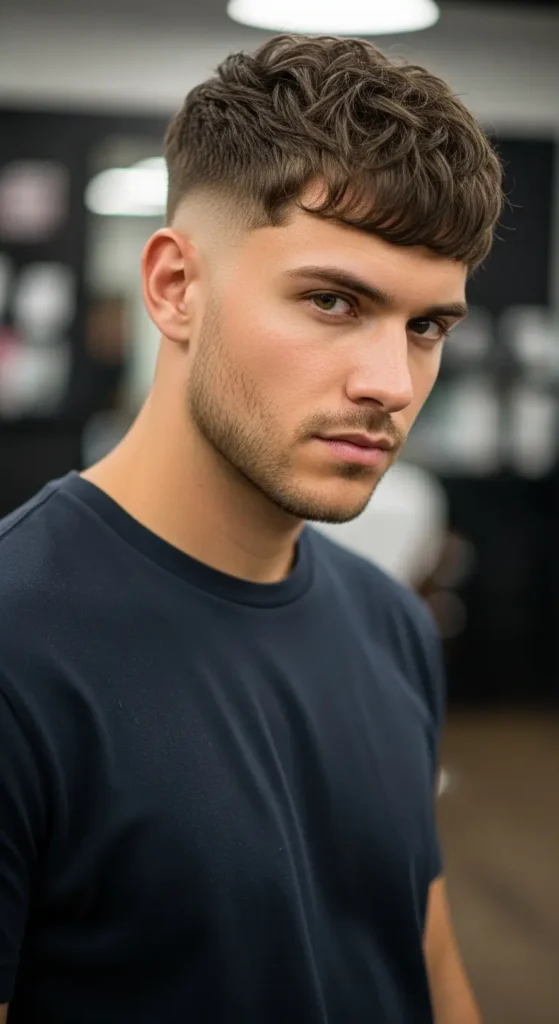
The textured crop burst fade features a semicircular fade radiating outward from the ear, creating a distinctive “burst” pattern. This bold variation pairs exceptionally well with curly or wavy hair, as the curved fade complements natural texture.
2026 Status: 🔥 Hot Now
| Quick Facts | |
| Face Shapes | Oval, Square, Diamond |
| Hair Types | Curly, Wavy, Thick |
| Styling Time | 5 minutes daily |
| Trim Frequency | Every 2-3 weeks |
| Maintenance | High |
| Office Ready | Depends on the workplace |
What to Tell Your Barber:
“Textured crop with burst fade—curved fade radiating around my ears. Keep the top full with natural texture and choppy layers.”
How to Style:
- Apply styling cream to damp curly/wavy hair
- Let air dry or diffuse
- Add texture clay for definition once dry
Pro Tip: The burst fade creates a unique silhouette from behind. Request your barber show you the back view before finishing to ensure the burst shape is symmetrical.
Best Product: Styling Cream for curly hair + Texture Clay for definition
Length Variations
11. Short Textured Crop
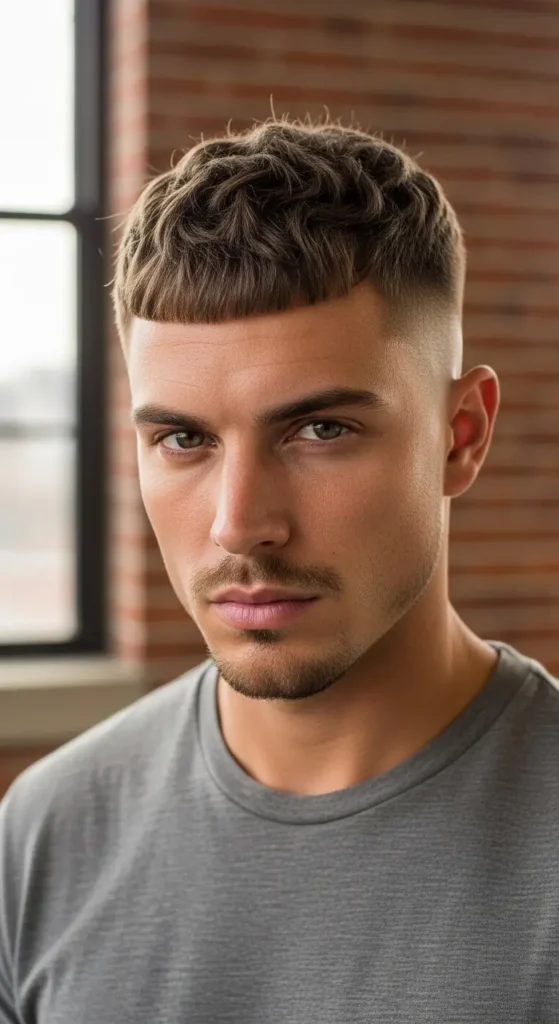
The short textured crop keeps the top section cropped close while maintaining the signature choppy texture. This variation delivers maximum ease—it’s essentially a textured buzz cut with more character. Perfect for active men, those with thinning hair, or anyone wanting minimal styling effort.
2026 Status: ✓ Timeless Classic
| Quick Facts | |
| Face Shapes | Oval, Square, Diamond |
| Hair Types | All types, especially Fine/Thin |
| Styling Time | 2 minutes daily |
| Trim Frequency | Every 2-3 weeks |
| Maintenance | Very Low |
| Office Ready | ✓ |
What to Tell Your Barber:
“Short textured crop—keep everything tight but with choppy texture. About an inch on top, maximum. Clean fade on sides.”
How to Style:
- Towel-dry hair
- Apply minimal texture powder for lift
- Shape with fingers—done
Pro Tip: The short textured crop is one of the best cuts for thin or thinning hair. The choppy texture creates the illusion of density without requiring length that exposes the scalp.
Best Product: Texture Powder for instant lift and volume
12. Long Textured Crop
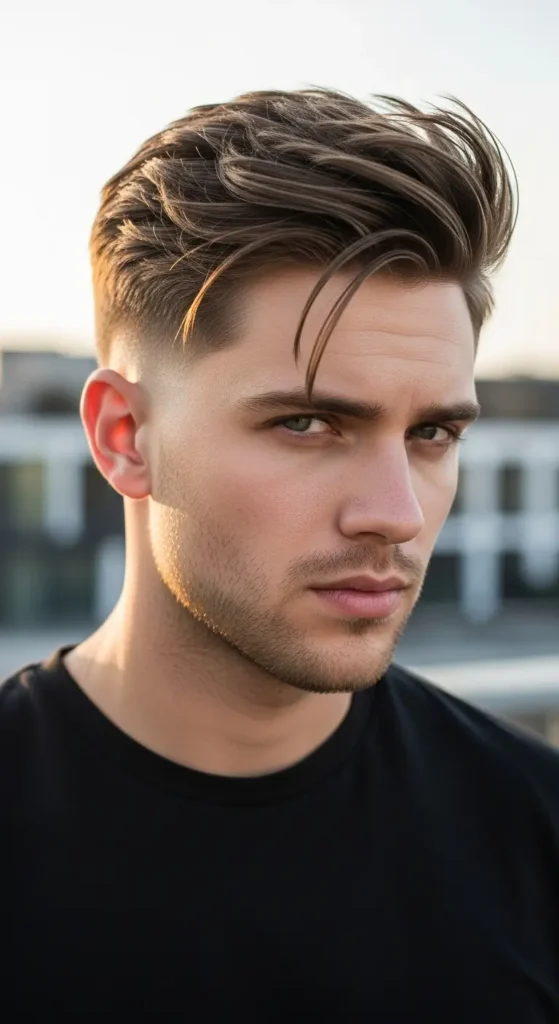
The long textured crop extends the top section to 3-4 inches, creating a fuller, more dramatic silhouette. The longer length allows for more styling versatility—you can wear it textured forward, swept to the side, or even pushed back when needed.
2026 Status: ↗ Rising Trend
| Quick Facts | |
| Face Shapes | Oval, Rectangle, Heart |
| Hair Types | Straight, Wavy, Thick |
| Styling Time | 5-7 minutes daily |
| Trim Frequency | Every 4-6 weeks |
| Maintenance | Medium-High |
| Office Ready | ✓ |
What to Tell Your Barber:
“Long textured crop—keep the top around 3-4 inches with lots of layers. I want flow and movement. Faded sides to create contrast.”
How to Style:
- Apply sea salt spray to damp hair
- Blow-dry forward while lifting at the roots
- Finish with molding paste for flexible hold
Pro Tip: The long textured crop requires more styling commitment. If you’re not willing to blow-dry regularly, consider a shorter variation.
Best Product: Sea Salt Spray + Molding Paste
13. Medium Length Textured Crop
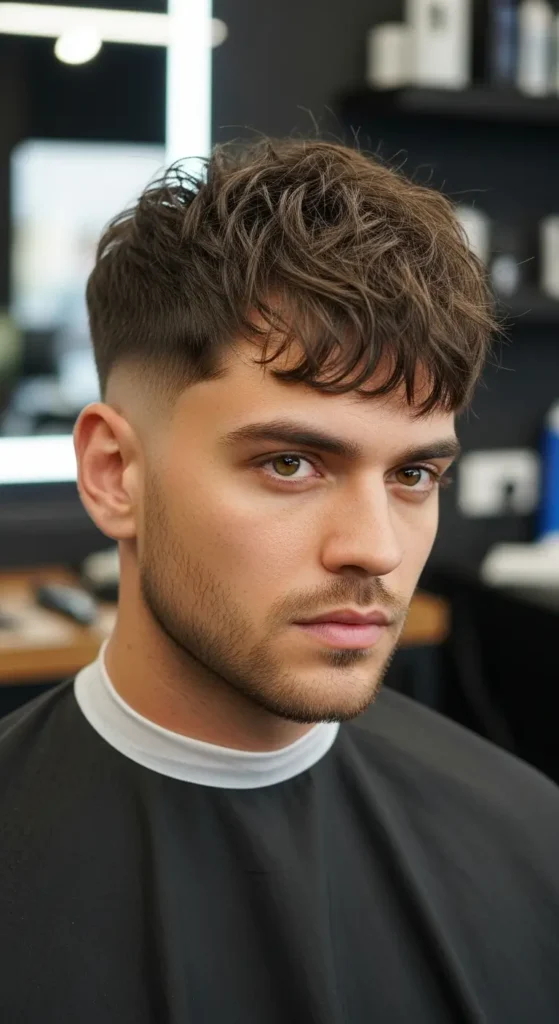
The medium-length textured crop hits the sweet spot at 2-3 inches on top—long enough for visible texture and movement, short enough for easy styling. This is the standard length most people envision when they think “textured crop.”
2026 Status: ✓ Timeless Classic
| Quick Facts | |
| Face Shapes | All shapes |
| Hair Types | All types |
| Styling Time | 3-4 minutes daily |
| Trim Frequency | Every 3-4 weeks |
| Maintenance | Low-Medium |
| Office Ready | ✓ |
What to Tell Your Barber:
“Standard textured crop—about 2-3 inches on top with choppy layers. Natural texture, forward fringe, faded sides.”
How to Style:
- Towel-dry hair
- Apply texture clay to slightly damp hair
- Work forward and create separation with fingers
Pro Tip: The medium length is ideal for first-time textured crop wearers. You can always go shorter on subsequent cuts once you understand how the style works with your hair.
Best Product: Texture Clay
Style Variations
14. Messy Textured Crop
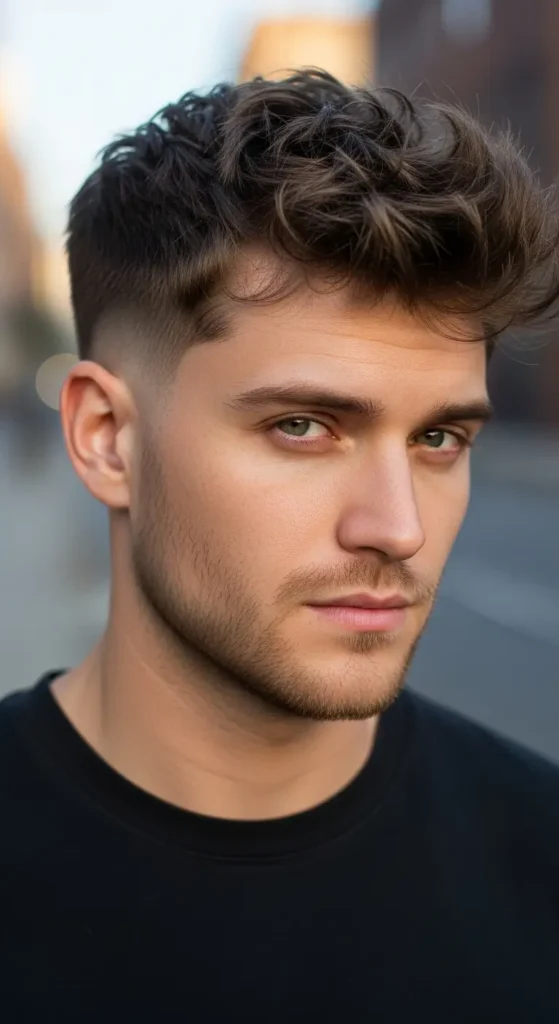
The messy textured crop embraces the undone, tousled aesthetic that defines 2026 hair trends. Rather than neat separation, the texture appears deliberately disheveled—like you ran your hands through it once and walked out the door. This variation delivers effortless cool.
2026 Status: 🔥 Hot Now
| Quick Facts | |
| Face Shapes | Oval, Round, Heart |
| Hair Types | All types |
| Styling Time | 2-3 minutes daily |
| Trim Frequency | Every 3-4 weeks |
| Maintenance | Very Low |
| Office Ready | Smart-casual settings |
What to Tell Your Barber:
“Messy textured crop—I want it to look undone and relaxed. Uneven layers, tousled fringe, nothing too neat or precise.”
How to Style:
- Let hair air-dry or rough towel-dry
- Apply texture clay to dry hair
- Tousle aggressively with fingers—mess it up
Pro Tip: The messy textured crop looks most authentic when you style it quickly without a mirror. Over-styling defeats the purpose.
Best Product: Texture Clay with matte finish
15. Textured Crop with Fringe
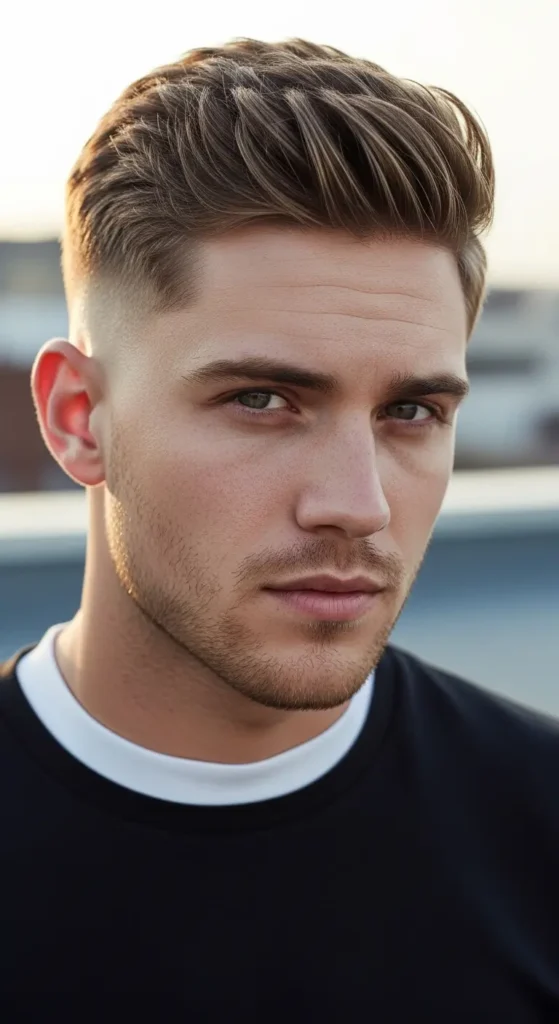
The textured crop with fringe emphasizes the forward-falling front section as the focal point. The fringe is kept deliberately longer and more prominent than other variations, creating an eye-catching frame for the face. This variation particularly suits men wanting to minimize a prominent forehead.
2026 Status: ✓ Timeless Classic
| Quick Facts | |
| Face Shapes | Oval, Rectangle, Heart |
| Hair Types | Straight, Wavy |
| Styling Time | 4 minutes daily |
| Trim Frequency | Every 3-4 weeks |
| Maintenance | Medium |
| Office Ready | ✓ |
What to Tell Your Barber:
“Textured crop with a prominent fringe—keep the front section longer and fuller. I want the fringe to be the focus. Textured, not blunt.”
How to Style:
- Blow-dry fringe forward and downward
- Apply molding paste to the fringe section
- Create soft, textured separation in the fringe
Pro Tip: The heavier fringe can cover forehead concerns and create a more youthful appearance. Communicate with your barber about where you want the fringe to fall—mid-forehead to eyebrow level.
Best Product: Molding Paste for pliable fringe control
16. Textured French Crop
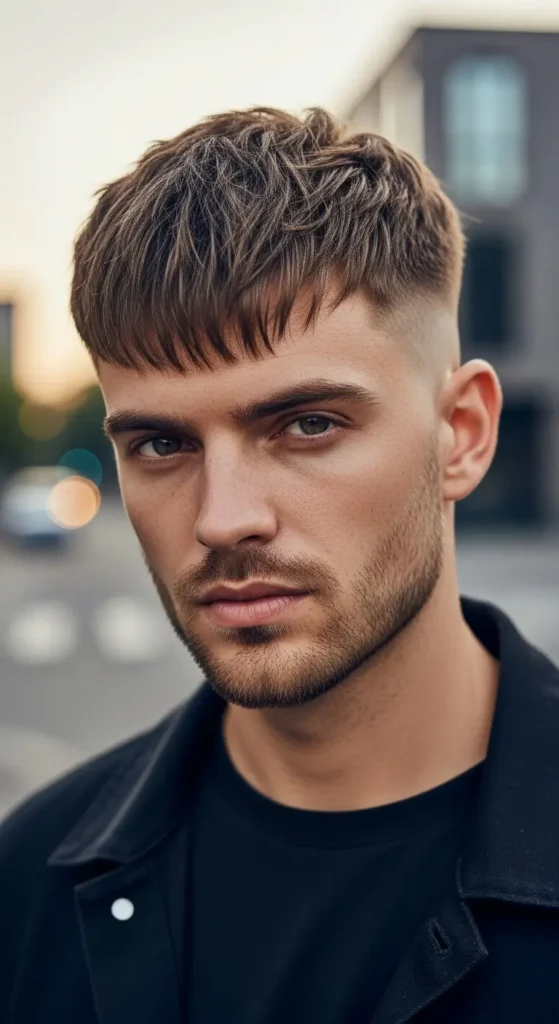
The textured French crop merges the classic French crop’s blunt fringe with added texture throughout the top. It’s choppier than a traditional French crop but maintains that distinctive straight-across fringe line. This variation bridges classic and contemporary aesthetics.
2026 Status: ✓ Timeless Classic
| Quick Facts | |
| Face Shapes | Oval, Square, Rectangle |
| Hair Types | Straight, Slightly Wavy |
| Styling Time | 4 minutes daily |
| Trim Frequency | Every 3-4 weeks |
| Maintenance | Low-Medium |
| Office Ready | ✓ |
What to Tell Your Barber:
“Textured French crop—I want the straighter fringe of a French crop but with more texture and layers in the top. Not completely blunt.”
How to Style:
- Blow-dry forward
- Apply styling cream for smooth control
- Use fingers to add subtle separation
Pro Tip: The textured French crop works best on straight to slightly wavy hair. Very curly hair won’t achieve the characteristic fringe line.
Best Product: Styling Cream for smooth, controlled finish
17. Classic Textured Crop
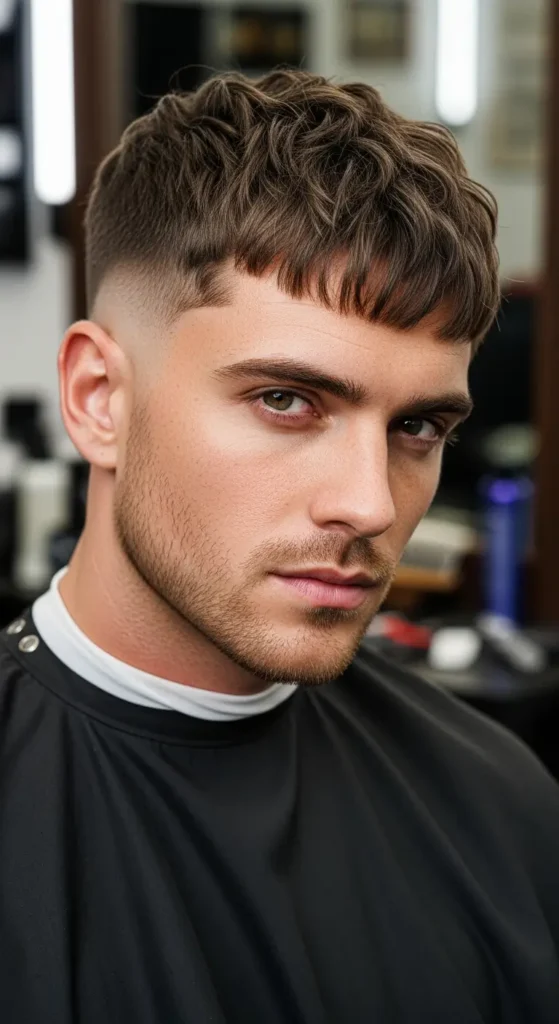
The classic textured crop represents the original, balanced interpretation—evenly trimmed sides with a textured, layered top and straight fringe. It’s neither too messy nor too precise, neither too long nor too short. This is the foundation all other variations build upon.
2026 Status: ✓ Timeless Classic
| Quick Facts | |
| Face Shapes | All shapes |
| Hair Types | All types |
| Styling Time | 3 minutes daily |
| Trim Frequency | Every 3-4 weeks |
| Maintenance | Low |
| Office Ready | ✓ |
What to Tell Your Barber:
“Classic textured crop—nothing extreme. Balanced texture on top, clean fade on sides, forward fringe. The standard version.”
How to Style:
- Towel-dry hair
- Apply texture clay to fingers
- Work through the top, push forward, done
Pro Tip: Start with the classic version before exploring variations. It helps you understand how the cut works with your specific hair before making adjustments.
Best Product: Texture Clay
18. Modern Textured Crop
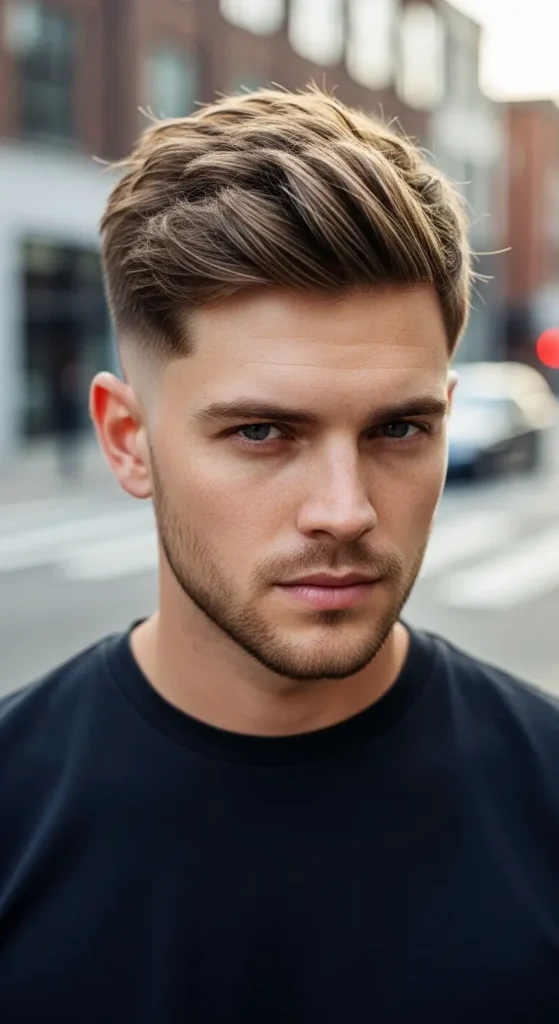
The modern textured crop pushes the style forward with more volume, more texture, and more contrast. The top is fuller and more lifted than traditional versions, paired with a sharper fade. This variation makes a statement without being extreme.
2026 Status: 🔥 Hot Now
| Quick Facts | |
| Face Shapes | Oval, Square, Diamond |
| Hair Types | Thick, Wavy |
| Styling Time | 5 minutes daily |
| Trim Frequency | Every 2-3 weeks |
| Maintenance | Medium |
| Office Ready | ✓ |
What to Tell Your Barber:
“Modern textured crop—I want volume and lift on top. Full, bold texture with a high fade for contrast. Contemporary, not traditional.”
How to Style:
- Blow-dry upward for maximum volume
- Apply molding paste while lifting
- Define texture with fingers throughout
Pro Tip: The modern textured crop requires more hair density to achieve the full, lifted look. Men with fine or thin hair may find other variations more flattering.
Best Product: Molding Paste for volume and flexible hold
19. Layered Textured Crop
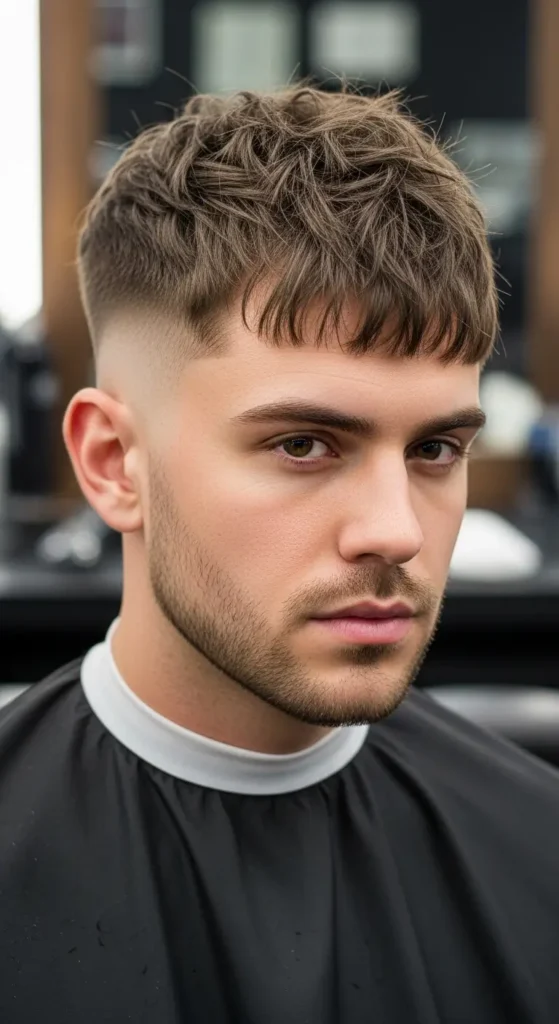
The layered textured crop emphasizes internal layering throughout the top section, creating depth and dimension. Rather than uniform length, the layers create a more complex, multi-dimensional appearance with visible graduation.
2026 Status: ✓ Timeless Classic
| Quick Facts | |
| Face Shapes | All shapes |
| Hair Types | Thick, Wavy |
| Styling Time | 4 minutes daily |
| Trim Frequency | Every 4-5 weeks |
| Maintenance | Low-Medium |
| Office Ready | ✓ |
What to Tell Your Barber:
“Layered textured crop—lots of internal layers for depth. I want to see the graduation and dimension. Soft, layered fringe.”
How to Style:
- Apply styling cream to damp hair
- Blow-dry while finger-shaping
- Add texture clay for definition
Pro Tip: Heavy layering works best on thick hair. Fine hair may look thin with too many layers. Ask your barber to adjust layer density to your hair type.
Best Product: Styling Cream + Texture Clay
20. Textured Crop Undercut
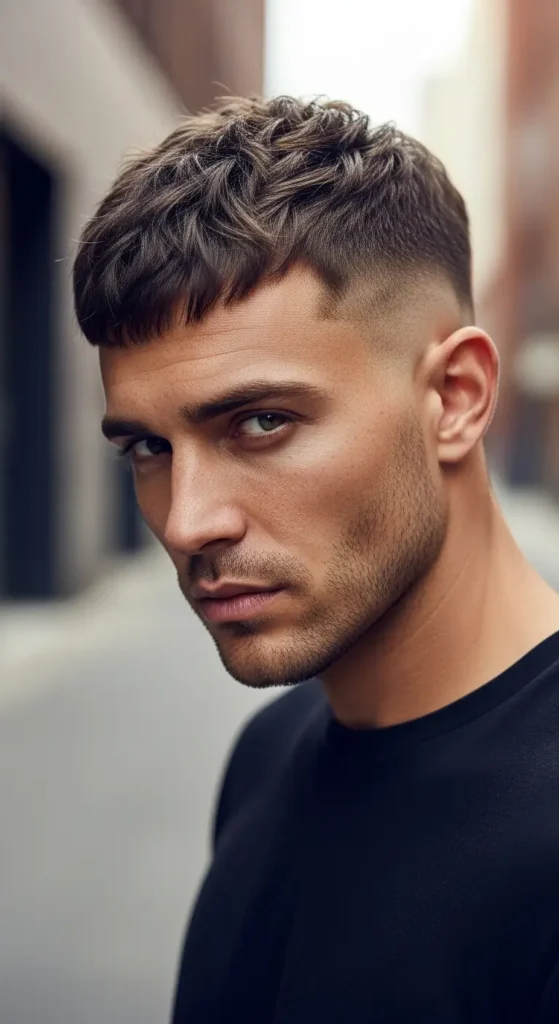
The textured crop undercut creates a sharp disconnection between the top and sides rather than gradual blending. The sides are cut uniformly short or shaved without fading into the longer top. This bold variation makes a strong statement with clear geometric contrast.
2026 Status: ↗ Rising Trend
| Quick Facts | |
| Face Shapes | Oval, Square |
| Hair Types | All types |
| Styling Time | 4 minutes daily |
| Trim Frequency | Every 2-3 weeks |
| Maintenance | High |
| Office Ready | Casual/creative environments |
What to Tell Your Barber:
“Textured crop with an undercut—I want disconnection, not blending. Sharp contrast between the sides and top. Edgy and bold.”
How to Style:
- Blow-dry the top section forward
- Apply texture clay to create a defined separation
- Keep the undercut lines clean
Pro Tip: The undercut creates a distinctive “mushroom” silhouette from certain angles. Make sure you’re comfortable with this look before committing—it’s harder to disguise than faded versions.
Best Product: Texture Clay for defined texture
Hair Type Variations
21. Curly Textured Crop
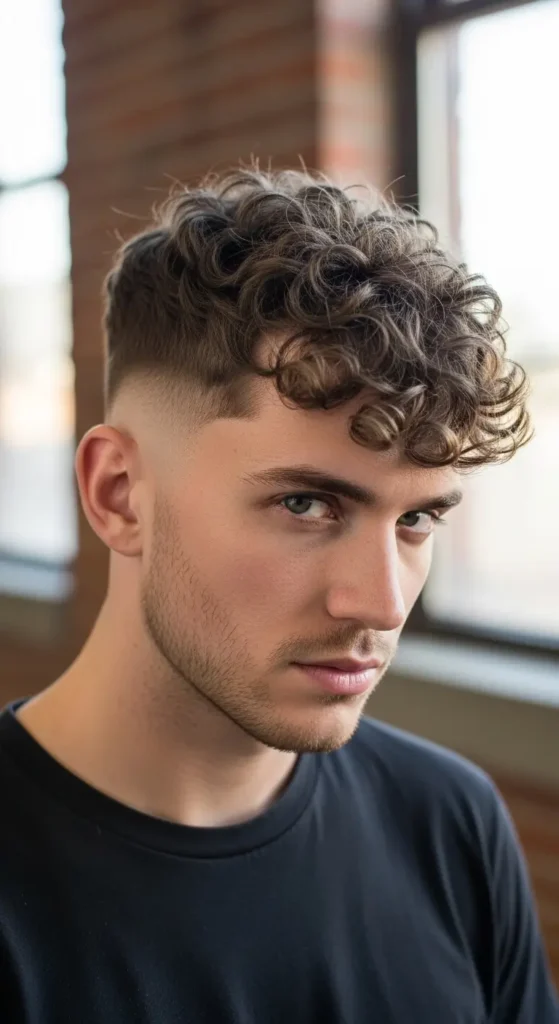
The curly textured crop embraces natural curl patterns rather than fighting them. The cut is designed to enhance curl definition while maintaining the crop’s compact shape. This variation works with your natural texture rather than against it.
2026 Status: 🔥 Hot Now
| Quick Facts | |
| Face Shapes | Oval, Heart, Diamond |
| Hair Types | Curly, Coily |
| Styling Time | 5-10 minutes daily |
| Trim Frequency | Every 3-4 weeks |
| Maintenance | Medium |
| Office Ready | ✓ |
What to Tell Your Barber:
“Curly textured crop—work with my natural curls. Keep the shape compact but let the texture show. Tapered sides, curly top.”
How to Style:
- Apply styling cream to damp curls
- Scrunch to define curl pattern
- Let air dry or diffuse—avoid touching until dry
Pro Tip: Find a barber experienced with curly hair. They should cut your hair dry to see how curls naturally fall rather than wet, which distorts curl length.
Best Product: Styling Cream or Curl Defining Cream
22. Wavy Textured Crop
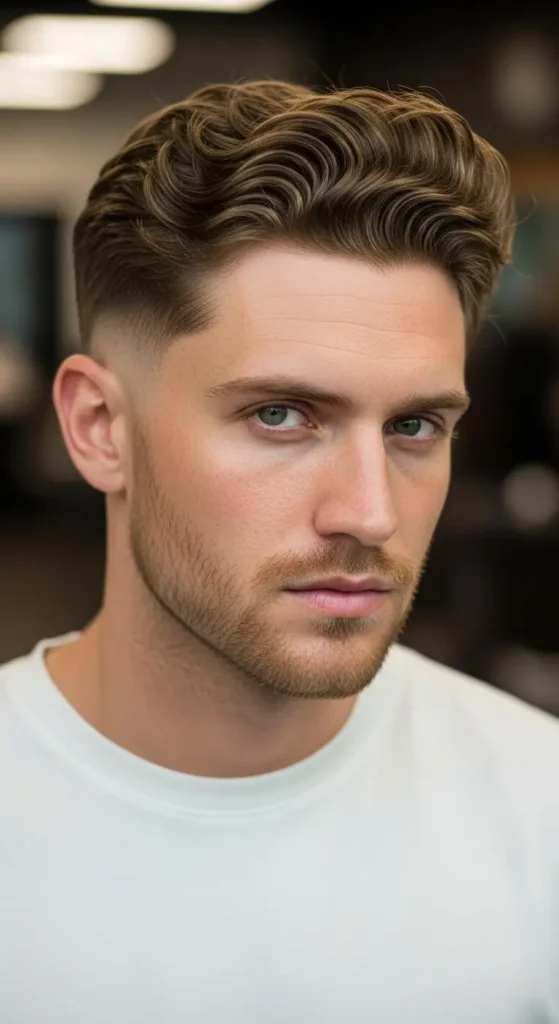
The wavy textured crop leverages natural wave patterns to create movement and character. The waves add dimension that straight hair can’t achieve naturally, making this one of the most effortlessly stylish variations.
2026 Status: ✓ Timeless Classic
| Quick Facts | |
| Face Shapes | All shapes |
| Hair Types | Wavy |
| Styling Time | 3-4 minutes daily |
| Trim Frequency | Every 3-4 weeks |
| Maintenance | Low |
| Office Ready | ✓ |
What to Tell Your Barber:
“Wavy textured crop—enhance my natural waves. Layered to highlight the movement. Forward fringe with wave texture visible.”
How to Style:
- Apply sea salt spray to damp hair
- Scrunch and let air dry
- Add minimal texture clay for definition if needed
Pro Tip: Wavy hair is the ideal texture for the textured crop—it provides natural movement without requiring product or blow-drying. Embrace it.
Best Product: Sea Salt Spray to enhance natural waves
23. Textured Crop for Straight Hair
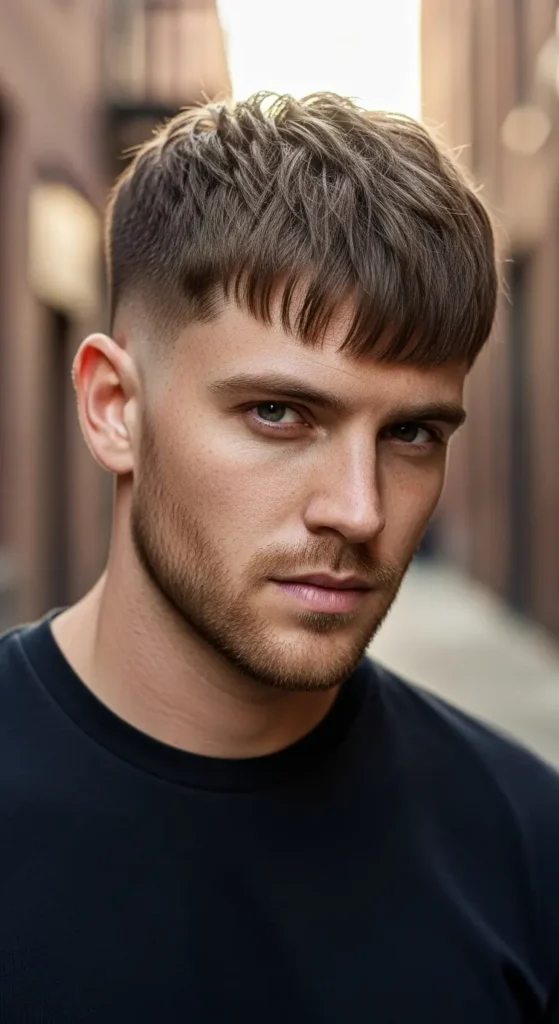
The textured crop for straight hair compensates for the lack of natural movement through strategic cutting and product use. Point-cutting and razor work create the illusion of texture that straight hair doesn’t naturally possess.
2026 Status: ✓ Timeless Classic
| Quick Facts | |
| Face Shapes | All shapes |
| Hair Types | Straight |
| Styling Time | 4 minutes daily |
| Trim Frequency | Every 3-4 weeks |
| Maintenance | Medium |
| Office Ready | ✓ |
What to Tell Your Barber:
“Textured crop for straight hair—I need point-cutting and layers to create movement. My hair is very straight, so add extra texture through the cutting technique.”
How to Style:
- Apply texture powder to dry hair for grip
- Work the texture of clay through the top
- Use fingers to create separation and lift
Pro Tip: Straight hair needs more product to achieve the textured look. Don’t be afraid to use texture powder plus clay—straight hair can handle more product without looking greasy.
Best Product: Texture Powder + Texture Clay combination
Demographic/Style Variations
24. Textured Crop Asian
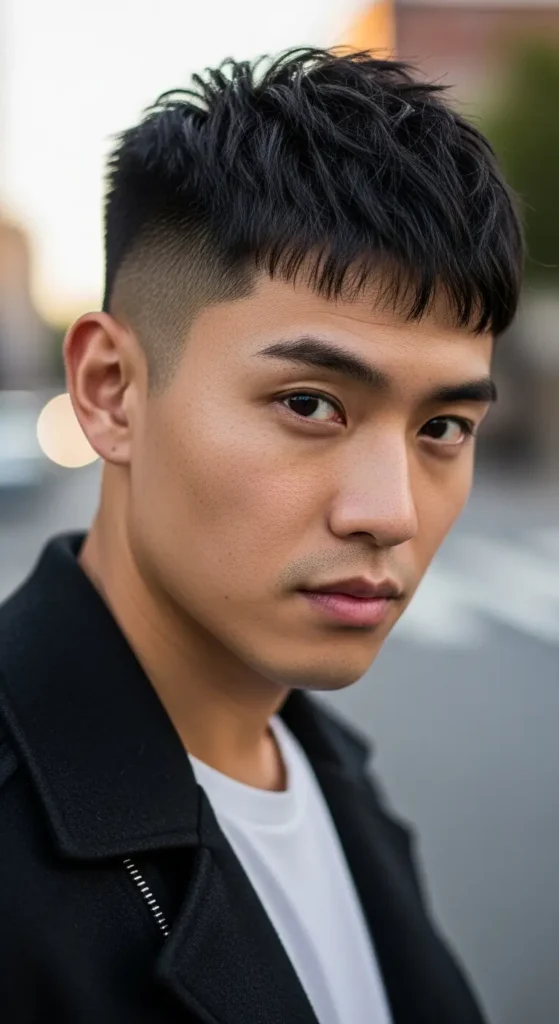
The textured crop Asian adapts the style for typically thicker, straighter Asian hair types. This variation often requires more length on top (3-4 inches instead of 2-3) because Asian hair tends to stick out rather than lay flat at shorter lengths.
2026 Status: ✓ Timeless Classic
| Quick Facts | |
| Face Shapes | All shapes |
| Hair Types | Thick, Straight (Asian texture) |
| Styling Time | 5 minutes daily |
| Trim Frequency | Every 3-4 weeks |
| Maintenance | Medium |
| Office Ready | ✓ |
What to Tell Your Barber:
“Textured crop adapted for Asian hair—I need extra length on top because my hair sticks up when short. Keep it long enough to lay forward with texture.”
How to Style:
- Blow-dry forward while pressing down
- Apply molding paste for control
- Use fingers to create a soft texture
Pro Tip: Asian hair often requires 1-2 extra inches compared to Western hair guides. If a guide suggests 2 inches, try 3-4 inches for similar results.
Best Product: Molding Paste for control and flexible hold
25. Textured Crop Black Men
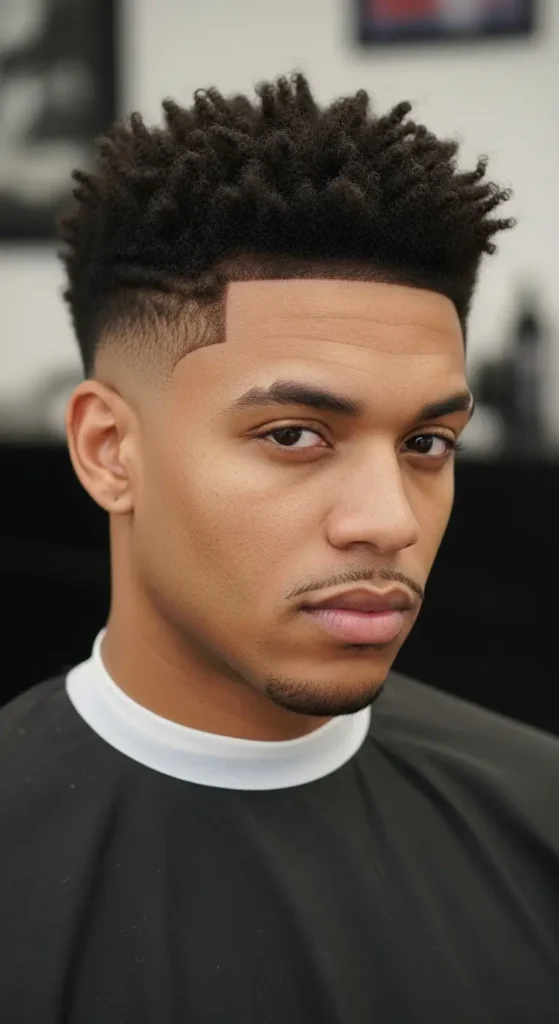
The textured crop for Black men works with natural Afro-textured hair to create a defined, shaped silhouette. The texture is inherent, so the focus shifts to creating a clean shape and defined edges while maintaining natural curl patterns.
2026 Status: ✓ Timeless Classic
| Quick Facts | |
| Face Shapes | All shapes |
| Hair Types | Coily, Afro-textured |
| Styling Time | 5-10 minutes daily |
| Trim Frequency | Every 2-3 weeks |
| Maintenance | Medium |
| Office Ready | ✓ |
What to Tell Your Barber:
“Textured crop for my hair type—defined shape with clean edges. Keep my natural texture but shape it into the crop silhouette. Line up included.”
How to Style:
- Apply curl-defining cream to damp hair
- Use a curl sponge for definition
- Pick out for volume if desired
Pro Tip: Find a barber experienced with Afro-textured hair. The cutting techniques differ significantly from European-style textured crops. Ask for a line-up to frame the style.
Best Product: Curl Defining Cream + Edge Control for lineup
26. Textured Crop Blonde
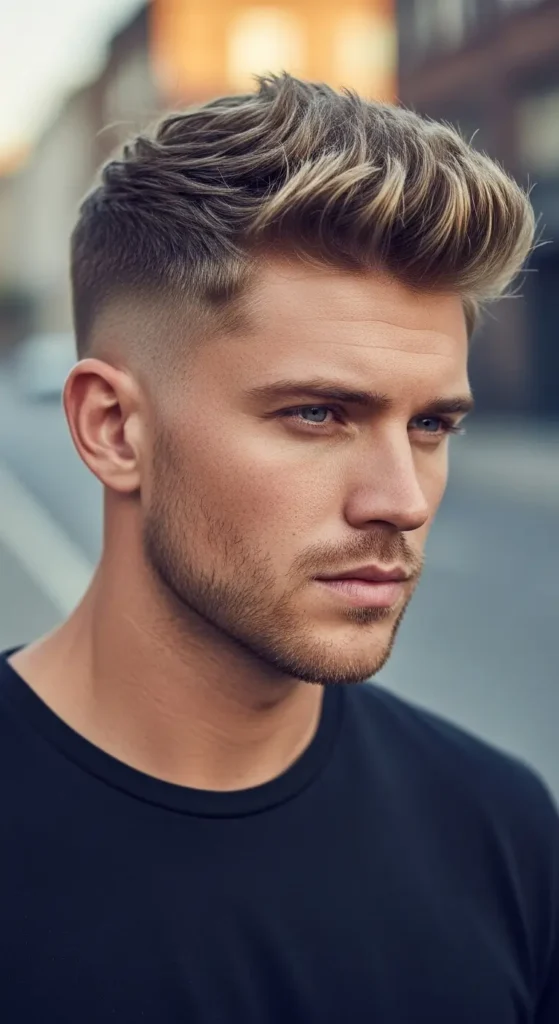
The textured crop blonde showcases how the style looks with lighter hair colors. Blonde hair makes the texture and layers more visible due to the contrast between light hair and shadow. This variation emphasizes the dimensional aspects of the cut.
2026 Status: ↗ Rising Trend
| Quick Facts | |
| Face Shapes | All shapes |
| Hair Types | All types (dyed or natural blonde) |
| Styling Time | 3-4 minutes daily |
| Trim Frequency | Every 3-4 weeks |
| Maintenance | Low (cut) + color maintenance |
| Office Ready | ✓ |
What to Tell Your Barber:
“Textured crop—I want the layers and texture to be visible. Since my hair is blonde, cut for maximum dimension and shadow.”
How to Style:
- Apply texture clay to dry or slightly damp hair
- Work through for separation
- Define fringe with fingers
Pro Tip: Blonde hair shows texture more dramatically but also shows grease faster. Use matte products and avoid over-application.
Best Product: Matte Texture Clay
27. Textured Crop with Beard
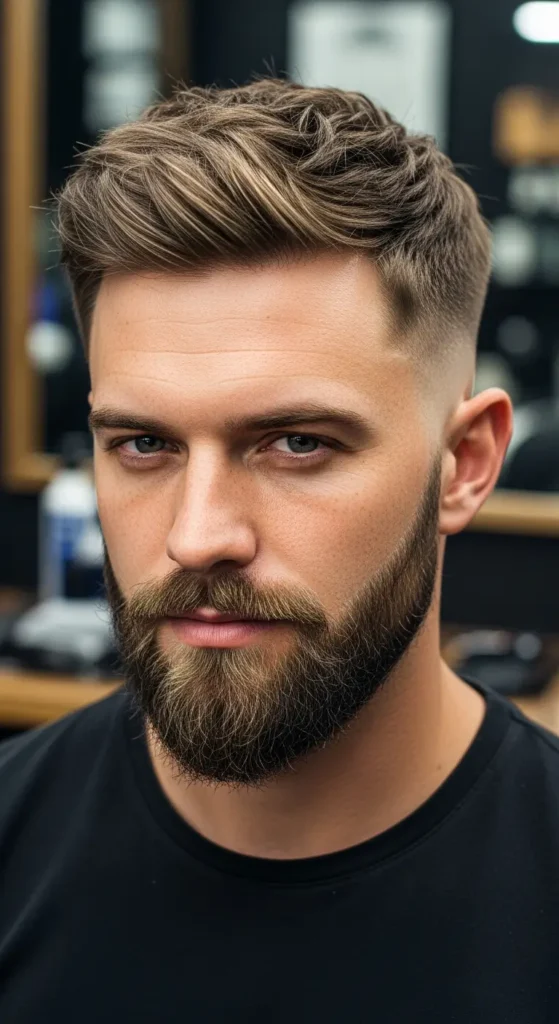
The textured crop with beard combines the clean-topped style with facial hair for a masculine, balanced look. The contrast between the textured crop’s clean lines and a fuller beard creates visual interest and frames the face effectively.
2026 Status: ✓ Timeless Classic
| Quick Facts | |
| Face Shapes | Oval, Rectangle, Diamond |
| Hair Types | All types |
| Styling Time | 4 minutes (hair) + beard maintenance |
| Trim Frequency | Every 3-4 weeks (both) |
| Maintenance | Medium |
| Office Ready | ✓ (with groomed beard) |
What to Tell Your Barber:
“Textured crop that connects well with my beard. I want the fade to blend into my beard line. Keep everything balanced and cohesive.”
How to Style:
- Style hair with texture clay as normal
- Groom beard with beard oil
- Ensure a clean neckline connection between the fade and the beard
Pro Tip: Ask your barber to blend the fade into your beard line for a seamless transition. A sharp disconnect between fade and beard can look unintentional.
Best Product: Texture Clay + Beard Oil
What’s the Difference Between a Textured Crop and a French Crop?
The textured crop and French crop share similarities but have key differences. The textured crop features choppy, uneven layers with a textured fringe that creates volume and movement. The French crop has a neater, more uniform top with a straighter, blunter fringe. The textured crop appears more relaxed and contemporary, while the French crop looks more polished and traditional.
Visual Comparison Table
| Feature | Textured Crop | French Crop |
| Top Texture | Choppy, layered, uneven | Smoother, more uniform |
| Fringe Style | Textured, piece-y, uneven | Blunt, straight across |
| Volume | More lift and movement | Flatter, controlled |
| Overall Vibe | Relaxed, contemporary | Polished, classic |
| Styling Time | 3-5 minutes | 2-4 minutes |
| Product Needed | Texture clay/paste | Styling cream/pomade |
| Best For | Casual to smart-casual | Professional settings |
| Maintenance | Low-medium | Low |
When to Choose Each
Choose Textured Crop if:
- You want a more relaxed, contemporary look
- You prefer visible texture and movement
- Your hair has a natural wave or curl
- You want to add volume to fine hair
Choose French Crop if:
- You need a neater, more formal appearance
- You prefer minimal styling
- You want a cleaner, more precise finish
- You have straight hair and want it to lay flat
Which Face Shape Suits a Textured Crop Best?
The textured crop works for almost all face shapes due to its adaptable nature. Different variations can be adjusted to balance any facial proportions. The key is choosing the right fade height, top length, and fringe style to complement your specific features.
Oval Face
Compatibility: Excellent — almost any variation works
Oval faces have balanced proportions, making them versatile for all textured crop styles. You can experiment freely with fade heights, lengths, and textures without concern for proportion issues.
Best Variations: All — choose based on personal preference and hair type
Round Face
Compatibility: Good — choose variations that add height
Round faces benefit from textured crops that add vertical dimension. Opt for more volume on top with shorter, tighter fades on the sides. This creates the illusion of an elongated face shape.
Best Variations: Modern Textured Crop (#18), Textured Crop High Fade (#4), Messy Textured Crop (#14)
Avoid: Very short crops, low fades that add width
Square Face
Compatibility: Good — choose softer textures
Square faces have strong angular features. The textured crop’s softness balances these angles well. Opt for more textured, piece-y fringes rather than blunt lines.
Best Variations: Messy Textured Crop (#14), Textured Crop with Fringe (#15), Wavy Textured Crop (#22)
Avoid: Very blunt fringes, extreme geometric cuts
Heart Face
Compatibility: Good — emphasize the fringe
Heart faces have wider foreheads and narrower chins. A fuller, more prominent fringe balances these proportions by adding visual weight to the upper face.
Best Variations: Textured Crop with Fringe (#15), Long Textured Crop (#12), Textured French Crop (#16)
Avoid: Very short fringes that expose the forehead width
Rectangle/Long Face
Compatibility: Good — avoid extreme height
Rectangle faces are longer than wide. Avoid styles that add significant height, which elongates the face further. Opt for flatter textures with more width on the sides.
Best Variations: Short Textured Crop (#11), Classic Textured Crop (#17), Textured Crop Low Taper (#7)
Avoid: Very high fades, tall quiff-style texturing
Diamond Face
Compatibility: Good — balance cheekbones
Diamond faces have prominent cheekbones with a narrower forehead and chin. The textured crop’s forward fringe adds width to the forehead while the tapered sides balance cheekbone prominence.
Best Variations: Textured Crop with Fringe (#15), Messy Textured Crop (#14), Modern Textured Crop (#18)
Avoid: Very tight sides that emphasize cheekbone width
Face Shape Compatibility Table
| Face Shape | Best Variations | Avoid |
| Oval | All variations | None |
| Round | #4, #14, #18 (add height) | Very short crops, low fades |
| Square | #14, #15, #22 (soft texture) | Blunt fringes |
| Heart | #12, #15, #16 (fuller fringe) | Very short fringes |
| Rectangle | #7, #11, #17 (flatter) | High fades, extreme height |
| Diamond | #14, #15, #18 (balance) | Very tight sides |
What Hair Type Works Best for a Textured Crop?
The textured crop adapts to virtually all hair types through variation selection and styling adjustments. Each hair type has optimal variations and products that maximize the style’s potential.
Straight Hair
Compatibility: Good — needs texture added through cutting and product
Straight hair doesn’t naturally create the movement that textured crops showcase. Success depends on skilled cutting (point-cutting, razor work) and product use.
Best Variations: Textured Crop for Straight Hair (#23), Classic Textured Crop (#17), Textured French Crop (#16)
Key Products: Texture Powder + Texture Clay
Wavy Hair
Compatibility: Excellent — ideal texture for this style
Wavy hair is arguably the best texture for textured crops. The natural movement creates effortless texture without heavy product reliance.
Best Variations: Wavy Textured Crop (#22), Messy Textured Crop (#14), Any variation
Key Products: Sea Salt Spray for enhancement
Curly Hair
Compatibility: Good — showcases natural texture beautifully
Curly hair brings built-in texture but requires adapted cutting techniques. Find a barber experienced with curls who cuts dry.
Best Variations: Curly Textured Crop (#21), Textured Crop Burst Fade (#10)
Key Products: Styling Cream, Curl Defining Cream
Thick Hair
Compatibility: Good — needs strategic layering
Thick hair has enough density for full, voluminous textured crops but needs internal layering to prevent bulk.
Best Variations: Modern Textured Crop (#18), Layered Textured Crop (#19)
Key Products: Molding Paste, Texture Clay
Thin/Fine Hair
Compatibility: Excellent — one of the best cuts for fine hair
The textured crop is one of the best haircuts for thin hair. Choppy texture creates the illusion of density, and the forward styling conceals thinning areas.
Best Variations: Short Textured Crop (#11), Textured Crop Low Fade (#2), Textured Crop Skin Fade (#5)
Key Products: Texture Powder for volume
Hair Type Compatibility Table
| Hair Type | Best Variations | Key Products |
| Straight | #17, #16, #23 | Texture Powder + Clay |
| Wavy | #14, #22, any | Sea Salt Spray |
| Curly | #21, #10 | Styling Cream |
| Thick | #18, #19 | Molding Paste |
| Fine/Thin | #2, #5, #11 | Texture Powder |
Who Should Avoid a Textured Crop?
While the textured crop suits most men, it’s not ideal for everyone. Consider these factors honestly before committing:
Men with extremely coarse, wiry hair — Very coarse hair may stick out at awkward angles rather than laying textured. You may need significantly more length than guides suggest.
Men wanting zero daily styling — Even “low maintenance” variations require 2-3 minutes of product application. If you want absolutely no styling, a buzz cut or crew cut may suit you better.
Very formal work environments — While most textured crops are professional, some conservative industries (law, finance) may prefer cleaner, more traditional cuts. Assess your workplace culture.
Men with severe cowlicks at the front — Cowlicks can fight against the forward-falling fringe, requiring extra styling effort or alternative fringe directions.
Those unable to commit to regular trims — Textured crops rely on maintained fade lines and fringe length. If you can’t visit a barber every 3-4 weeks, the style loses its shape.
How Do You Ask Your Barber for a Textured Crop?
Clear communication is essential for getting the textured crop you want. Use these scripts and strategies to ensure your barber understands your vision.
Simple Script (30-Second Version)
Use this quick script if your barber is familiar with the style:
“I’d like a textured crop—choppy texture on top, styled forward, with a [low/mid/high] fade on the sides.”
Detailed Script (With Specifications)
Use this comprehensive script for precision or unfamiliar barbers:
“I’d like a textured crop haircut. On top, keep about [2-3] inches with choppy, point-cut layers for texture—I want it to look naturally messy, not uniform. Style the fringe forward, falling to about [mid-forehead/eyebrow level]. On the sides, I want a [low/mid/high] [fade/taper], blending smoothly into the top. Matte finish, not shiny. Here are some reference photos.”
Terminology Your Barber Understands
| Term | Meaning |
| Point-cutting | Cutting into the hair vertically for texture |
| Texturizing | Removing weight and adding movement |
| Fade | Gradual gradient from short to long |
| Taper | Similar to fade but typically not to skin |
| Fringe | The front section that falls on the forehead |
| Disconnect/Undercut | Sharp line between top and sides (no blending) |
Photos to Bring
Reference photos eliminate 90% of miscommunication. Bring 2-3 images showing:
- Front view — Fringe length and overall shape
- Side view — Fade height and blend
- Texture detail — The specific choppiness you want
Show your barber what you DON’T want to. “I like this texture but not this fade height” is valuable information.
How Do You Style a Textured Crop?
Styling a textured crop is straightforward once you understand the basic technique. Follow these steps for consistent results.
Step 1 — Wash and Prep Hair
Start with clean, towel-dried hair. Remove excess water but keep hair slightly damp—not dripping, not dry. This is the optimal state for product application.
Time: 1 minute
Step 2 — Apply Pre-Styler (Optional)
For extra texture and volume, apply sea salt spray to damp hair before blow-drying. This adds grip and enhances natural movement. Skip this step for a more controlled finish.
Time: 30 seconds
Step 3 — Blow-Dry Forward
Using medium heat, blow-dry hair forward toward your forehead while shaping with your fingers. Lift at the roots for volume. This sets the direction and foundation for the style.
Time: 2-3 minutes (or skip if air-drying for messier look)
Step 4 — Finish with Product
Rub a small amount of texture clay or molding paste between your palms until evenly distributed. Work through the top section with your fingers, creating separation and texture. Push forward and mess it up slightly.
Time: 1-2 minutes
Common Styling Mistakes to Avoid
Using too much product — Start with a pea-sized amount. You can add more, but you can’t remove excess without rewashing.
Over-styling — The textured crop should look effortless. Stop before it looks “done.”
Using shiny products — Pomades and gels create the wrong finish. Stick to matte clays and pastes.
Fighting your natural texture — Work with your hair, not against it. If it wants to go a certain direction, let it.
Skipping the blow-dry — For straight hair, especially, blow-drying creates the foundation texture. Skipping it results in flat, lifeless styling.
How Long Does a Textured Crop Take to Style?
Styling time varies by variation and hair type. Here’s what to expect:
| Variation Type | Daily Styling Time |
| Short Textured Crop | 2 minutes |
| Classic/Standard | 3-4 minutes |
| Messy/Casual | 2-3 minutes |
| Long Textured Crop | 5-7 minutes |
| Curly Textured Crop | 5-10 minutes |
| Modern/Volumized | 5 minutes |
Fastest Options: Short Textured Crop (#11), Messy Textured Crop (#14)
Most Time-Intensive: Long Textured Crop (#12), Curly Textured Crop (#21)
How Often Should You Trim a Textured Crop?
Trim frequency depends on your variation, how quickly your hair grows, and how precise you want the style to look.
Trim Frequency by Variation
| Variation | Trim Frequency | Notes |
| Skin fade variations | Every 2 weeks | Fade grows out quickly |
| High fade variations | Every 2-3 weeks | Noticeable grow-out |
| Mid fade variations | Every 2-3 weeks | Balanced maintenance |
| Low fade/taper | Every 3-4 weeks | More forgiving grow-out |
| No fade/scissors only | Every 4-5 weeks | Most forgiving |
Daily Care Routine
Washing: 2-3 times per week with lightweight shampoo. Daily washing strips natural oils.
Conditioning: After every wash with hydrating conditioner to maintain hair health.
Styling: Daily product application takes 2-5 minutes, depending on variation.
Nighttime: No special care needed. The textured look tolerates “bed head” well.
Growing Out a Textured Crop
If you decide to grow out your textured crop into a longer style:
Weeks 1-4: The textured top grows into a longer, shaggier version. Consider a “cleanup” trim on the sides only.
Weeks 4-8: The fade grows in significantly. You’ll enter an awkward phase. Commit to growing it out or get a full trim.
Weeks 8-12: If committing to growth, the textured crop transitions into a flow or medium-length style. Regular side trims help maintain shape during transition.
Pro Tip: Tell your barber you’re growing it out. They can trim strategically to minimize awkward phases.
What Products Are Best for a Textured Crop?
The right product makes or breaks your textured crop styling. Here’s what each product does and when to use it.
Texture Clay
Hold: Strong Finish: Matte Best For: All textured crop variations
Texture clay is the go-to product for textured crops. It provides a strong, flexible hold with a natural matte finish that defines separation without shine. Use on dry or slightly damp hair.
Molding Paste
Hold: Medium Finish: Natural/slight sheen Best For: Flexible styling, longer variations
Molding paste offers more pliable control than clay. It’s ideal if you want to restyle throughout the day or prefer a softer hold. Works well for longer textured crops and curly variations.
Sea Salt Spray
Hold: Light Finish: Natural Best For: Pre-styling, wavy/curly enhancement
Sea salt spray adds grip and enhances natural texture before blow-drying. It’s not a finishing product—use it as a foundation, then add clay or paste over it.
Texture Powder
Hold: Light Finish: Matte Best For: Fine/thin hair, instant volume
Texture powder provides immediate lift and grip for fine hair. Apply to dry hair at the roots, then style with fingers. Adds volume without weight. Can be used alone or under clay.
Styling Cream
Hold: Light-Medium Finish: Natural Best For: Curly variations, smooth control
Styling cream offers moisture and control for curly textured crops. It defines curls without crunch and fights frizz. Apply to damp hair and let air dry or diffuse.
Product Comparison Table
| Product | Hold | Finish | Best Variations |
| Texture Clay | Strong | Matte | All variations |
| Molding Paste | Medium | Natural | Long, flexible styles |
| Sea Salt Spray | Light | Natural | Pre-styling, wavy hair |
| Texture Powder | Light | Matte | Fine/thin hair |
| Styling Cream | Light-Med | Natural | Curly variations |
FAQs About Textured Crop Haircuts
What is a textured crop haircut?
A textured crop is a men’s haircut featuring short faded sides with a longer, layered top and forward-styled fringe. The top is cut with point-cutting or razor techniques to create choppy, natural texture. It’s low-maintenance, versatile, and suits most face shapes and hair types.
How do you do a textured crop haircut?
Barbers create a textured crop by fading or tapering the sides, then cutting the top with point-cutting or razor techniques to create choppy layers. The fringe is cut shorter than the back top section and styled forward. The key is creating uneven, textured layers rather than uniform length.
What’s the difference between a textured crop and a French crop?
The textured crop has choppier, more uneven layers with a textured fringe, creating more volume and movement. The French crop has a smoother, more uniform top with a straighter, blunter fringe. The textured crop looks more relaxed; the French crop looks more polished.
Which fade works best with a textured crop?
Low and mid fades are most versatile for textured crops. Low fades offer a subtle, professional look that grows out gracefully. Mid fades provide balanced contrast without being extreme. High and skin fades create maximum contrast but require more frequent maintenance (every 2 weeks).
Is a textured crop good for thin or fine hair?
Yes—the textured crop is one of the best cuts for thin or fine hair. The choppy layers create the illusion of density, the forward fringe conceals thinning areas, and texture products add volume without weight. Opt for shorter variations (#11, #2, #5) for best results.
How should I ask my barber for a textured crop?
Say: “I’d like a textured crop with choppy texture on top, styled forward, with a [low/mid/high] fade.” Bring 2-3 reference photos showing front view, side view, and texture detail. Specify fringe length (mid-forehead to eyebrow level) and whether you want matte or natural finish.
What products are best for styling a textured crop?
Texture clay is the most versatile product—strong hold, matte finish, works on all variations. For wavy hair, sea salt spray enhances natural texture. For fine hair, texture powder adds volume. For curly hair, styling cream defines curls without crunch.
How often should I trim a textured crop?
Trim every 2-4 weeks, depending on variation. Skin and high fades need trimming every 2 weeks to stay sharp. Low fades and tapers can last 3-4 weeks. Standard textured crops maintain their shape for about 3-4 weeks before needing a refresh.
Is the textured crop suitable for formal occasions?
Yes—most textured crop variations work for formal settings when styled neatly. The classic textured crop (#17), taper fade variations (#6, #7, #8), and textured French crop (#16) are particularly appropriate. Avoid extremely messy variations for very formal events.
Is a textured crop still trendy in 2026?
Yes—the textured crop remains one of the most requested men’s haircuts in 2026. Its popularity continues because it aligns with the dominant 2026 trend toward natural texture, low-maintenance styling, and versatile cuts that work across settings.
What face shape suits a textured crop haircut?
The textured crop suits all face shapes with the right variation. Oval faces work with any style. Round faces benefit from added height (high fades, modern variations). Square faces suit softer textures. Heart faces look best with fuller fringes. Rectangle faces should avoid extreme height.
Can I get a textured crop with curly hair?
Absolutely. The curly textured crop (#21) embraces natural curl patterns beautifully. Find a barber experienced with curly hair who cuts dry. Use styling cream rather than clay to define curls without crunch. The burst fade (#10) also pairs particularly well with curly texture.
How long does it take to style a textured crop?
Most textured crops take 3-5 minutes to style daily. Short variations take 2 minutes. Long or curly variations may take 5-10 minutes. The messy textured crop (#14) is fastest—just product and tousle. The style is designed for minimal morning effort.
Is a textured crop low maintenance?
Yes—the textured crop is designed for low maintenance. Daily styling takes 2-5 minutes. The cut looks intentional even when slightly disheveled. It grows out relatively gracefully between trims. Most variations need barber visits every 3-4 weeks. It’s one of the most practical modern men’s cuts.
What’s the difference between a textured crop and a crew cut?
The crew cut has a more uniform, tapered top that’s typically styled upward or to the side, with a cleaner, more military-inspired finish. The textured crop has choppier layers styled forward with a more relaxed, contemporary vibe. The crew cut is neater; the textured crop is more textured and casual.