

The bro flow haircut is a medium-to-long hairstyle where hair grows past the ears and sweeps back naturally from the face. It creates a relaxed, effortlessly cool look that works for casual days and professional settings alike.
Think of it as hair that “flows” backward with natural movement—not stiff, not overly styled, just easy and confident.
Whether you have straight, wavy, or curly hair, this guide covers everything you need to know. From how to ask your barber for a bro flow to the best products for your hair type, you’ll find it all here.
What Is the Bro Flow Haircut?
The bro flow is a hairstyle where medium-to-long hair grows out and naturally sweeps backward off the face. Unlike slicked-back styles that use heavy product, the bro flow relies on your hair’s natural texture and movement.
Here’s what makes it a bro flow:
- Length: Hair grows past the ears, usually reaching the nape of the neck or collar area
- Soft layers: Prevents hair from looking heavy or flat
- Natural movement: Hair flows backward without looking stiff or crunchy
- Minimal product: Light styling keeps the look effortless, not overdone
- Versatile finish: Can be tucked behind ears or left to fall naturally
The bro flow goes by several names. You might hear it called:
- Flow haircut or men’s flow haircut
- Hockey flow or hockey hair (popular among hockey players)
- Lacrosse flow (common in lacrosse culture)
- Surfer hair (when styled with beachy texture)
These names all describe similar styles within the “flow” family. The core idea stays the same: medium-length hair with natural backward movement.
20 Best Bro Flow Haircut Styles for Men
Below are the most popular bro flow variations. Each includes styling guidance and product recommendations.
Core Bro Flow Variations
1. Classic Bro Flow
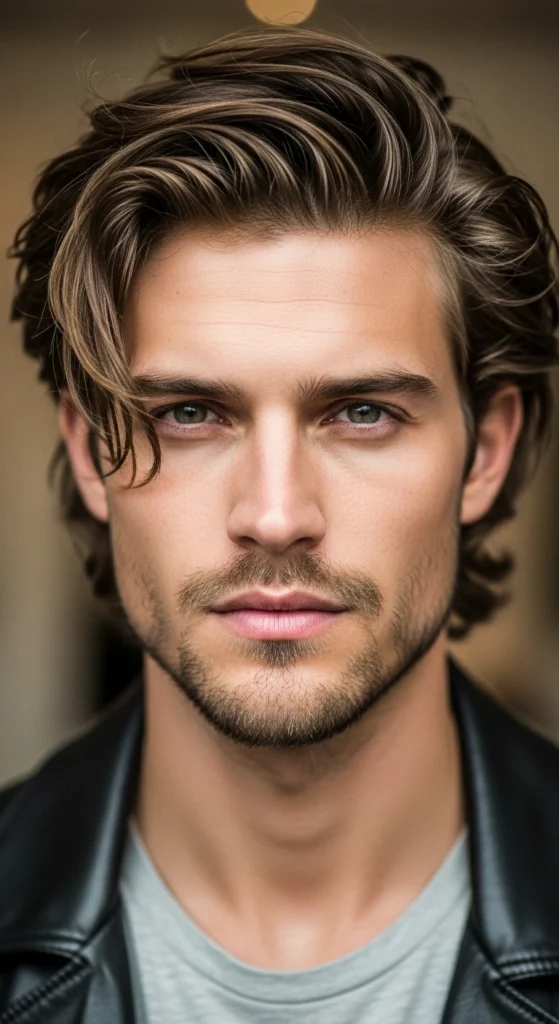
The original flow look. Medium-length hair swept back naturally with minimal styling. Clean, timeless, and effortlessly cool.
- Best for: Everyday wear, versatile occasions
- Hair type: Works with straight, wavy, or thick hair
- Face shape: Oval and heart shapes
- Barber notes: Soft layers, natural neckline, no fade
- Product: Light styling cream or mousse
- Maintenance: Low—trims every 6-8 weeks
2. Textured Bro Flow
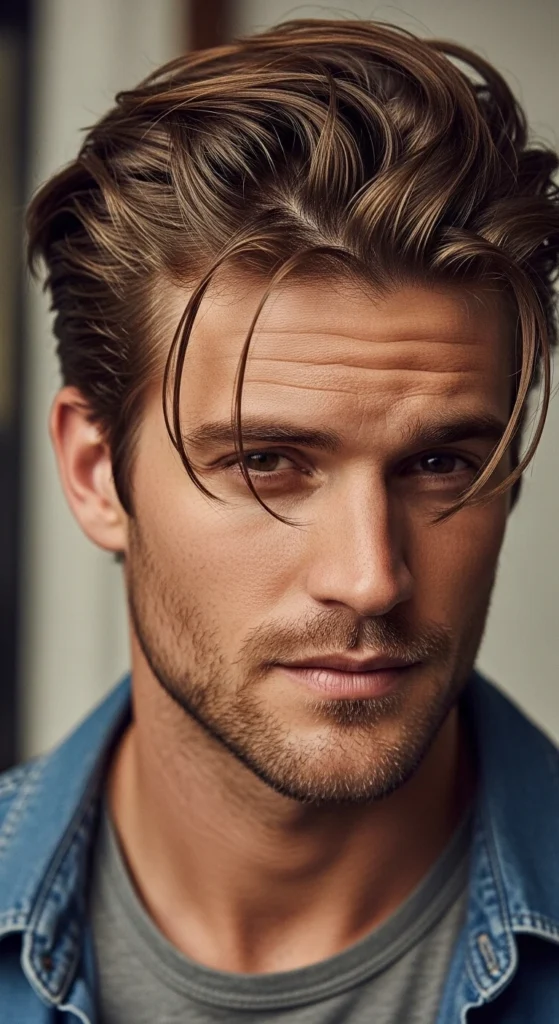
Adds choppy layers and movement for a more dynamic look. The textured flow creates volume and dimension that catches light differently.
- Best for: Adding life to flat or fine hair
- Hair type: All types, especially straight hair needing volume
- Face shape: Round and square faces
- Barber notes: Ask for texturizing, point-cutting layers
- Product: Sea salt spray or texture clay
- Maintenance: Medium—needs occasional product refresh
3. Messy Bro Flow
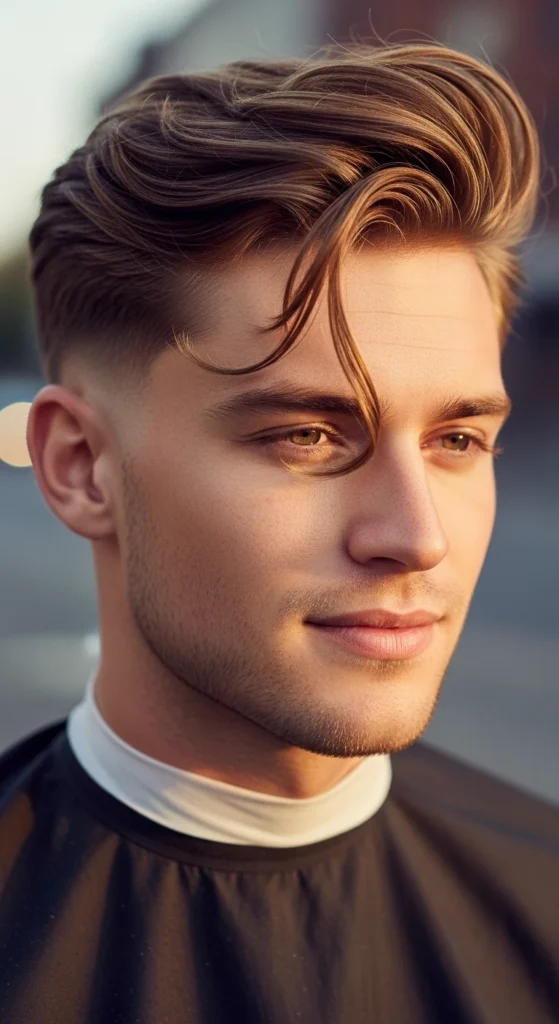
The intentionally undone version. Hair looks tousled and lived-in, like you just woke up looking good.
- Best for: Casual, relaxed settings
- Hair type: Wavy or naturally textured hair
- Face shape: All face shapes
- Barber notes: Longer layers, minimal shaping
- Product: Matte clay or texturizing paste
- Maintenance: Low—the messier, the better
4. Modern Bro Flow
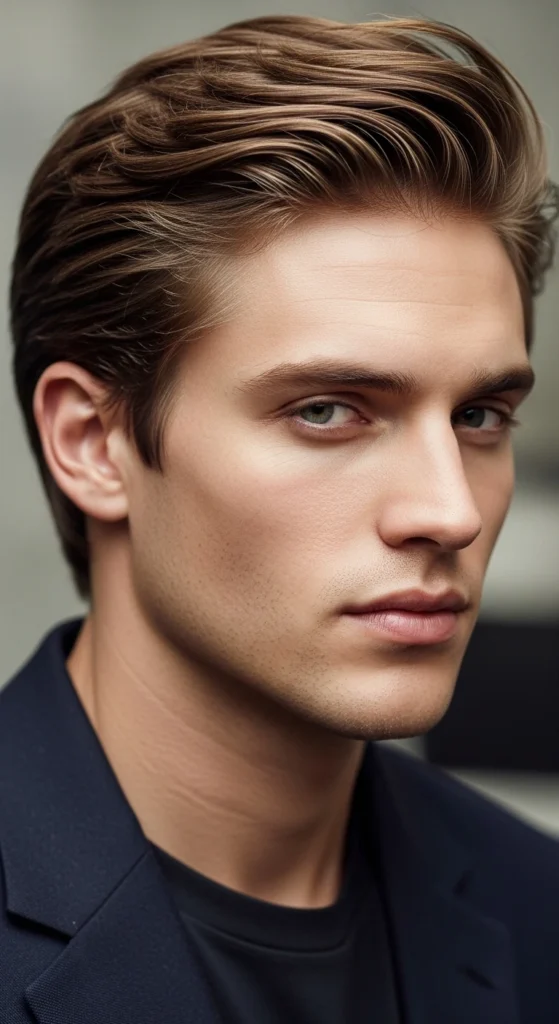
A cleaner, more controlled take on the classic. Neater shape with defined layers and polished finish.
- Best for: Professional environments, dates
- Hair type: Straight to wavy
- Face shape: Oval and rectangular
- Barber notes: Precise layering, clean neckline
- Product: Light pomade or styling cream
- Maintenance: Medium—regular shaping needed
5. Layered Bro Flow
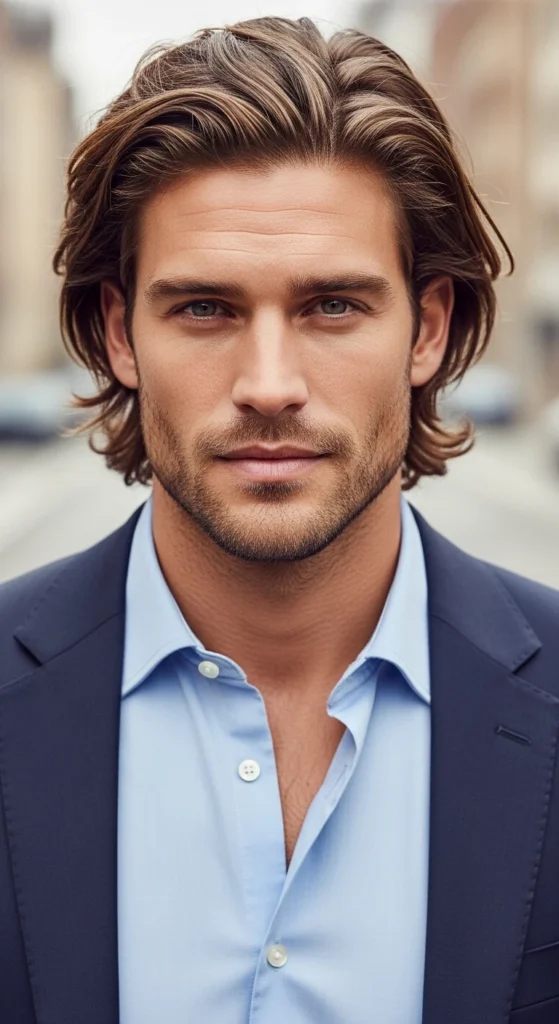
Multiple layers create movement and reduce bulk. Hair bounces and moves naturally throughout the day13.
- Best for: Thick hair that needs weight removed
- Hair type: Thick, coarse, or heavy hair
- Face shape: Oval and heart shapes
- Barber notes: Graduated layers, keep length on top
- Product: Light mousse or volumizing spray
- Maintenance: Medium—layer trims every 6 weeks
Parting-Based Styles
6. Middle Part Flow
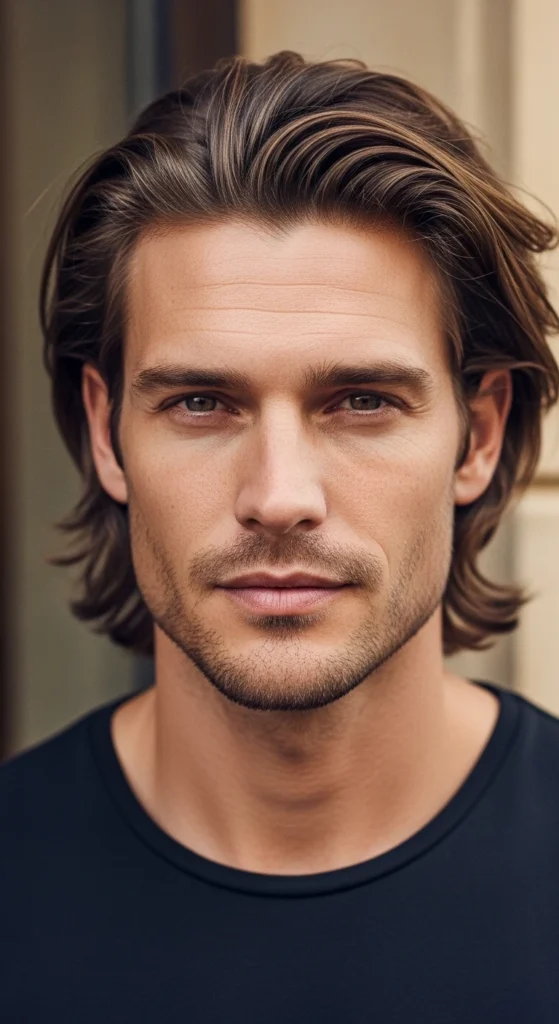
Hair parts down the center and flows to each side. Creates symmetry and frames the face evenly.
- Best for: Balanced, symmetrical looks
- Hair type: Straight or wavy with even growth
- Face shape: Oval, square, and diamond
- Barber notes: Even layers on both sides
- Product: Light cream for control
- Maintenance: Low—natural part does the work
7. Side Part Bro Flow
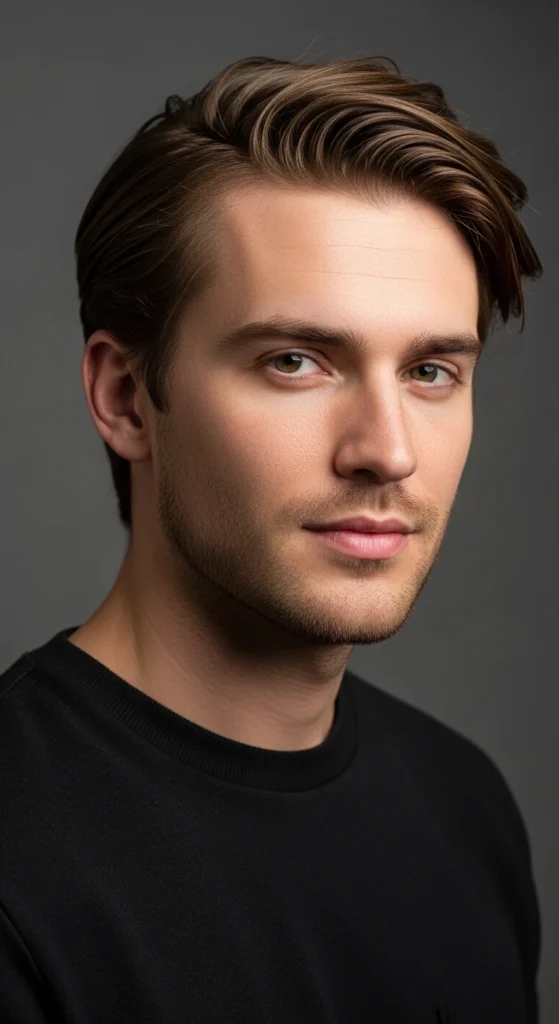
A defined side part adds structure and sophistication. More polished than center parts, office-friendly.
- Best for: Professional settings, formal events
- Hair type: Straight to slightly wavy
- Face shape: Oval and rectangular
- Barber notes: Create natural part line, blend layers
- Product: Light pomade for hold and shine
- Maintenance: Medium—needs daily styling
Hair-Type Specific Styles
8. Wavy Bro Flow
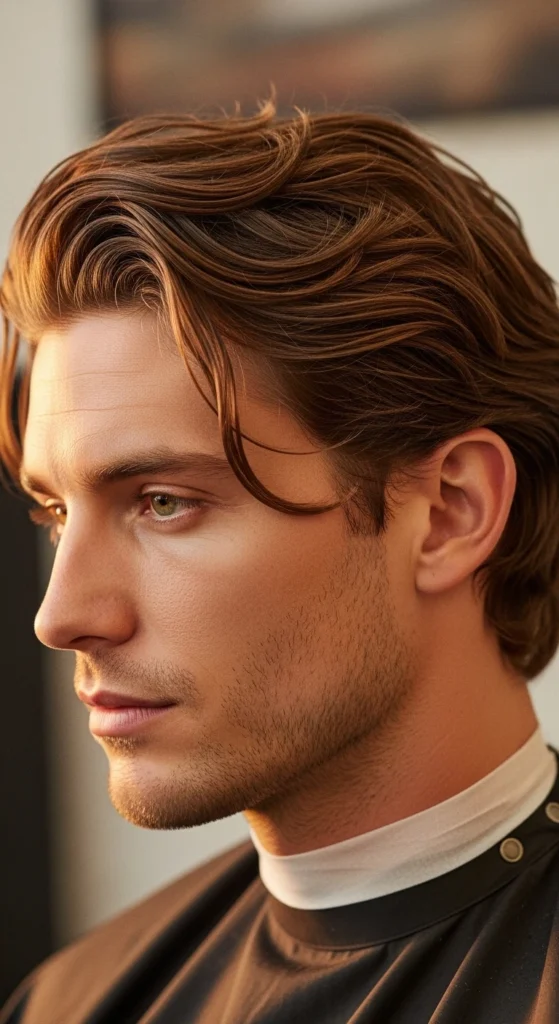
Embraces natural waves for effortless texture and movement. The waves create built-in volume and interest.
- Best for: Showcasing natural wave pattern
- Hair type: Naturally wavy hair
- Face shape: All shapes—waves soften angles
- Barber notes: Layers that enhance wave pattern
- Product: Sea salt spray or light mousse
- Maintenance: Low—waves do the styling work
9. Curly Bro Flow
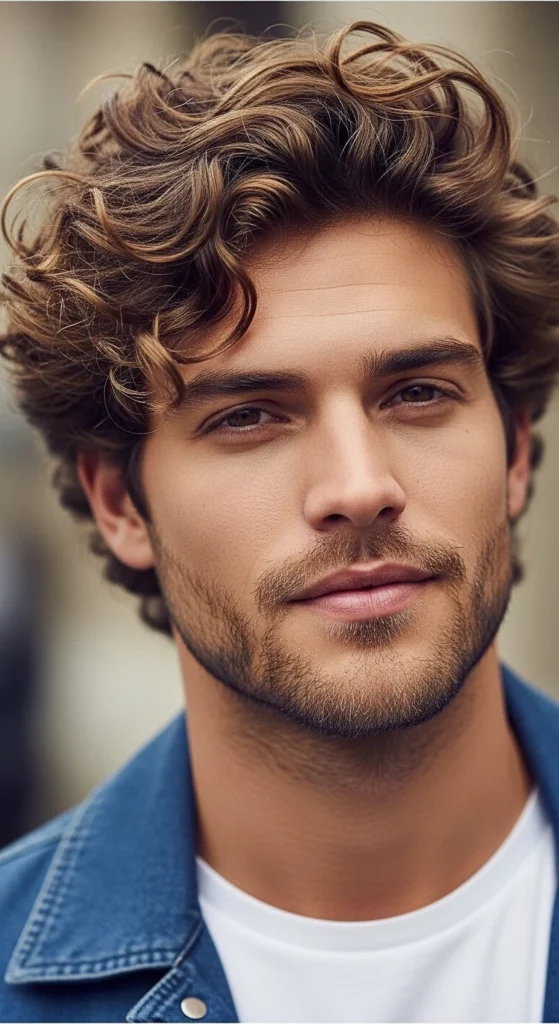
Works with natural curls instead of fighting them. Requires proper layering and moisture management.
- Best for: Men with curly hair wanting flow
- Hair type: Naturally curly or coiled
- Face shape: Square and oval
- Barber notes: Layers for curl definition, reduce bulk
- Product: Curl cream or leave-in conditioner
- Maintenance: Medium—hydration is essential
10. Straight Hair Bro Flow
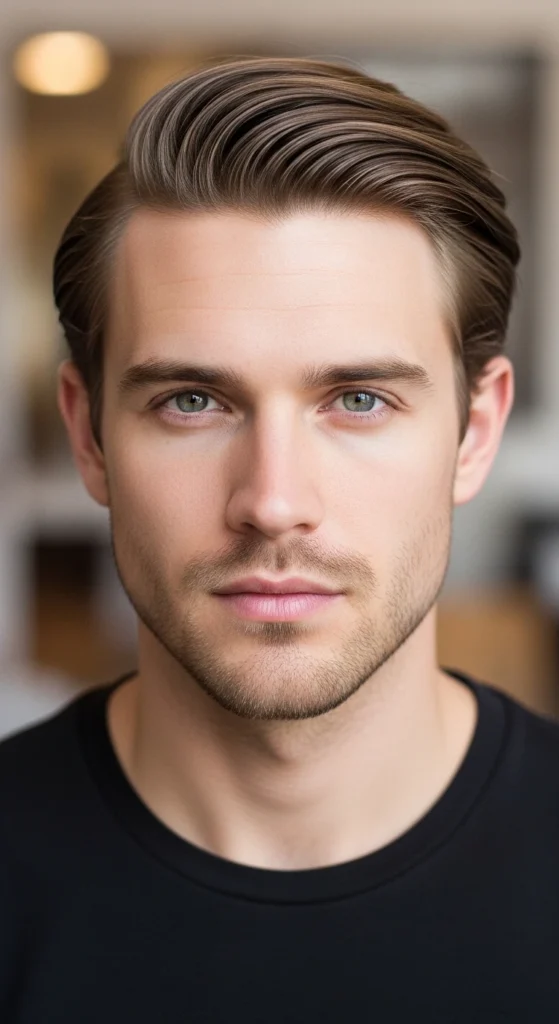
Maximizes flow potential with straight hair through strategic layering and volume-building techniques1.
- Best for: Clean, sleek flow appearance
- Hair type: Naturally straight
- Face shape: All shapes
- Barber notes: Layers for movement, avoid one-length
- Product: Volumizing mousse, root lifter
- Maintenance: Medium—needs blow-dry for body
Fade and Taper Combinations
11. Bro Flow with Taper
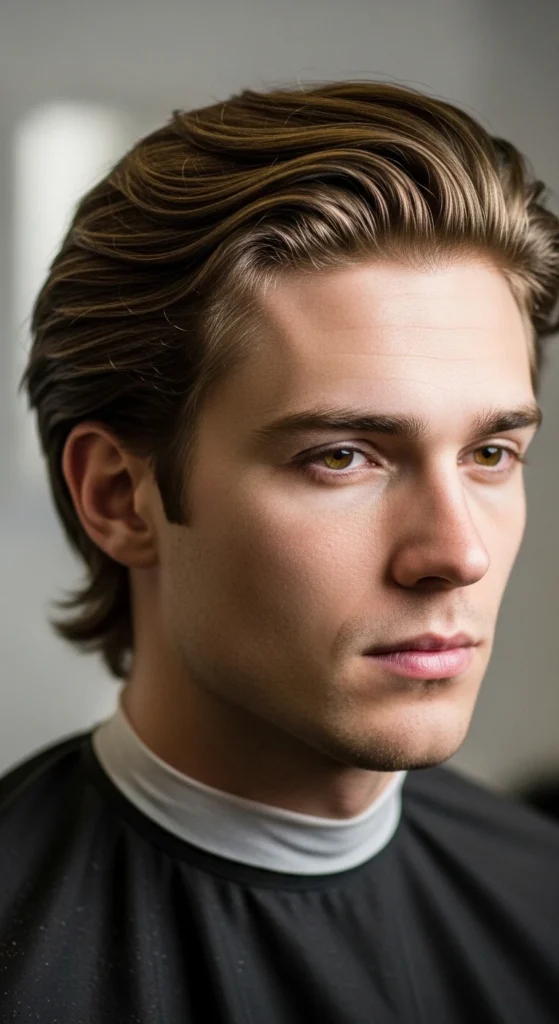
Adds a gentle taper around ears and neckline while keeping the flowing top. Cleaner than classic but still relaxed.
- Best for: Balanced modern look
- Hair type: All types
- Face shape: All shapes
- Barber notes: Low taper, blend into top length
- Product: Styling cream
- Maintenance: Medium—taper needs touch-ups
12. Mid Taper Flow Haircut
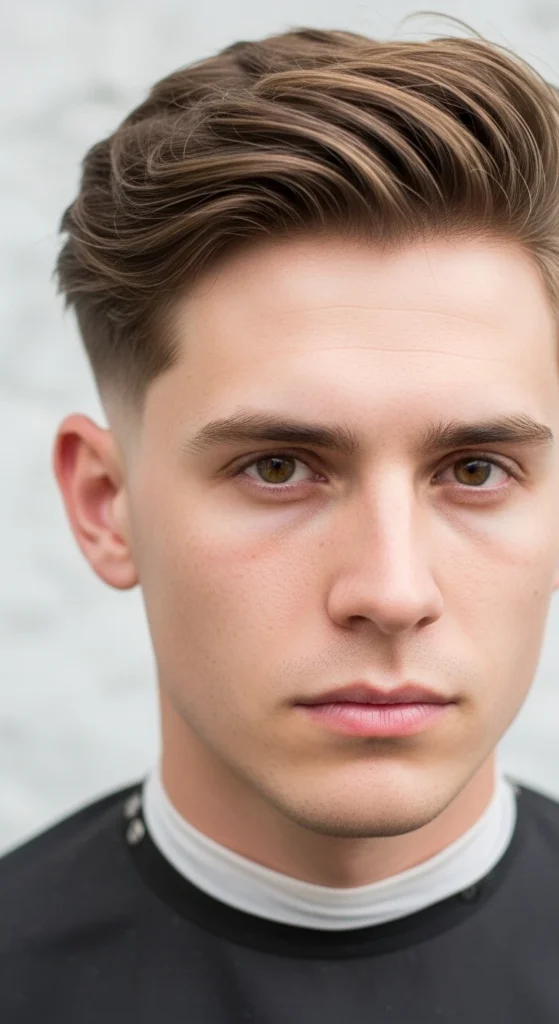
The mid taper flow features a gradual fade at mid-ear level that blends into longer flowing hair on top.
- Best for: Sharp yet relaxed appearance
- Hair type: Straight to wavy
- Face shape: Oval, square, and rectangular
- Barber notes: Mid-level taper, seamless blend
- Product: Light pomade or cream
- Maintenance: Medium-high—taper needs regular trims
13. Flow Haircut with Fade
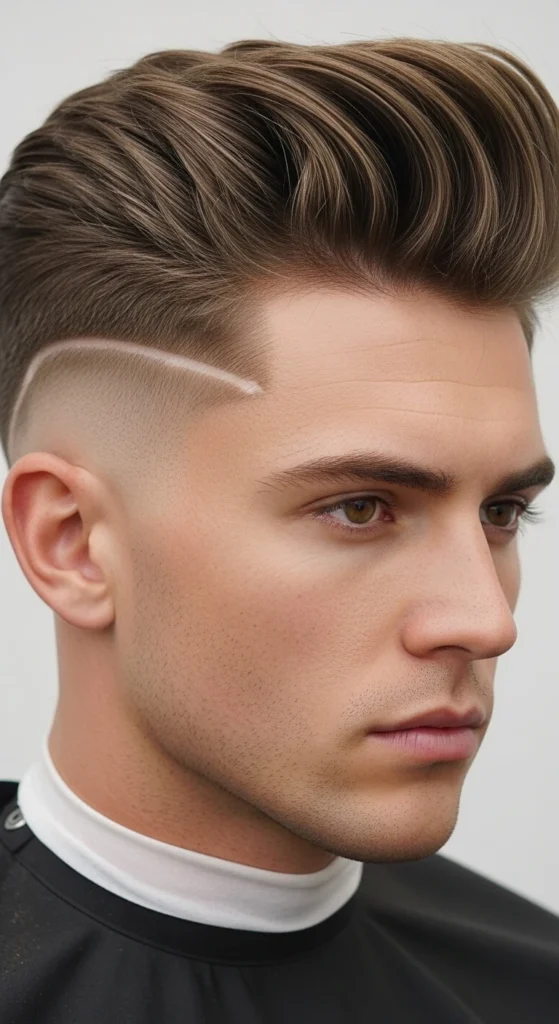
A more dramatic contrast between short faded sides and flowing top. Creates modern edge while keeping the flow.
- Best for: Statement-making, trendy look
- Hair type: Straight or wavy (curly works too)
- Face shape: All shapes
- Barber notes: Skin or low fade, longer disconnected top
- Product: Pomade or styling cream
- Maintenance: High—fade needs weekly touch-ups
14. Undercut Bro Flow
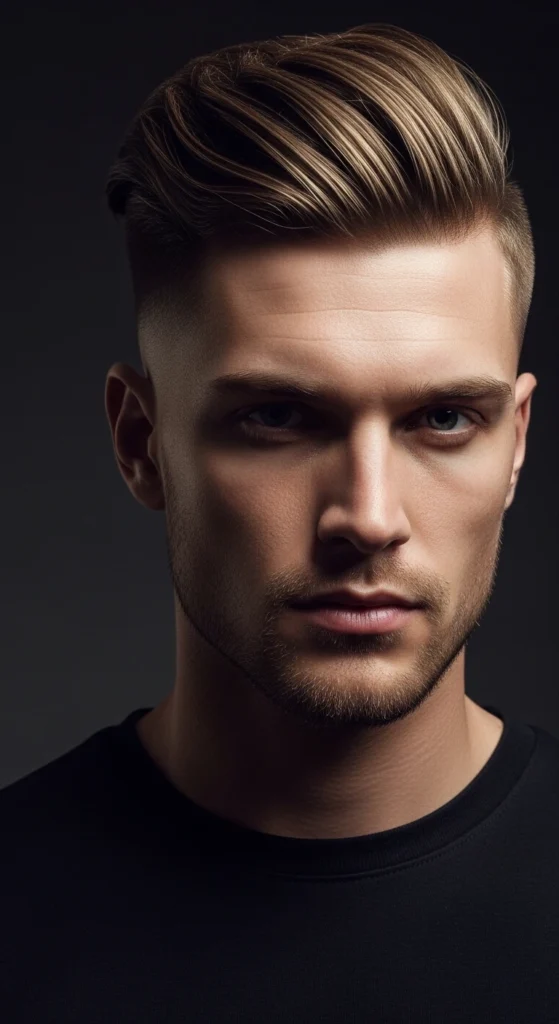
Dramatic contrast with shaved or very short sides and long flowing top. Bold and eye-catching.
- Best for: Maximum impact, creative expression
- Hair type: Straight to wavy
- Face shape: Oval and square
- Barber notes: Disconnected undercut, long top
- Product: Pomade for slick finish or cream for natural
- Maintenance: High—undercut needs frequent trims
Length-Based Styles
15. Short Flow Haircut
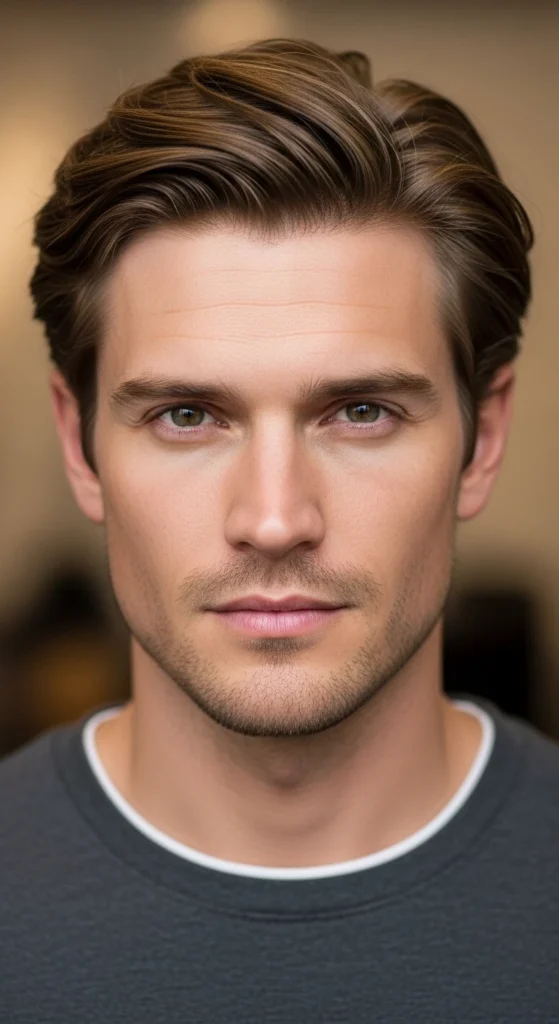
The conservative, professional-friendly flow. Hair just reaches past ears with controlled shape.
- Best for: Office environments, clean look
- Hair type: All types
- Face shape: All shapes
- Barber notes: Shorter layers, clean outline
- Product: Light cream or mousse
- Maintenance: Low-medium—easy to manage
16. Medium Length Bro Flow Haircut
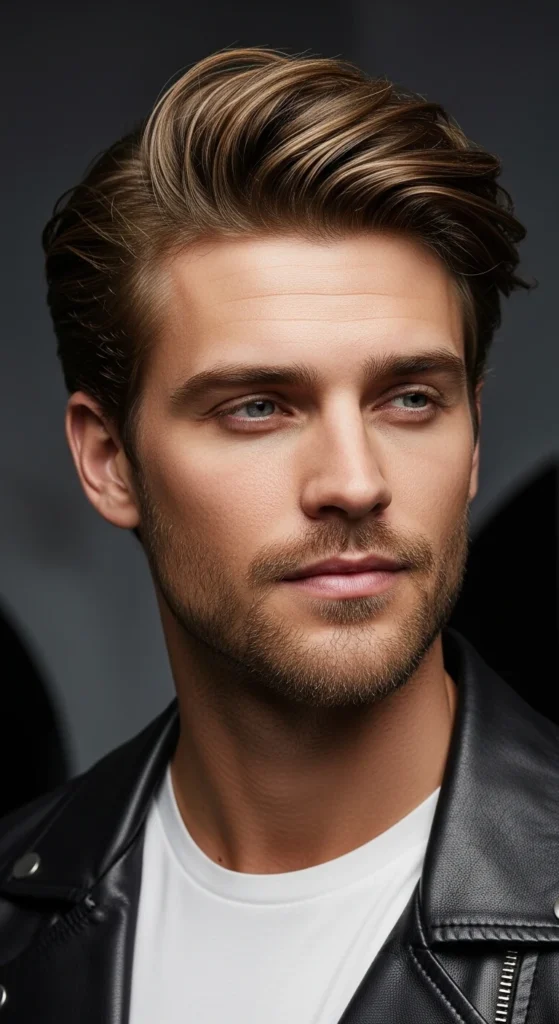
The most versatile option. Hair reaches nape of neck with room for styling flexibility.
- Best for: Maximum versatility
- Hair type: All types
- Face shape: All shapes
- Barber notes: Medium layers, natural neckline
- Product: Varies by preference
- Maintenance: Medium—sweet spot for effort vs. impact
17. Long Bro Flow
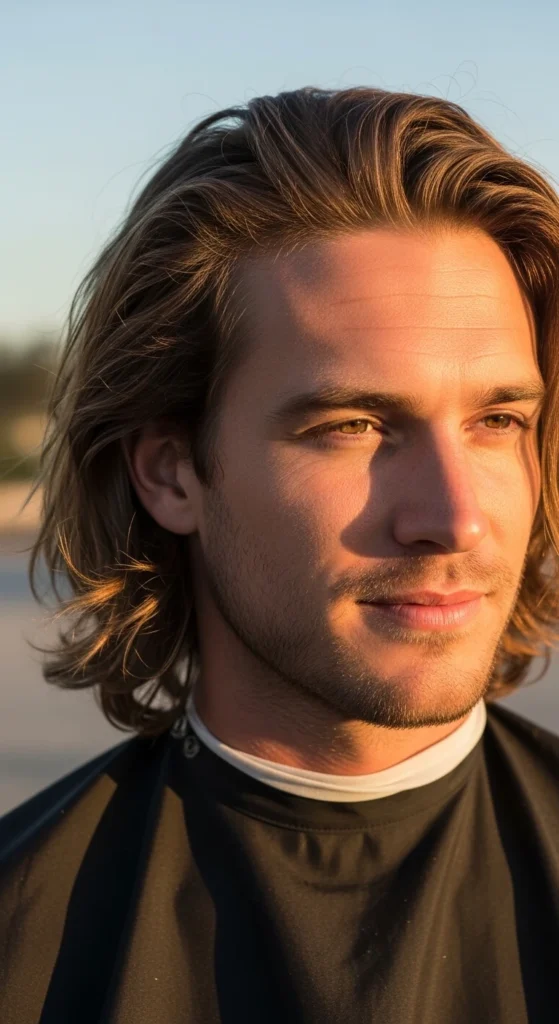
Hair reaches collar or shoulders. More dramatic and requires commitment to length and care.
- Best for: Making a statement
- Hair type: Thick or wavy hair handles it best
- Face shape: Oval and heart
- Barber notes: Long layers, regular conditioning
- Product: Leave-in conditioner, light cream
- Maintenance: High—requires more washing and conditioning
Sport-Culture Styles
18. Hockey Flow
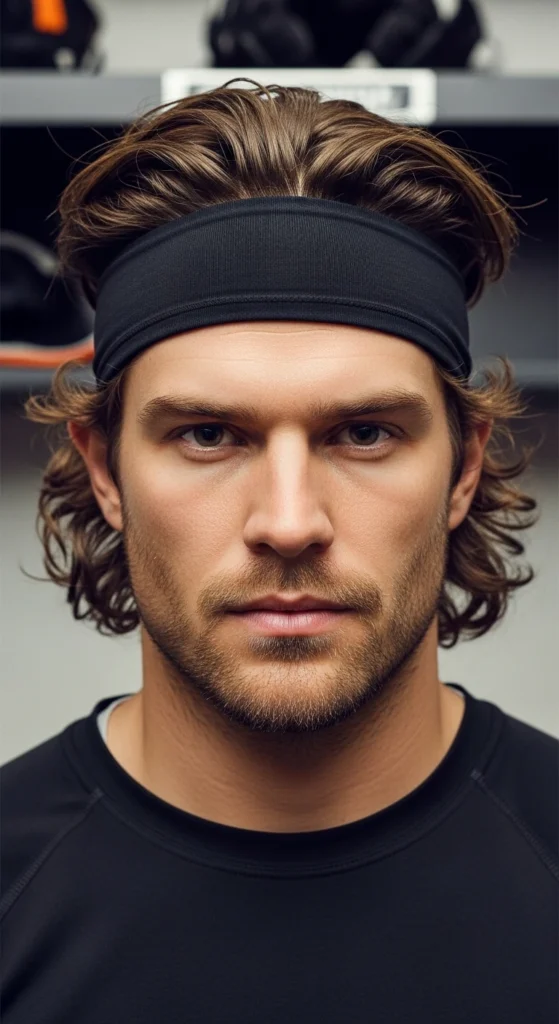
The athlete-inspired flow popular among hockey players. Hair tucked under helmet, released to flow after games.
- Best for: Athletes, sporty aesthetic
- Hair type: All types
- Face shape: All shapes
- Barber notes: Functional length for helmet wear
- Product: Whatever survives helmet sweat
- Maintenance: Medium—functional over fashionable
19. Lacrosse Flow Haircut
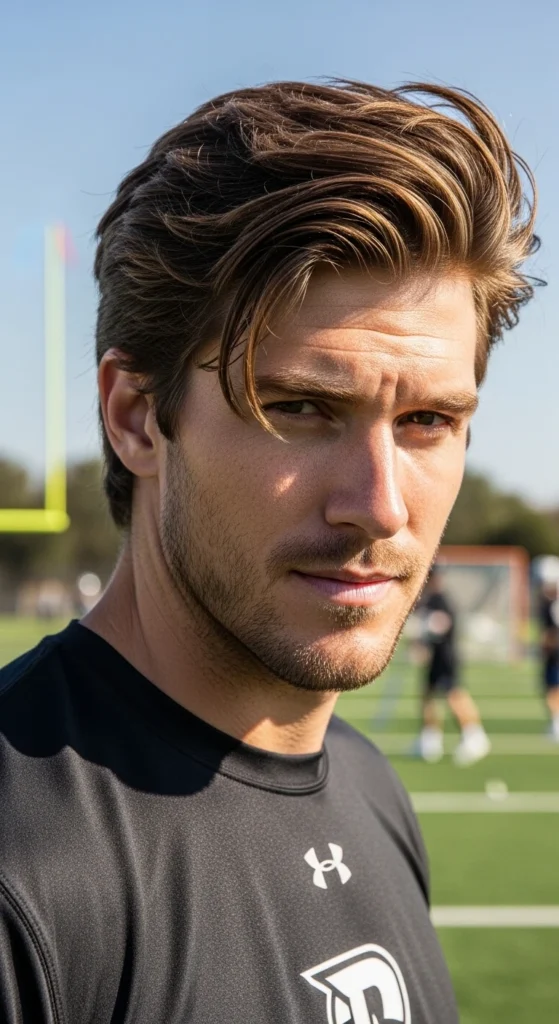
Similar to hockey flow but often slightly longer and messier. Part of lacrosse culture and identity7.
- Best for: Lacrosse players, athletic look
- Hair type: All types
- Face shape: All shapes
- Barber notes: Longer, free-flowing layers
- Product: Light hold that survives activity
- Maintenance: Low-medium—embraces natural messiness
20. Baseball Flow Haircut
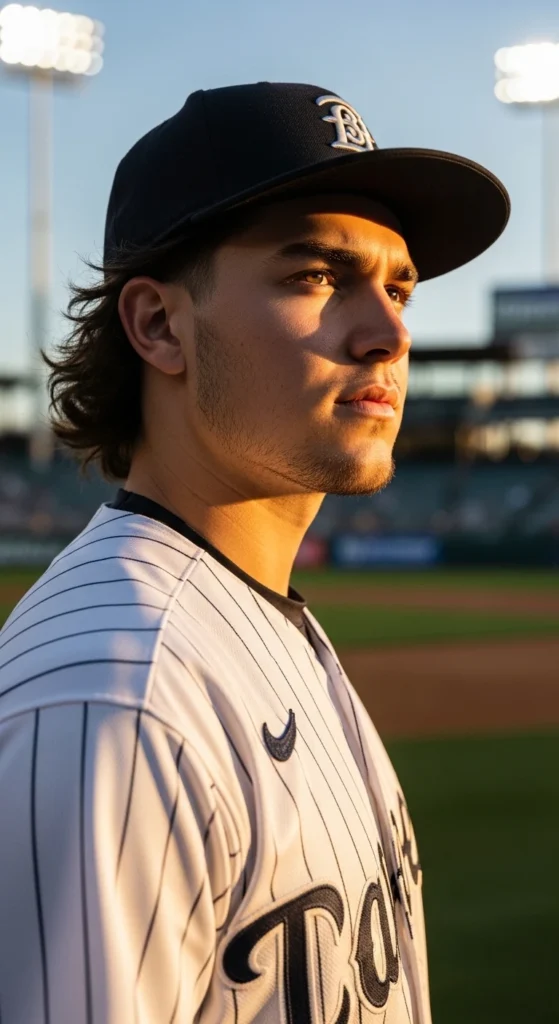
Medium-length layers styled with natural flow, designed to work with baseball caps.
- Best for: Baseball players, cap wearers
- Hair type: Straight to wavy
- Face shape: All shapes
- Barber notes: Layers that reset after hat removal
- Product: Texture clay for flexible hold
- Maintenance: Low—hat-friendly styling
How long does hair need to be?
Your hair should be at least 4 inches on top to start seeing the “flow” effect. The ideal length ranges from 4 to 8 inches, depending on whether you want a short, medium, or long bro flow.
How do I ask my barber for a bro flow?
Ask for “medium-length layers with natural flow and movement.” Bring 2-3 reference photos showing front, side, and back views. Mention you want soft layers, not heavy or blunt cuts.
Is the bro flow haircut still in style in 2026?
Yes. The flow haircut remains popular in 2026, especially with added texture and soft tapering around the ears and neckline. It continues to appear in current hairstyle guides as a go-to look for men who want relaxed confidence.
Is the Bro Flow Still in Style? (2026 Update)
Yes, the bro flow remains popular in 2026.
The flow haircut continues to be a top choice for men who want a relaxed, confident look. Current trends show a shift toward:
- More texture and layers instead of heavy, uniform length
- Soft tapers around the ears and neckline for a cleaner shape
- Natural finishes using lightweight products instead of heavy gels
What makes it look modern in 2026:
| Old Approach | 2026 Approach |
| Heavy, one-length hair | Layered, textured movement |
| Greasy, slicked-back finish | Light, natural hold |
| No shape at sides | Gentle taper for cleaner outline |
| Overly long, untamed | Controlled length with intentional shape |
Celebrities and athletes continue to wear variations of the bro flow, keeping it relevant across different style preferences.
Who Should Get a Bro Flow?
The bro flow works for most men, but some hair types and face shapes make it easier to achieve.
Best Hair Types for Bro Flow
Wavy hair is the easiest match. Natural waves add volume and movement without extra effort. The hair falls into place with minimal styling.
Straight hair works well too, but you’ll need layers to prevent flatness. A round brush and blow dryer help add lift and shape.
Curly hair can look great with a bro flow, but requires proper layering to control bulk. Moisture is key—dry curls puff up instead of flowing.
Fine or thin hair is trickier. You’ll need volumizing products and strategic layering. Heavy products weigh down fine hair, so stick with lightweight mousses or sprays.
Thick hair handles the bro flow easily. The natural volume creates fullness without much work. Light texturizing products help control the shape.
Best Face Shapes
| Face Shape | How Bro Flow Helps |
| Oval | Works with almost any length or variation |
| Square | Softens strong jaw angles |
| Rectangle | Adds width and balances length |
| Heart | Frames forehead, adds balance at jaw |
| Round | Adds height on top, creates length |
Lifestyle Fit
For the office: Keep the neckline and area around ears clean. Use controlled products for a polished finish. A well-maintained bro flow looks professional.
For active guys: The style handles sweat and hats well. After workouts, a quick water splash and light product resets the flow easily.
For low-maintenance guys: Once grown out, the bro flow needs only basic daily styling. Skip days are forgiving—the messy look is part of the appeal.
Bro Flow Hair Length Guide
Understanding length helps you communicate with your barber and set realistic expectations.
Minimum Length to Start
You need at least 3-4 inches on top before hair starts “flowing” backward. Below this length, hair sticks up or out instead of sweeping back.
At the minimum starting point, expect:
- Hair barely reaching past the ears
- Some pieces are still poking out
- Limited styling options
- Foundation for growth, not the final look
The Three Main Length Ranges
Short Bro Flow (3-4 inches)
- Conservative, work-friendly version
- Hair brushes back but doesn’t reach collar
- Easier to maintain, grows out gracefully
- Good starting point before committing to longer lengths
Medium Length Bro Flow (4-6 inches)
- The “sweet spot” for most men
- Hair reaches past ears, touches nape of neck
- Maximum versatility—can style slicked back, messy, or natural
- Balances flow with manageability
Long Bro Flow (6-8+ inches)
- Hair reaches collar or shoulders
- More dramatic, statement-making look
- Requires more maintenance and conditioning
- Best for thick or wavy hair that handles length well
What to Trim While Growing
As you grow out a bro flow, certain areas need regular cleanup to avoid looking messy:
- Neckline: Keep it clean and natural (not boxed or squared)
- Around ears: Trim stray hairs that stick out awkwardly
- Sideburns: Maintain neat edges
- Split ends: Light dusting every 6-8 weeks
Do not thin the top or cut layers too short during the growing phase. You need that length for the flow effect.
How to Ask Your Barber for a Bro Flow
This section solves one of the biggest frustrations: getting the cut you actually want.
The Exact Script (Copy and Use)
Walk into your barber shop and say:
“I want a medium-length bro flow that sweeps back off my face. Keep it scissor-cut with soft layers for movement. I don’t want a hard fade—just a gentle taper around the neckline and ears. Leave enough length on top so it flows naturally backward.”
Adjust based on your preference:
- For shorter flow: “Keep it conservative—just past the ears”
- For longer flow: “I’m growing it out, so keep maximum length”
- For more texture: “Add some choppy layers for movement”
- For cleaner look: “Tighter taper around the ears, please”
Cut Specifications (Barber-Facing Details)
Top and crown:
- Soft, blended layers for natural movement
- No heavy thinning (removes volume you need)
- Cut with scissors, not clippers
- Maintain length for backward flow
Sides:
- Keep length—don’t disconnect from top
- Optional: mid taper flow haircut with gradual fade
- Blend naturally into top layers
- Allow hair to tuck behind ears
Back and neckline:
- Natural, rounded neckline (not squared or boxy)
- Soft taper that blends with flow
- Avoid harsh lines unless specifically requested
What NOT to Ask For
These common requests ruin the bro flow look:
- “Thin it out a lot” — Removes the volume needed for flow
- “High fade on the sides” — Creates disconnect, kills the flow effect
- “Make it really layered” — Over-layering causes wispy, thin ends
- “Cut it all one length” — No movement, looks heavy and flat
Bring Reference Photos
Pictures communicate better than words. Bring:
- One front-view photo showing how hair falls around face
- One side-view photo showing length and ear coverage
- One back-view photo showing neckline and overall shape
Choose photos of men with similar hair texture to yours. A wavy-haired reference won’t work if you have straight hair.
How to Grow a Bro Flow (Timeline + Awkward Phase Survival)
Growing out a bro flow takes patience. Here’s what to expect and how to survive the awkward stages.
Realistic Growth Timeline
Hair grows about half an inch per month on average. Here’s a typical timeline starting from a short haircut:
| Month | What to Expect |
| Month 1-2 | Hair starts covering forehead, ears still visible |
| Month 3-4 | Awkward phase begins—hair sticks out, won’t lay flat |
| Month 5-6 | Hair reaches ears, starting to show direction |
| Month 7-8 | Flow starts forming, can brush back with product |
| Month 9-10 | True bro flow achieved, hair flows naturally |
Total time: 6-10 months depending on your starting length and hair growth rate.
Surviving the Awkward Phase (Months 3-6)
The awkward phase is real. Your hair will:
- Stick out at weird angles
- Refuse to stay down
- Look neither short nor long
- Make you want to quit
How to get through it:
Use hats and beanies — They hide awkward length and train hair to lay backward
Get strategic trims — Clean up neckline and around ears without losing top length
Try styling products — A strong-hold product can temporarily tame rebellious hair
Use headbands — Athletic headbands push hair back and train it to flow
Be patient — Everyone goes through this phase. It ends.
What NOT to do:
- Don’t cut the top shorter (you’ll restart the process)
- Don’t thin out hair (you need that volume)
- Don’t give up at month 3 (the worst is almost over)
Training Hair to Flow Backward
Hair has memory. You can train it to fall in your preferred direction:
- After every shower, brush or comb hair straight back while wet
- Blow dry in the desired direction using fingers or a brush
- Sleep with hair brushed back (use a silk pillowcase to reduce friction)
- Throughout the day, push hair back with your hands instead of to the sides
- Use light product to hold hair in place while it learns the pattern
After a few weeks, hair naturally falls backward with less effort.
How to Style a Bro Flow (Daily Routine)
A simple daily routine keeps your bro flow looking good with minimal effort.
Step 1: Wash Routine
How often to wash:
- Thick or oily hair: Every day or every other day
- Normal hair: Every 2-3 days
- Dry or curly hair: Every 3-4 days (or less)
Washing tips:
- Use a lightweight, volumizing shampoo
- Focus shampoo on scalp, not ends
- Always condition the ends to prevent dryness
- Rinse with cool water to reduce frizz
Avoid:
- Heavy, moisturizing shampoos (weigh hair down)
- Skipping conditioner (causes tangling and breakage)
- Hot water (dries out hair, increases frizz)
Step 2: Drying Options
Option A: Air Dry (Natural Finish)
Best for wavy or curly hair that needs minimal manipulation:
- Gently squeeze excess water with a towel (don’t rub)
- Apply light product to damp hair
- Brush or finger-comb hair backward
- Let dry naturally
- Adjust shape with fingers once dry
Option B: Blow Dry (More Volume and Control)
Best for straight or fine hair that needs lift:
- Towel dry until hair is damp, not dripping
- Apply volumizing mousse or light cream
- Set blow dryer to medium heat
- Direct airflow backward while brushing hair back
- Use a round brush for extra lift at roots (optional)
- Finish with cool shot to set the style
- Apply finishing product if needed
Step 3: How to Comb a Bro Flow
Proper combing preserves texture while controlling shape:
For natural texture:
- Use fingers to comb hair backward
- Work from front hairline toward crown
- Gently separate strands, don’t smooth flat
For more control:
- Use a wide-tooth comb on damp hair
- Comb straight back from forehead
- Follow with fingers to break up comb lines
For stubborn areas:
- Apply small amount of product to problem spots
- Use a brush to direct hair in place
- Hold briefly while product sets
Avoid:
- Fine-tooth combs (create too-smooth, helmet look)
- Brushing dry hair aggressively (causes frizz and breakage)
- Over-combing (removes natural texture)
Best Hair Products for Men’s Bro Flow
Choosing the right bro flow hair products depends on your hair type. Here’s what works best:
Products for Fine or Straight Hair
Fine hair needs volume without weight. Heavy products make it look greasy and flat.
Best products:
- Volumizing mousse — Adds lift at roots without heaviness
- Thickening spray — Creates illusion of fuller hair
- Light styling cream — Provides shape without grease
- Root lifting spray — Targets volume where you need it most
Avoid: Heavy pomades, oils, thick creams
Products for Wavy Hair
Wavy hair benefits from products that enhance natural texture without flattening waves.
Best products:
- Sea salt spray — Enhances waves, adds beachy texture
- Texture spray — Builds grip and movement
- Light styling cream — Defines waves while keeping them soft
- Mousse — Adds hold without crunch
Avoid: Heavy gels, slicking products, anything that creates stiffness
Products for Curly Hair
Curly hair needs moisture and definition. Dry curls puff up instead of flowing.
Best products:
- Curl cream — Defines curls while adding moisture
- Leave-in conditioner — Keeps curls hydrated all day
- Light gel — Provides hold without crunch (scrunch out the crunch when dry)
- Anti-frizz serum — Controls flyaways in humidity
Avoid: Products with alcohol (drying), heavy waxes
Products for Thick or Coarse Hair
Thick hair needs control without crunchiness. The goal is smooth, flowing movement.
Best products:
- Leave-in conditioner — Softens and smooths
- Light oil (small amount) — Adds shine, reduces frizz
- Smoothing cream — Controls bulk while keeping natural movement
- Molding paste — Provides flexible hold
Avoid: Light mousses (not enough hold), volumizing products (you have enough volume)
Common Product Mistakes to Avoid
| Mistake | Why It Ruins Your Flow |
| Using too much product | Creates greasy, heavy appearance |
| Heavy pomades on fine hair | Flattens volume, looks oily |
| Skipping product entirely | No control, frizzy mess |
| Using gel for natural look | Creates stiff, crunchy texture |
| Applying to soaking wet hair | Dilutes product, no hold |
Golden rule: Start with a small amount. You can always add more, but you can’t remove excess without washing.
Bro Flow Maintenance Schedule
Keeping your bro flow looking good requires simple, regular maintenance.
Trim Schedule
| Task | Frequency | Purpose |
| Full haircut/shaping | Every 8-10 weeks | Maintains overall shape and layers |
| Neckline cleanup | Every 3-4 weeks | Keeps back looking neat |
| Around ears trim | Every 3-4 weeks | Removes awkward strays |
| Split end trim | Every 6-8 weeks | Prevents breakage and frizz |
Weekly Care
- Deep condition once per week (especially for medium-to-long lengths)
- Check for split ends and trim if needed
- Clean styling tools (brushes, combs) to remove product buildup
Daily Habits
- Don’t over-wash — Strips natural oils, causes dryness
- Use heat protectant before blow drying
- Sleep on silk or satin pillowcase — Reduces friction and breakage
- Avoid touching hair constantly — Transfers oil from hands
Bro Flow Troubleshooting Guide
Real problems. Real fixes.
Problem: Hair Looks Flat
Why it happens:
- Fine or straight hair lacks natural volume
- Heavy products weigh hair down
- Over-conditioning makes hair limp
How to fix it:
- Switch to volumizing shampoo and skip conditioner on roots
- Use mousse instead of cream or pomade
- Blow dry with head upside down for root lift
- Ask barber for more layers to create movement
Problem: Hair Puffs Up Instead of Flowing
Why it happens:
- Hair is too dry
- Rough towel drying causes frizz
- Wrong products for your hair type
How to fix it:
- Add moisture with leave-in conditioner
- Pat hair dry gently instead of rubbing
- Use anti-frizz serum
- Try overnight hair training with a light product
Problem: Hair Gets Frizzy
Why it happens:
- Humidity
- Lack of moisture in hair
- Heat damage from styling
How to fix it:
- Use hydrating products (leave-in conditioner, curl cream)
- Apply anti-humidity spray or serum
- Reduce heat styling frequency
- Deep condition weekly
Problem: Hair Splits Weird in the Middle
Why it happens:
- Natural cowlick or growth pattern
- Fighting your hair’s natural part
- Uneven weight distribution
How to fix it:
- Work with your natural part instead of against it
- Ask barber to adjust layers to control split direction
- Train hair gradually toward desired direction
- Use stronger hold product on problem areas
Problem: Hair Looks Greasy
Why it happens:
- Too much product
- Not washing enough
- Heavy products wrong for your hair type
How to fix it:
- Use half the amount of product you normally use
- Wash more frequently or use dry shampoo between washes
- Switch to lighter products (mousse, spray instead of cream, pomade)
- Apply product to ends only, not roots
Problem: Sides Stick Out (Wing Effect)
Why it happens:
- Hair at ears reaches awkward length
- Lack of weight to hold it down
- Natural growth pattern pushes outward
How to fix it:
- Grow through it—longer length will lay flat
- Ask barber for light layering around ears
- Use product to smooth sides back
- Tuck hair behind ears until it’s long enough
Problem: Doesn’t Look Professional
Why it happens:
- Neckline and ear areas look unkempt
- Using wrong products (too messy or shiny)
- Lack of regular maintenance
How to fix it:
- Keep neckline and around ears trimmed clean
- Use matte or natural-finish products
- Style neatly with slight control instead of messy texture
- Consider a version with soft taper for cleaner outline
Bro Flow Celebrity Inspiration
These well-known figures have worn variations of the bro flow, showing its versatility across different occasions and personal styles:
- Chris Hemsworth — Classic medium-length flow with natural texture
- Timothée Chalamet — Textured curly flow with artistic edge
- Brad Pitt — Various flow lengths throughout his career
- Kit Harington — Curly, natural flow with rugged appeal
- Harry Styles — Modern, fashion-forward flow variations
- Leonardo DiCaprio (younger years) — Classic 90s bro flow
- Bradley Cooper — Swept-back textured flow
- Dev Patel — Longer, flowing curly style
Use these as visual references when explaining to your barber what you want.
Frequently Asked Questions
What is a bro flow haircut?
A bro flow haircut is a medium-to-long men’s hairstyle where hair naturally sweeps backward from the face. It features soft layers that create movement and flow, typically reaching past the ears. The style is known for its relaxed, effortless appearance that works for both casual and professional settings.
How do I ask for a bro flow?
Ask your barber for “medium-length layers with natural flow and backward movement.” Bring reference photos showing front, side, and back views. Mention you want soft layers, a natural neckline, and length that allows hair to flow back from your face.
How do I style a bro flow daily?
Start with damp hair after showering. Apply a light product like styling cream or mousse. Blow dry while directing hair backward with fingers or a brush. For a natural finish, air dry while brushing hair back occasionally. Finish by running fingers through for texture3.
How long does it take to grow a bro flow?
From a short haircut, expect 6-10 months to achieve a true bro flow. Hair grows about half an inch monthly. The awkward phase happens around months 3-5 when hair sticks out but isn’t long enough to flow properly.
Can I do a bro flow with thin or fine hair?
Yes, but it requires the right approach. Use volumizing products (mousse, root lifter) instead of heavy creams. Ask your barber for layers that create movement. Blow dry for extra lift. Avoid heavy products that weigh down fine hair.
What’s the difference between a bro flow and a curtain haircut?
A bro flow sweeps all hair backward off the face. A curtain haircut parts in the middle with hair falling to each side, framing the face like curtains. Both are medium-length styles, but the direction of flow differs.
Can I have a bro flow with a fade or taper?
Yes. A bro flow with taper keeps the flowing top while adding a gradual fade around ears and neckline for a cleaner outline. A mid taper flow haircut balances the relaxed top with a sharper side profile. Both work well for men wanting flow with added structure.
Final Points
The bro flow haircut gives men a relaxed, confident look that works across different hair types, face shapes, and lifestyles. Whether you choose a classic flow, textured variation, or fade combination, the key elements remain the same:
- Medium-to-long length that allows natural backward movement
- Soft layers that create flow without heaviness
- Light products that enhance texture without stiffness
- Regular maintenance that keeps shape without over-styling
Start by growing your hair out, survive the awkward phase, and work with your barber to find the variation that matches your hair type and personal style. The bro flow is forgiving—it looks good messy, styled, or anywhere in between.