

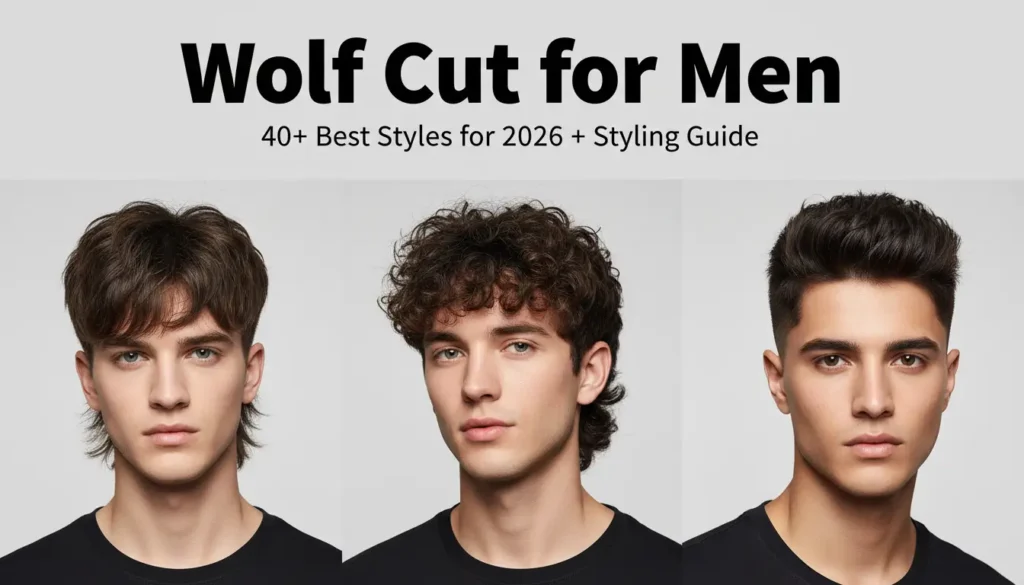
The wolf cut is a mix of two classic hairstyles—the mullet and the shag. It gives you choppy layers on top with longer, feathered hair at the back. The result? A textured, voluminous look that screams cool without trying too hard.
This hairstyle started in South Korea. K-pop idols like BTS’s Jungkook made it famous. Then TikTok picked it up. Now, men everywhere rock this edgy, rebellious cut.
The best part? It works on almost any hair type. Straight, wavy, curly—doesn’t matter. And it flatters most face shapes too.
In this guide, you’ll find 40+ wolf cut for men. Plus, you’ll learn how to ask your barber for the perfect cut, style it at home, and keep it looking fresh.
What Is a Wolf Cut?
A wolf cut blends two iconic 1970s and 1980s hairstyles into one modern look.
Think of it this way: Take the business-in-front, party-in-back vibe of a mullet. Mix it with the soft, feathered texture of a shag. What you get is a wolf cut.
Here’s what makes a wolf cut unique:
- Short, choppy layers at the crown — This creates volume and lift on top
- Longer, feathered layers at the back and sides — These flow naturally toward the nape
- Face-framing texture — Soft pieces around your face add definition
- Lived-in, messy finish — It looks intentionally undone
The wolf cut got its name because the final look resembles a wolf’s wild, untamed mane. It’s edgy. It’s bold. And it’s surprisingly easy to maintain.
Where did it come from?
The wolf cut started gaining traction in South Korea around 2020. K-pop stars and Korean drama actors wore it first. Then the pandemic hit. People started cutting their own hair at home. DIY wolf cuts went viral on TikTok.
By 2021, the trend exploded worldwide. Celebrities like Timothée Chalamet and Billie Eilish embraced variations of this style. Now it’s one of the most requested haircuts in barbershops everywhere.
Why do men love it?
- Works with your natural hair texture
- Low-maintenance styling
- Looks good whether you style it or not
- Suits almost every face shape
- Offers endless customization options
40+ Best Wolf Cut Styles for Men
Now let’s explore every wolf cut variation you can try. Each style includes who it’s best for, how to style it, and what vibe it gives off.
Below is the complete list of Classic Wolf Cut styles to help you choose your favorite look.
Classic Wolf Cut
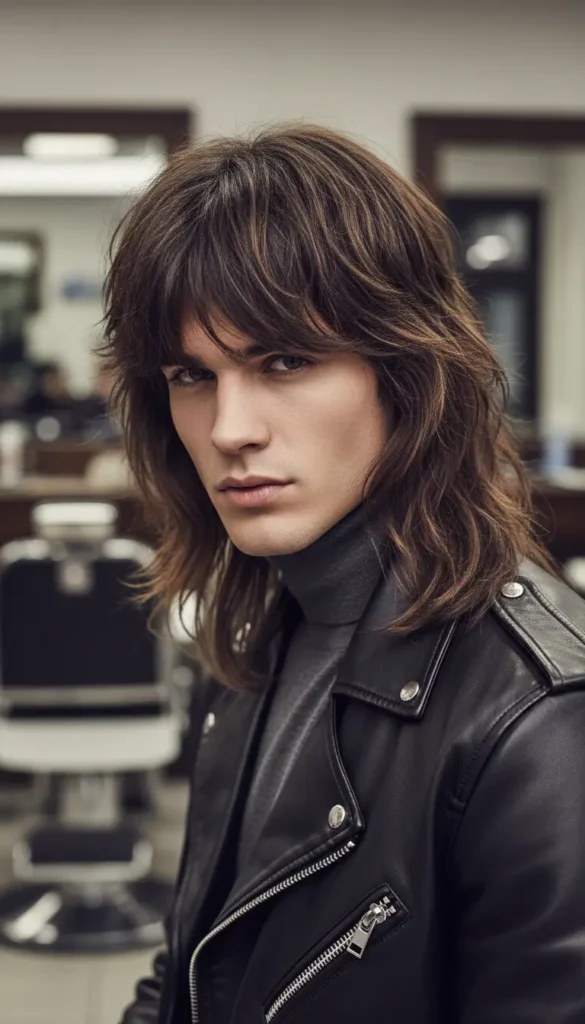
The classic wolf cut is where it all starts. It balances ’70s shag flow with ’80s mullet attitude.
You get heavy layers at the crown that create natural volume. The hair gradually lengthens toward the back and sides. The ends are feathered and soft.
- Best for: Thick or wavy hair
- Face shape: Oval, diamond, or heart
- How to style: Blow-dry with your fingers to lift the roots. Use texture spray for movement. Finish with styling cream to define the layers.
- Vibe: Rockstar nonchalance—effortlessly cool without looking like you tried
Full Wolf Cut
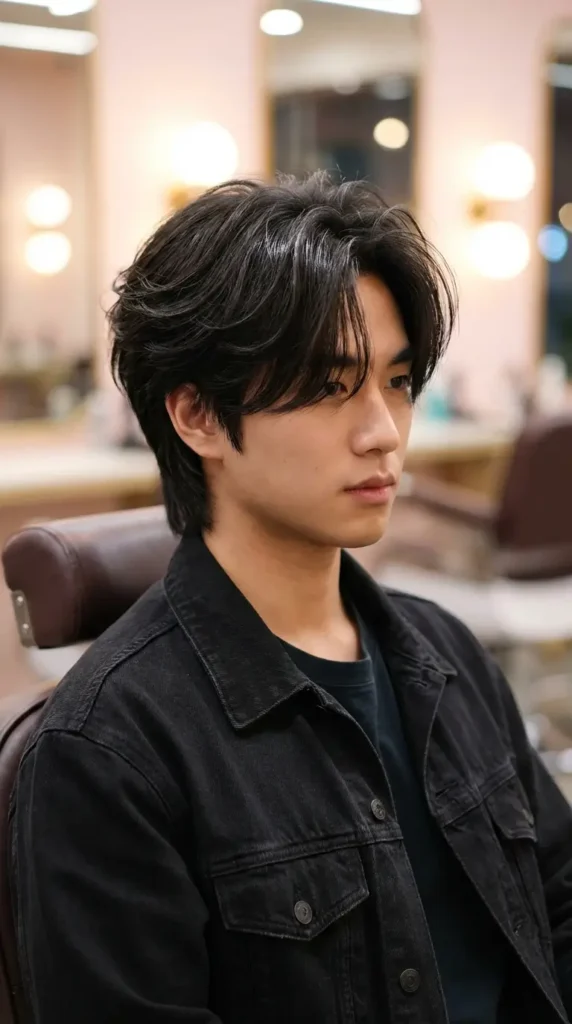
The full wolf cut is unapologetic. It’s maximum volume, maximum texture, maximum attitude.
This version uses aggressive layering throughout. Dense layers on top. Soft, wispy layers flowing down the neck. The contrast creates controlled chaos that turns heads.
- Best for: Thick or wavy hair
- Face shape: Angular faces (square, diamond)
- How to style: Apply sea salt spray to damp hair. Blow-dry while scrunching with your fingers. Finish with texture clay for definition.
- Vibe: Bold and rebellious—you mean business
Layered Wolf Cut
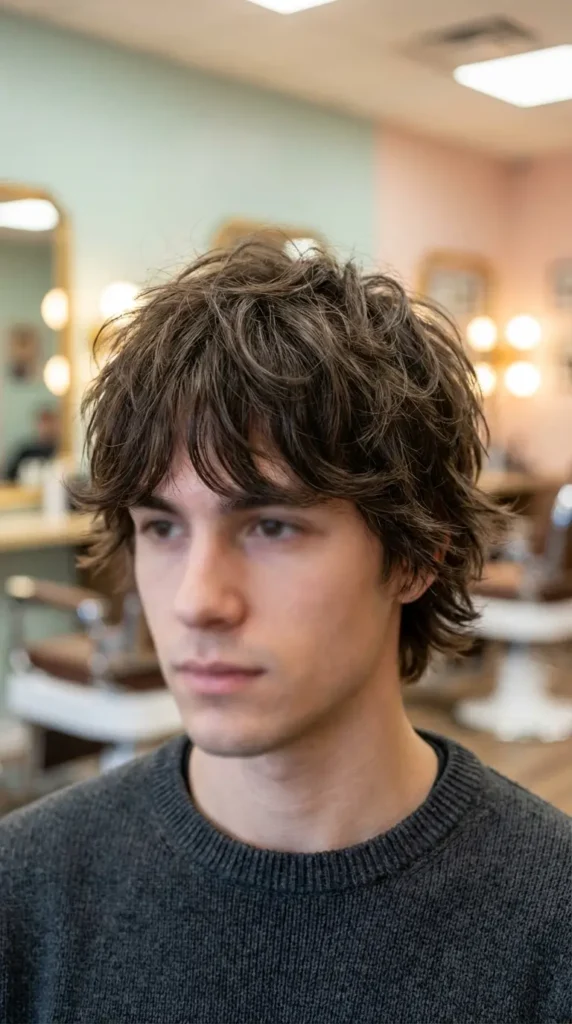
The layered wolf cut builds volume through strategic internal layering. It’s more polished than the messy versions but still has that signature wolf cut edge.
Feathered layers stack throughout the crown, sides, and nape. This creates natural lift and flow without looking too wild.
- Best for: All hair types
- Face shape: Oval, diamond, triangle
- How to style: Use a round brush while blow-drying. Apply texturizing clay for grip. Finish with leave-in conditioner on the ends.
- Vibe: Intentionally undone—professional enough for work, cool enough for the weekend
Below is the complete list of Wolf Cut styles by length to help you pick your favorite look.
Short Wolf Cut

The short wolf cut is perfect for men who want the wolf cut aesthetic without heavy commitment.
Layers stay cropped on top with feathered edges just above the neckline. It gives you movement and texture in a low-maintenance package.
- Best for: Straight or wavy hair
- Face shape: Round or square (the vertical layers elongate your face)
- How to style: Apply texture powder at the roots for lift. Use matte clay or wax through the ends for definition.
- Vibe: All edge, minimal effort—perfect for guys testing the trend
Medium Wolf Cut
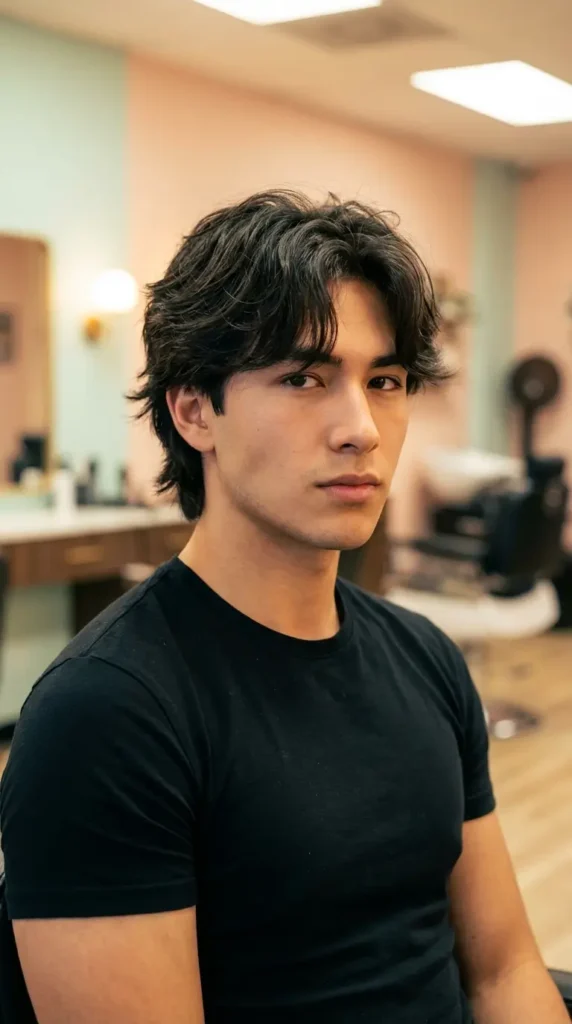
The medium wolf cut hits the sweet spot. Not too short, not too long. Maximum versatility.
You get enough length for visible layers and movement. But it’s still manageable for daily styling. The sides frame your face naturally.
- Best for: All hair types
- Face shape: All face shapes
- How to style: Blow-dry with a round brush for volume. Apply molding paste to shape. Set with light-hold hairspray.
- Vibe: Balanced cool—dress it up or down depending on the occasion
Long Wolf Cut
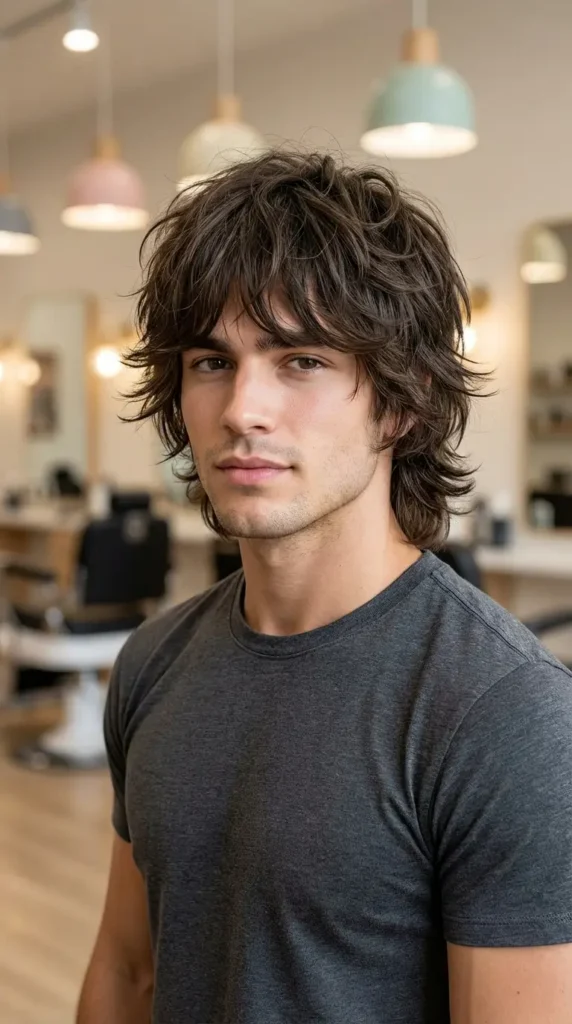
The long wolf cut is dramatic and expressive. Hair flows past the shoulders with heavy, choppy layers throughout.
This version maximizes movement. Every head turn creates flow. The top holds light volume while the length provides that rock-and-roll drama.
- Best for: Thick, wavy, or curly hair
- Face shape: Oval or oblong
- How to style: Use hydrating argan oil to smooth the ends. Apply sea salt spray for bounce. Let it air dry or diffuse.
- Maintenance: Trim every 8-10 weeks to keep the shape
- Vibe: Rebellious refinement—like you just stepped off a concert stage
Mini Wolf Cut (Pup Cut)
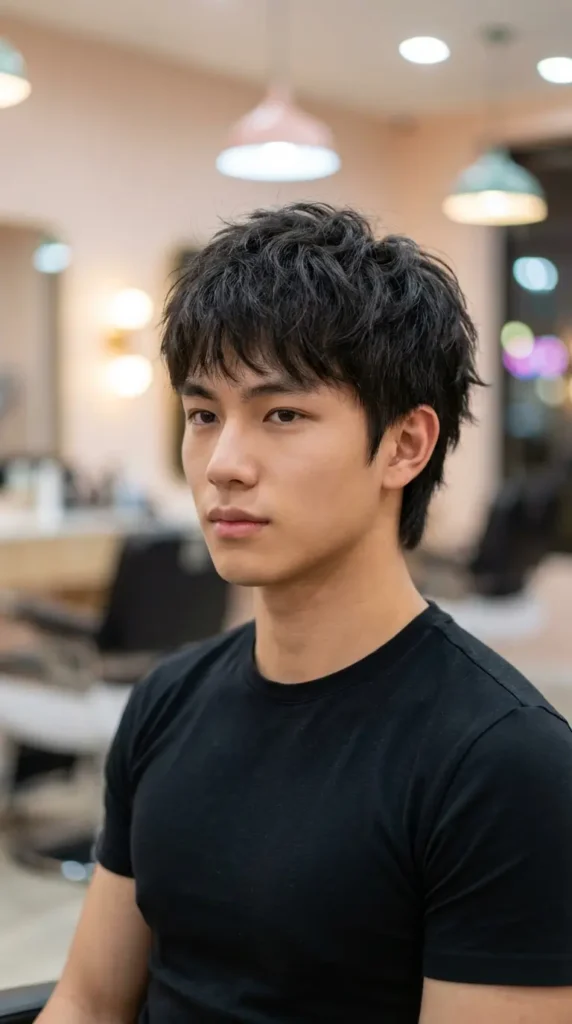
The mini wolf cut—sometimes called the pup cut—is the subtlest version. It’s a baby wolf cut for men who want just a hint of the trend.
Layers are short and close. The texture is there, but it’s understated. Perfect for professional environments where you can’t go too wild.
- Best for: Fine hair
- Face shape: All face shapes
- How to style: Just texture powder at the roots. That’s it. Super simple.
- Vibe: Subtle edge—professional with personality
Wolf Cut for Straight Hair
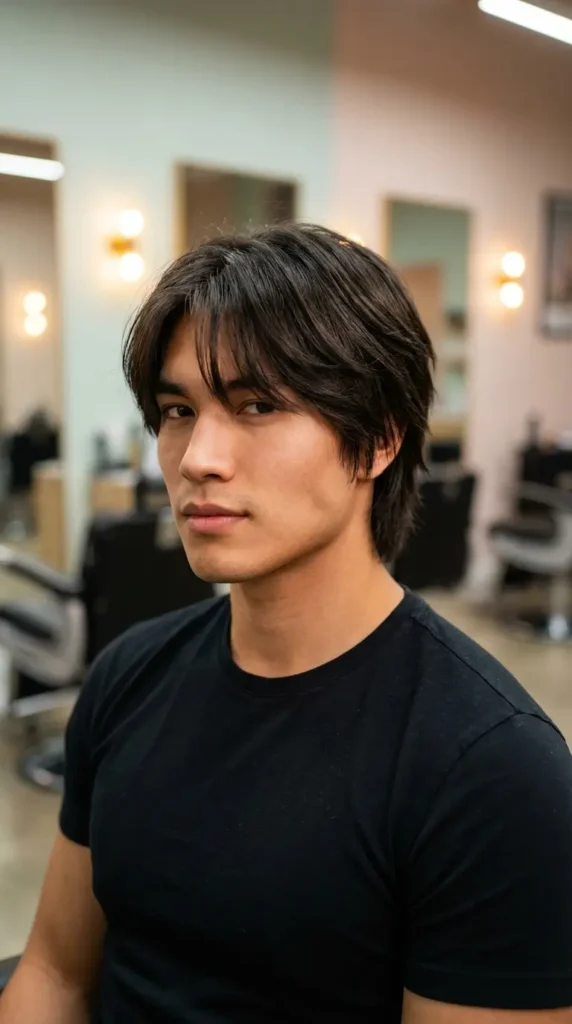
Straight hair can look flat without the right cut. The wolf cut fixes that.
Razor-cutting techniques add movement that scissors alone can’t create. Short layers near the crown give lift. Longer layers at the back prevent that helmet look.
- Best for: Straight or fine hair
- Face shape: All face shapes
- How to style: Texturizing spray is your best friend. Apply to damp hair, then blow-dry against the direction of growth for maximum lift. Finish with sea salt spray.
- Vibe: Defined edge—structured but not stiff
Wolf Cut for Wavy Hair
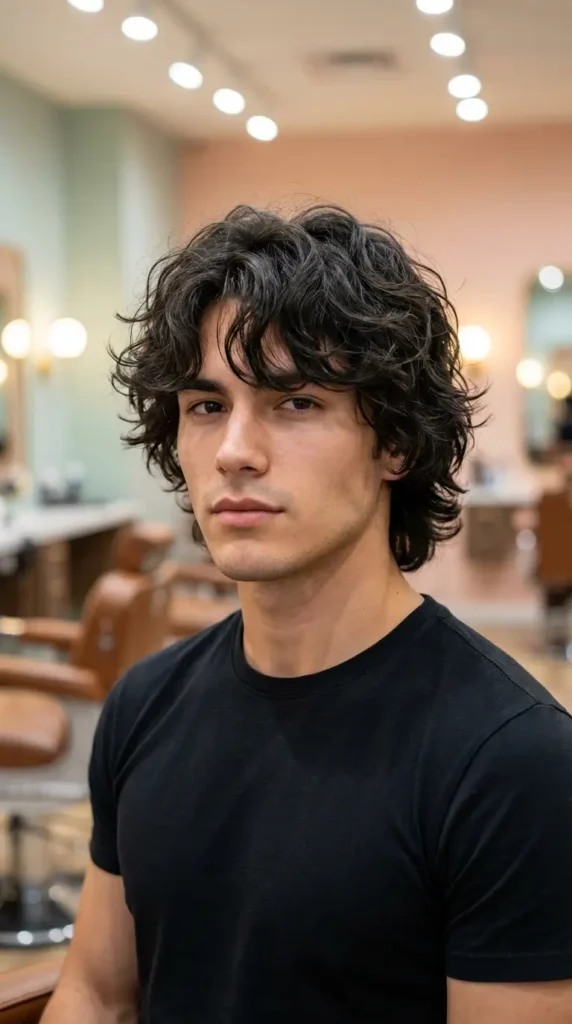
Wavy hair and wolf cuts are a perfect match. Your natural texture does most of the work.
The layers enhance your waves instead of fighting them. Movement looks effortless. Volume comes naturally.
- Best for: 2A-2C wavy hair
- Face shape: All face shapes
- How to style: Apply sea salt spray to damp hair. Scrunch gently. Let it air dry for a beachy finish. Add styling cream for extra definition.
- Vibe: Effortless cool—like you just rolled out of bed looking this good
Curly Wolf Cut
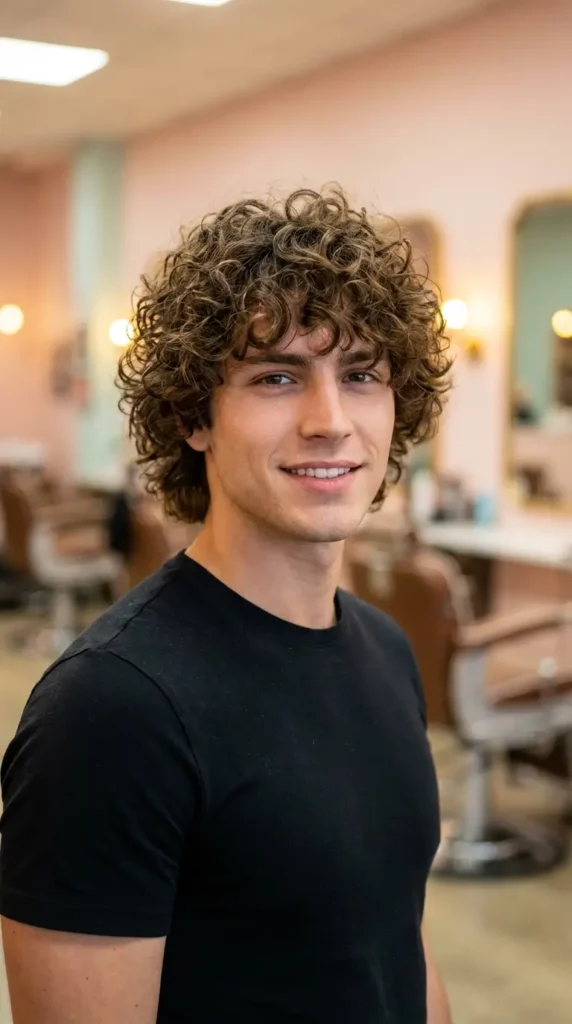
Curly hair gets bounce and definition from a wolf cut. The key is proper layering.
Shorter crown layers prevent the dreaded triangle shape. Tapered sides control bulk. The result is controlled bounce with maximum personality.
- Best for: 3A-3C curly hair
- Face shape: Oval or round
- How to style: Use curl-enhancing cream on wet hair. Diffuse with a blow dryer on low heat. Finish with hydrating argan oil to lock in moisture and reduce frizz.
- Tip: Let curls air dry partially before diffusing for best results
- Vibe: Bold and bouncy—your curls finally get the spotlight they deserve
Wolf Cut for Thick Hair
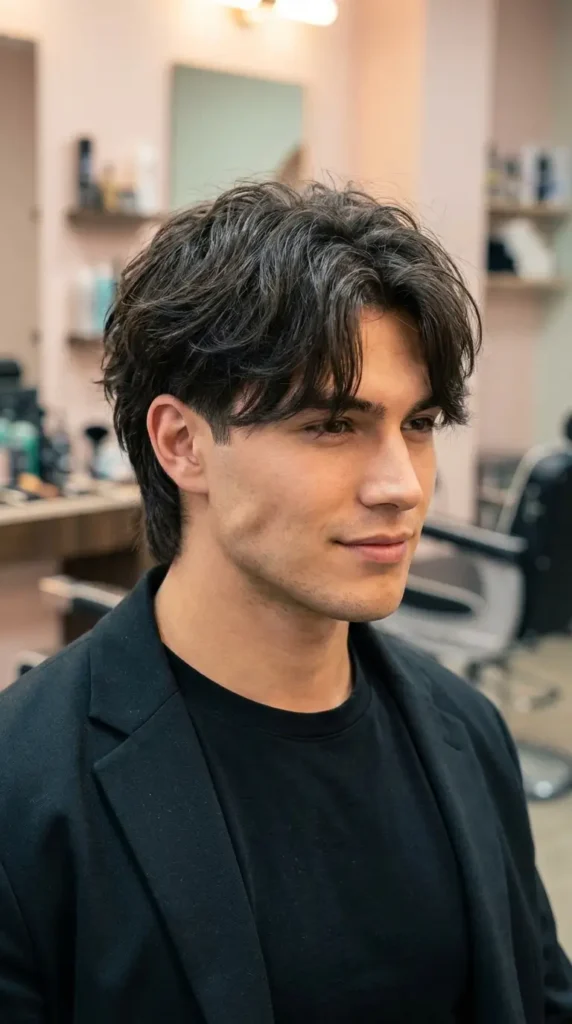
Thick hair has volume for days. But without proper shaping, it becomes unmanageable.
A wolf cut removes bulk through heavy layering. You keep the fullness. But it moves. It flows. It looks intentional instead of overwhelming.
- Best for: Thick or coarse hair
- Face shape: All face shapes
- How to style: Texture clay works best for control. Apply through mid-lengths and ends. Blow-dry with fingers for natural lift.
- Ask your barber for: Thinning shears to reduce bulk without losing shape
- Vibe: Powerful flow—like a lion’s mane, but cooler
Wolf Cut for Thin or Fine Hair
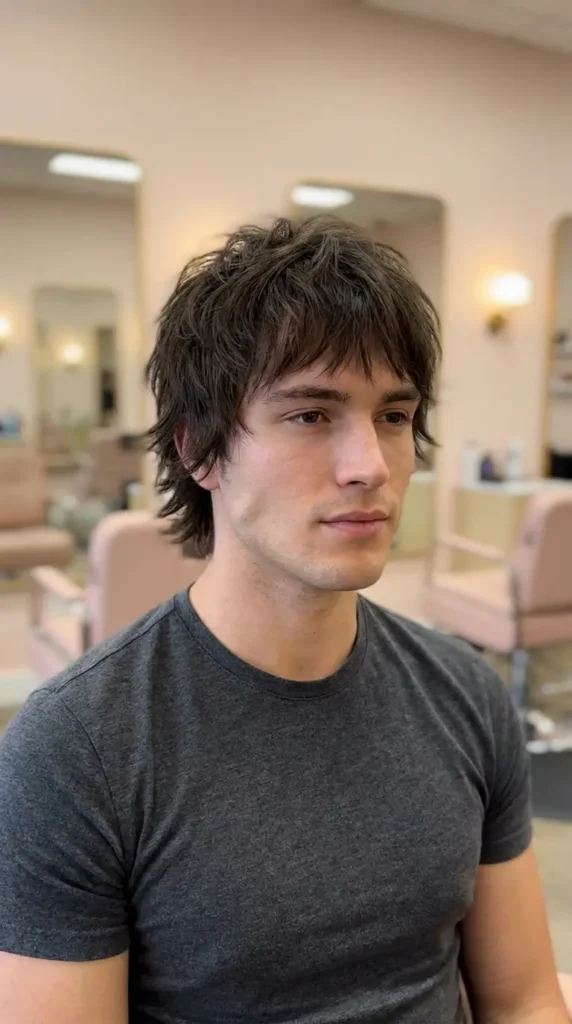
Thin hair benefits massively from a wolf cut. Strategic layering creates the illusion of density.
Shorter layers on top add height. Texture products boost volume at the roots. The result looks fuller than reality.
- Best for: Fine or thin hair
- Face shape: Oval or heart
- How to style: Volumizing mousse is essential. Apply to damp roots. Blow-dry upward. Finish with texture powder for weightless lift.
- Vibe: Fuller than nature intended—nobody needs to know your secret
Below is the complete list of Cultural and Aesthetic Wolf Cut styles to help you find the look that matches your vibe.
Korean Wolf Cut
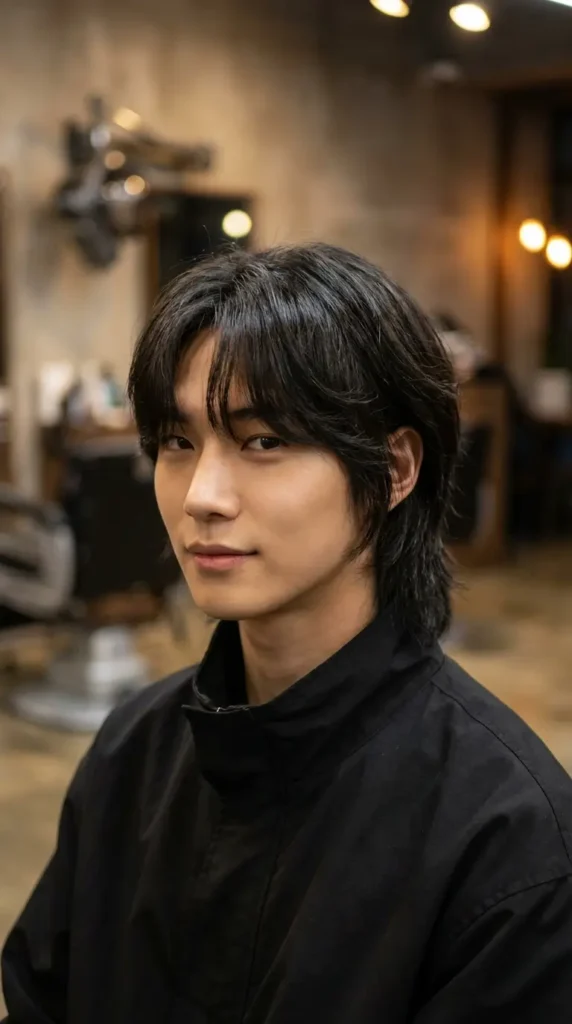
The Korean wolf cut is softer and more polished than Western versions. It’s the K-pop idol look.
Airy layers frame the face gently. Volume at the crown stays refined, not wild. The finish is smooth and intentional.
- Best for: Straight or wavy hair
- Face shape: Oval or slim faces
- How to style: Blow-dry with a round brush for smoothness. Apply styling cream for shape. Finish with hydrating argan oil for shine.
- Vibe: Refined effortlessness—like you have a personal stylist
Japanese Wolf Cut
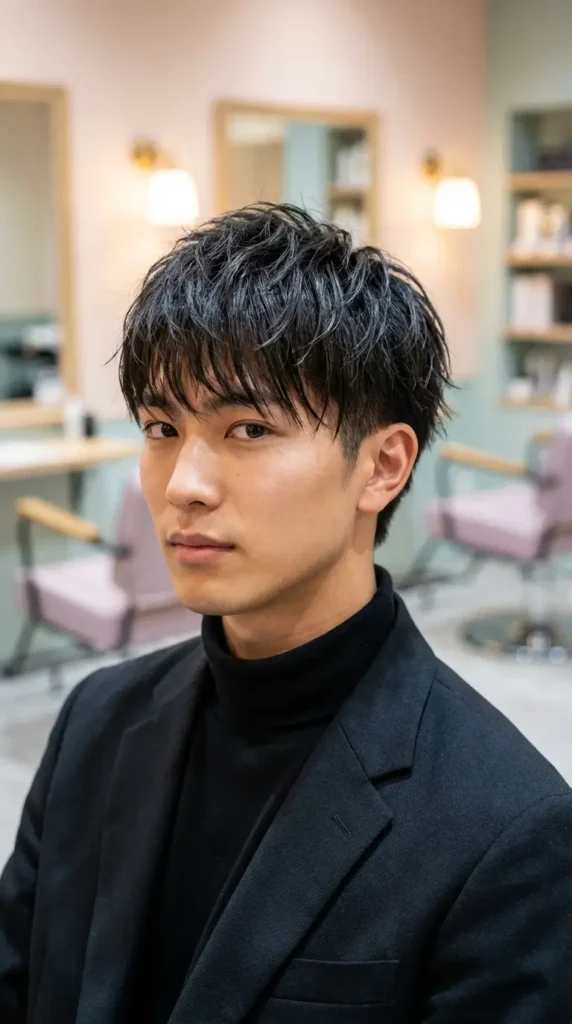
The Japanese wolf cut is sharper than the Korean version. It takes inspiration from anime and J-rock aesthetics.
Choppy crown layers flip outward. The precision is deliberate. Face-framing pieces add definition without softness.
- Best for: Straight hair
- Face shape: Angular faces
- How to style: Hair wax for texture. Flat iron to flip the ends outward. Light hairspray to hold.
- Vibe: Edgy precision—like a character come to life
Asian Wolf Cut
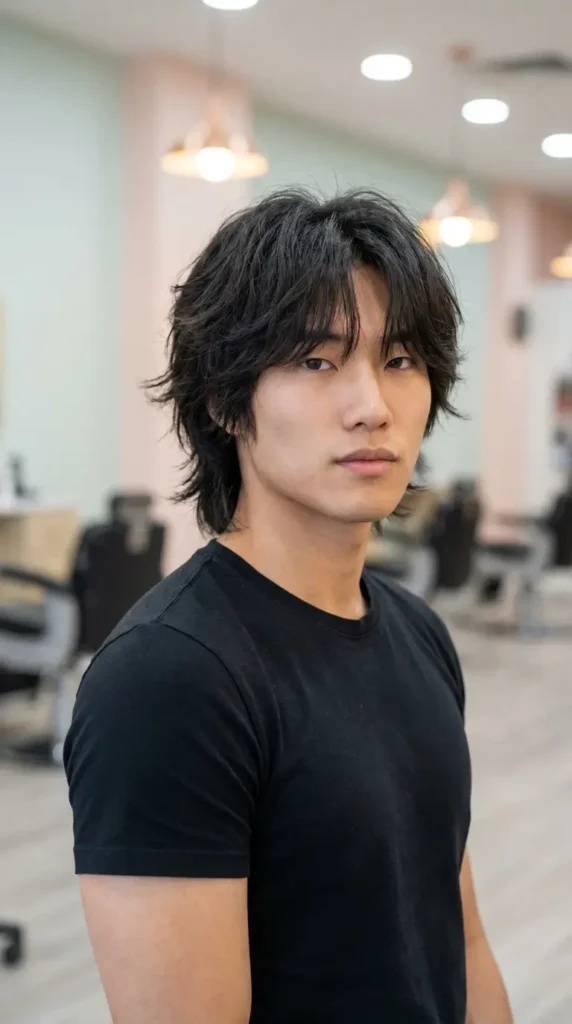
The Asian wolf cut blends Korean softness with Japanese edge. It’s versatile and works with various Asian hair textures.
Expect curtain bangs, airy layers, and clean movement. The finish feels natural but polished.
- Best for: Straight or wavy Asian hair textures
- Face shape: Oval, heart, round
- How to style: Light pomade for subtle definition. Natural air drying works best. Minimal product for maximum movement.
- Vibe: Modern tradition—honoring roots while staying current
90s Wolf Cut
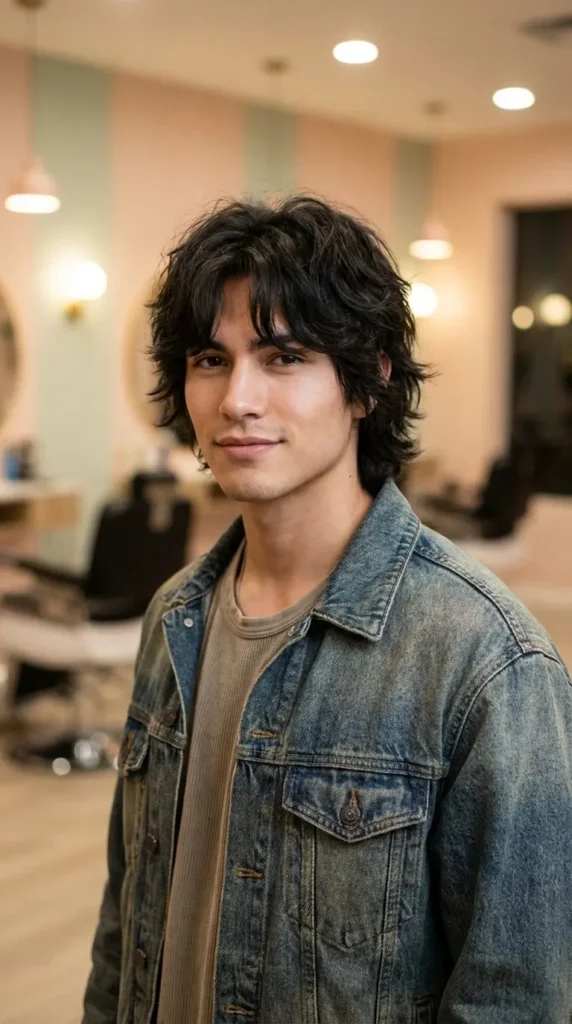
The 90s wolf cut is pure nostalgia. Messy layers, loose fringe, Oasis vibes.
This version leans into the grunge aesthetic. Think less polished, more lived-in. The messier, the better.
- Best for: All hair types
- Face shape: All face shapes
- How to style: Sea salt spray for gritty texture. Finger-tousle while blow-drying. Skip the finishing products—imperfection is the goal.
- Vibe: Vintage rebellion—like you time-traveled from a 90s concert
E-Boy Wolf Cut
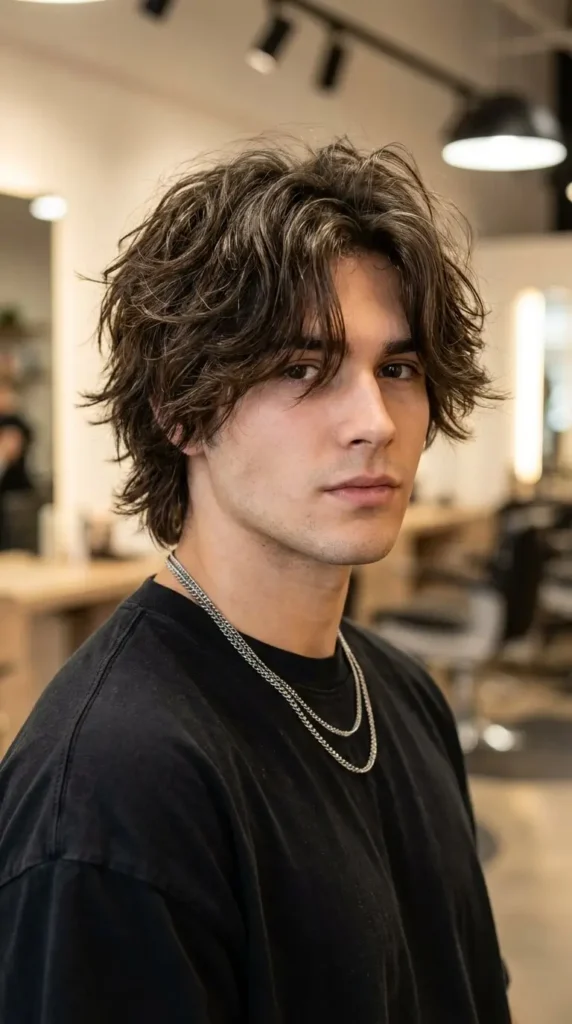
The E-Boy wolf cut is TikTok’s signature style. Middle-parted, face-framing, digitally cool.
This version is youthful and trend-focused. Curtain bangs are essential. The aesthetic is internet-inspired and expressive.
- Best for: Medium-length hair
- Face shape: Oval, heart, diamond
- How to style: Matte clay for texture without shine. Center part with a fine comb. Let the sides hang naturally.
- Vibe: Digital cool—ready for your close-up
Below is the complete list of Wolf Cut styles with styling elements to help you choose the perfect look.
Wolf Cut with Curtain Bangs
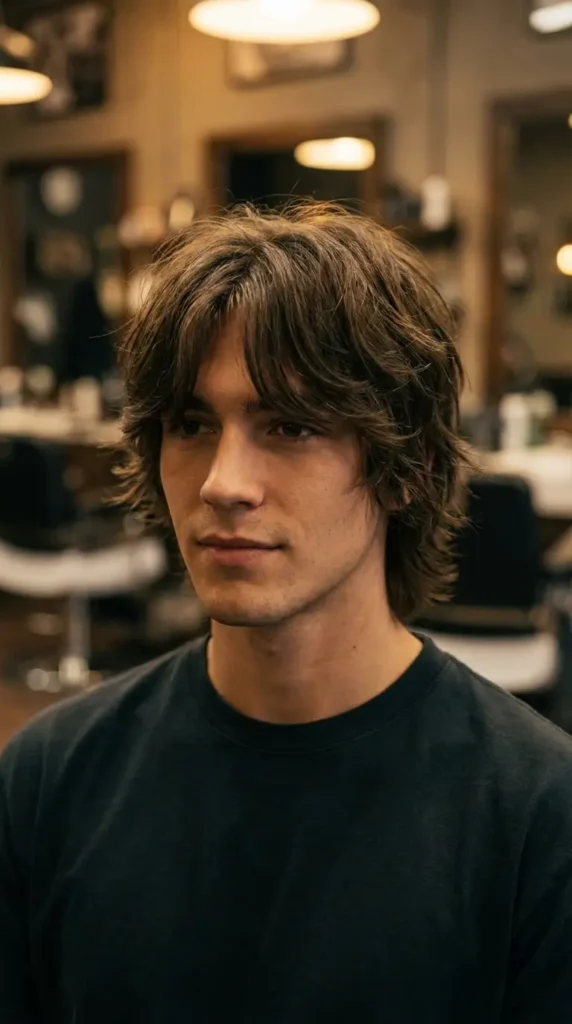
Curtain bangs transform a wolf cut from edgy to romantic.
Soft, parted fringe frames your face. The bangs sweep naturally to each side, blending into layered sides. Angular features get softened.
- Best for: Wavy or thick hair
- Face shape: Rectangular or square (bangs soften strong jawlines)
- How to style: Round brush the bangs while blow-drying. Apply styling cream for softness. Finish with texture powder for lift.
- Vibe: Chaos meets charm—rebellious with a romantic twist
Middle Part Wolf Cut
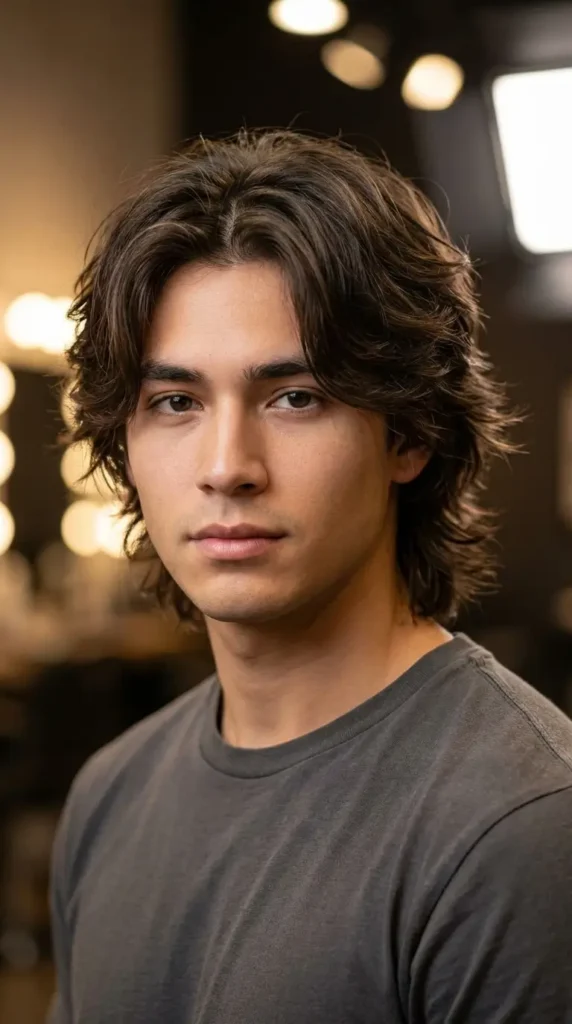
The middle part wolf cut is all about symmetry. A clean center split frames the face naturally.
Fluffy sides add texture. The part creates balance. It’s effortless symmetry that photographs beautifully.
- Best for: All hair types
- Face shape: Oval, heart, diamond
- How to style: Styling cream to keep it bouncy. Wide-tooth comb for the part. Argan oil on the ends for smoothness.
- Vibe: Effortless symmetry—balanced and intentional
Wolf Cut with Side-Swept Bangs
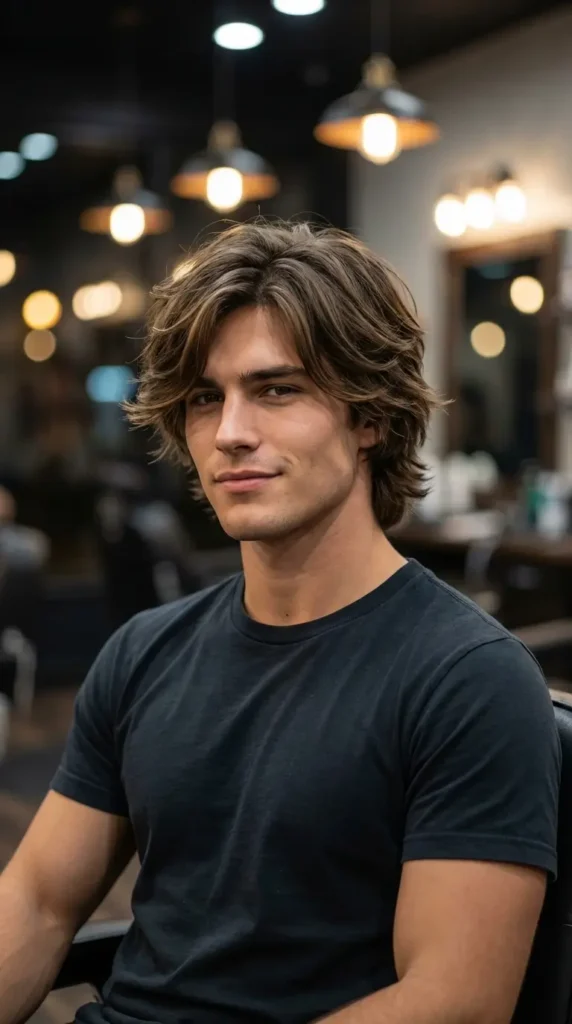
Side-swept bangs add asymmetry and softness. They break up angular features beautifully.
The fringe sweeps to one side, drawing attention to your eyes. It’s more structured than curtain bangs but still relaxed.
- Best for: Straight or wavy hair
- Face shape: Square or rectangular
- How to style: Pomade for direction. Blow-dry toward the sweep. Light hairspray to hold.
- Vibe: Structured cool—sophisticated with an edge
Wolf Cut with Heavy Fringe
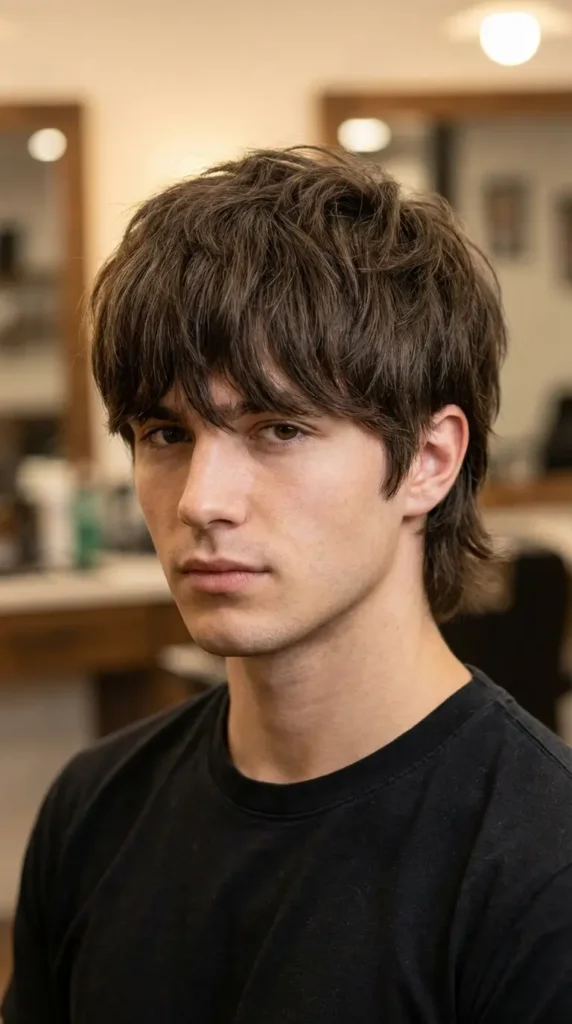
Heavy fringe makes a statement. Dense, brow-grazing bangs demand attention.
This version works great for high foreheads or oblong faces. The bangs create visual balance while adding drama.
- Best for: All hair types
- Face shape: High foreheads, oblong faces
- How to style: Molding paste for texture. Flat iron for smoothness. Texture powder at the roots for lift.
- Vibe: Dramatic presence—you’ll be remembered
Below is the complete list of Hybrid and Fade Wolf Cut styles to help you find your ideal haircut.
Wolf Cut Mullet
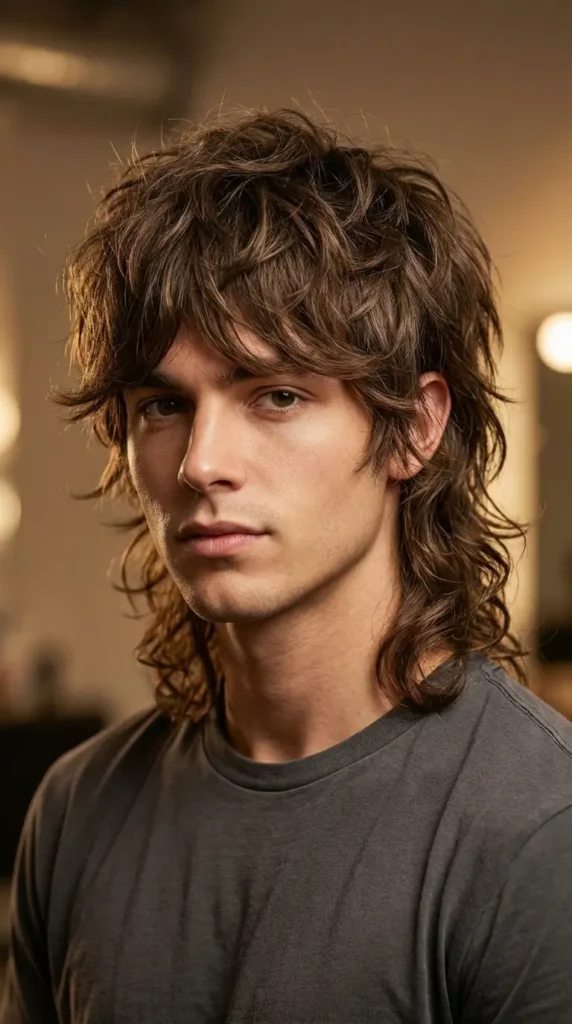
The wolf cut mullet leans hard into the mullet heritage. Short, choppy layers on top. Long, feathered layers at the back.
This version has attitude. It’s retro meets modern. Business in front, party everywhere.
- Best for: Thick or wavy hair
- Face shape: Oval or square
- How to style: Texture clay for the top. Matte pomade through the back. Blow-dry while finger-shaping.
- Vibe: Retro rebellion—your dad’s mullet, upgraded
Wolf Cut Fade
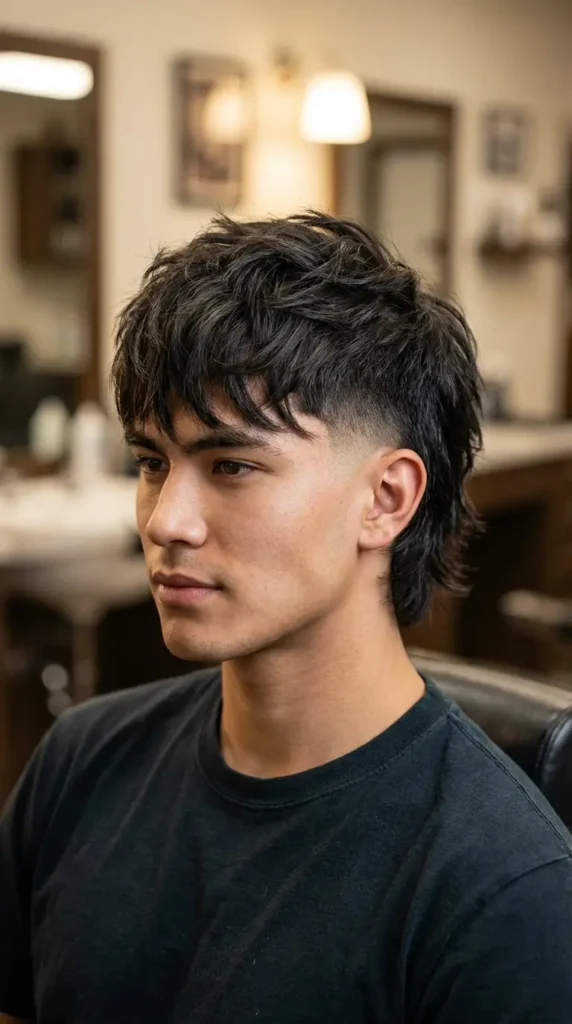
The wolf cut fade combines two worlds. Clean skin fade on the sides. Textured wolf cut on top.
The contrast is striking. Sharp meets wild. It’s a bold choice that turns heads.
- Best for: All hair types
- Face shape: Round or diamond (the fade elongates and defines)
- How to style: Texture powder at roots for lift. Pomade or molding paste through the top. Blow-dry with fingers.
- Vibe: Sharp meets wild—the best of both worlds
Wolf Cut with Taper
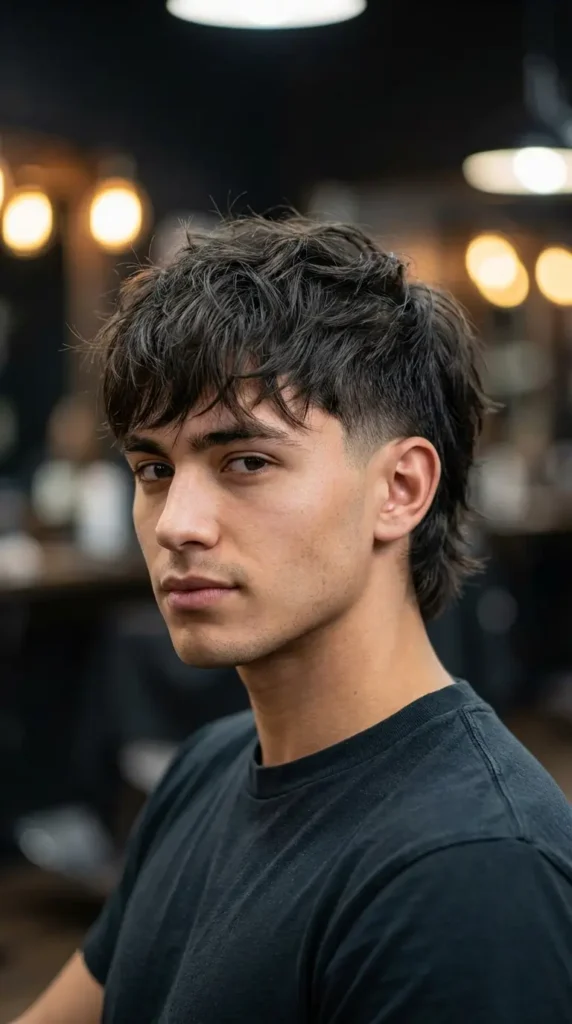
The tapered wolf cut is neater than a fade. Subtle tapering at the sides creates clean lines without dramatic contrast.
Perfect for professional settings where a skin fade might be too bold.
- Best for: All hair types
- Face shape: All face shapes
- How to style: Styling cream for natural texture. Light hairspray for hold. Keep it understated.
- Vibe: Polished edge—office-appropriate with personality
Wolf Cut with Undercut
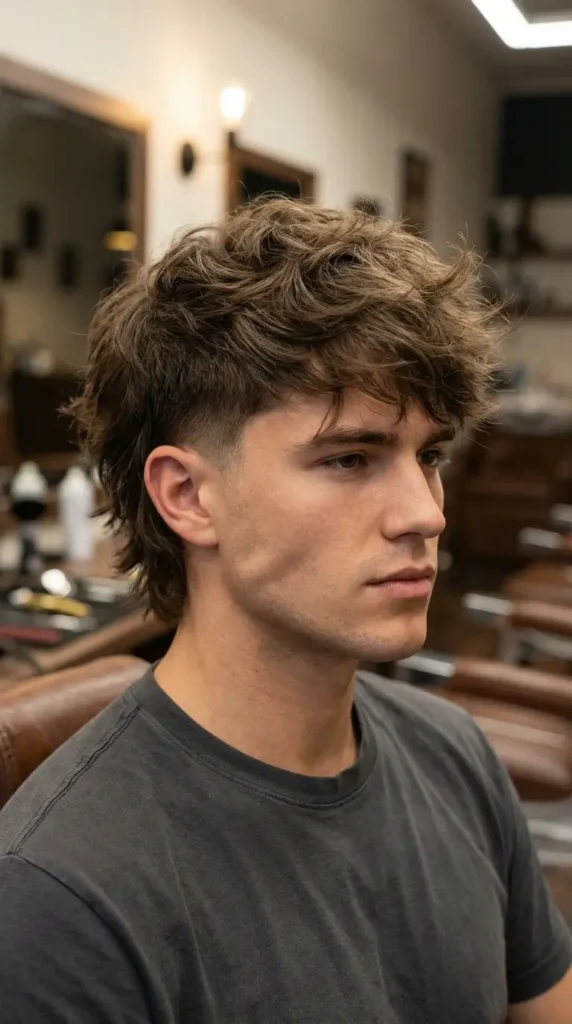
The undercut wolf cut is maximum contrast. Shaved or closely cropped sides. Voluminous, textured top.
This version is bold and modern. The disconnect between top and sides creates dramatic visual interest.
- Best for: Thick hair
- Face shape: Angular faces
- How to style: Strong-hold clay for the top. Blow-dry for volume. Let the sides stay clean.
- Vibe: Bold statement—you’re not blending into the crowd
Wolf Cut Mohawk
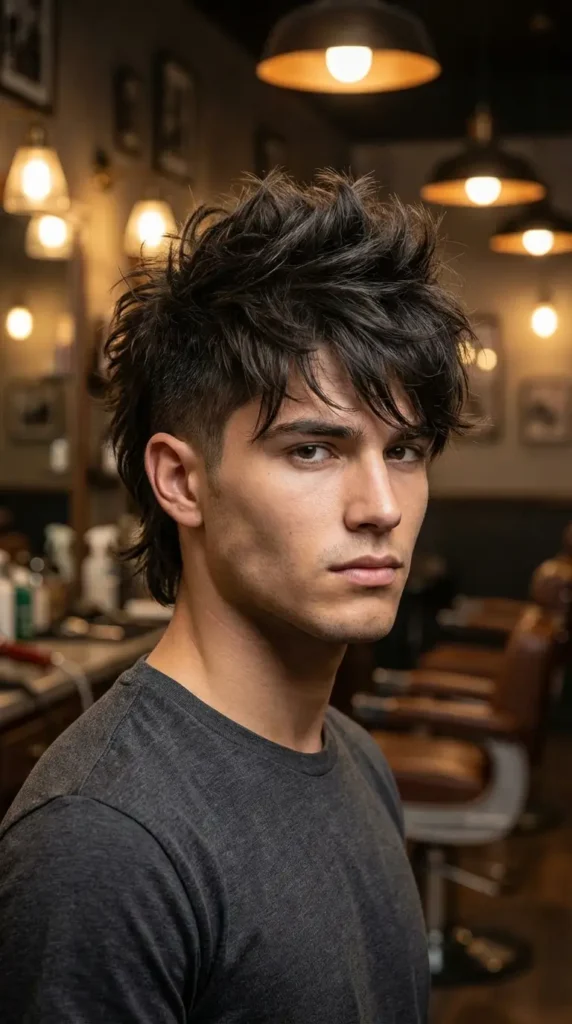
The wolf cut mohawk fuses punk edge with wolf cut texture. Faded sides frame a voluminous, textured strip on top.
It’s rebellious. It’s attention-grabbing. It’s not for the faint of heart.
- Best for: Wavy or thick hair
- Face shape: Oval or angular
- How to style: Volumizing mousse for height. Texture clay for definition. Blow-dry while shaping upward.
- Vibe: Rockstar energy—you’re the lead singer now
Low Taper Wolf Cut
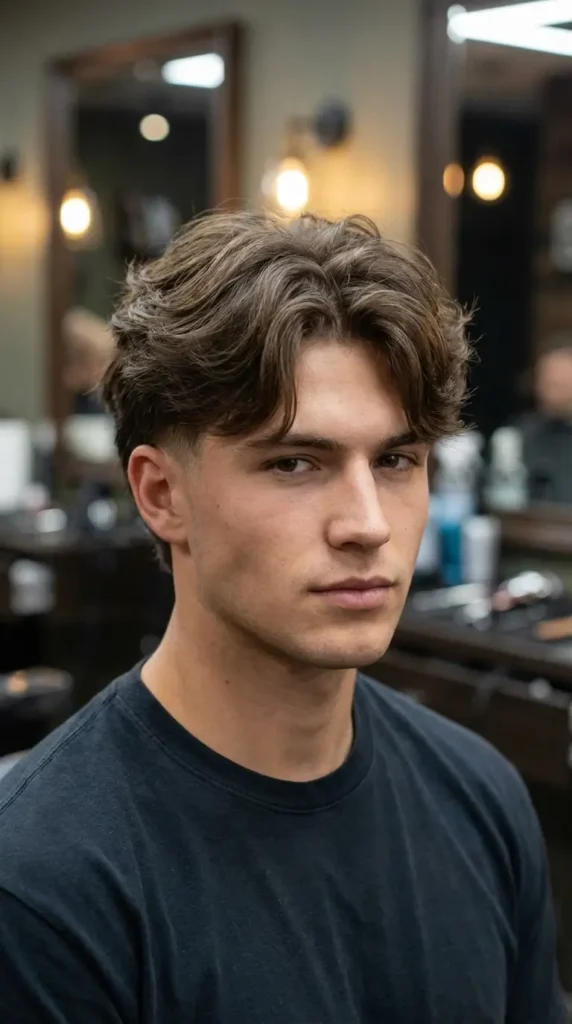
The low taper wolf cut keeps things subtle. Minimal tapering at the neckline provides structure without drama.
Natural flow remains. The outline just looks cleaner.
- Best for: All hair types
- Face shape: All face shapes
- How to style: Light pomade for natural texture. Finger-style for movement. Minimal product.
- Vibe: Understated cool—subtle boldness
Mid Taper Wolf Cut
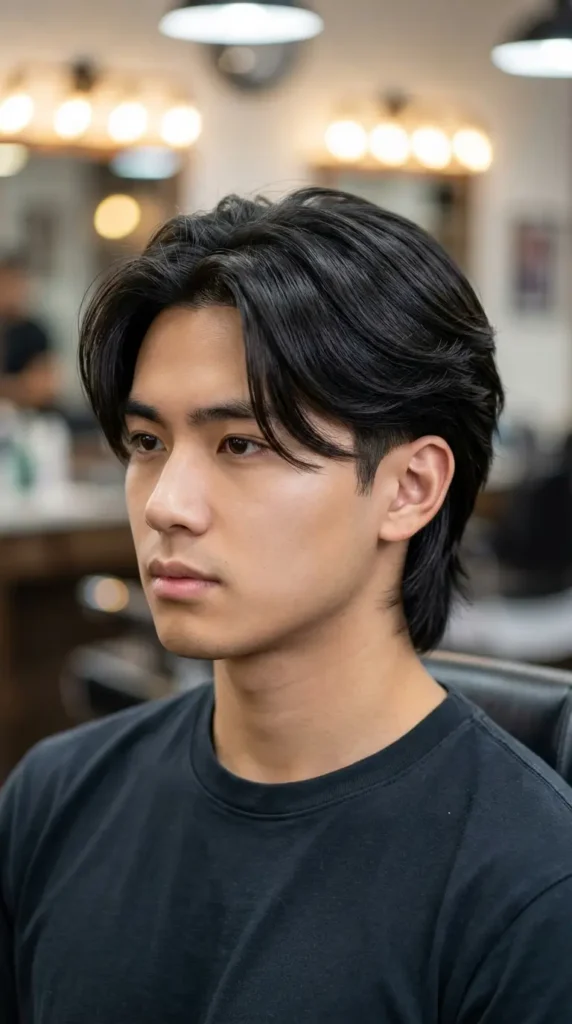
The mid taper wolf cut balances neatness with texture. Tapering around the ears creates clean lines while the top stays wild.
It’s the Goldilocks of wolf cut fades—not too dramatic, not too subtle.
- Best for: Thick hair
- Face shape: Round or square
- How to style: Texture clay for separation. Finger-style the top. Keep the taper fresh with regular touch-ups.
- Vibe: Controlled wildness—neat where it counts
Below is the complete list of Texture and Finish Wolf Cut styles to help you pick the perfect look.
Shaggy Wolf Cut
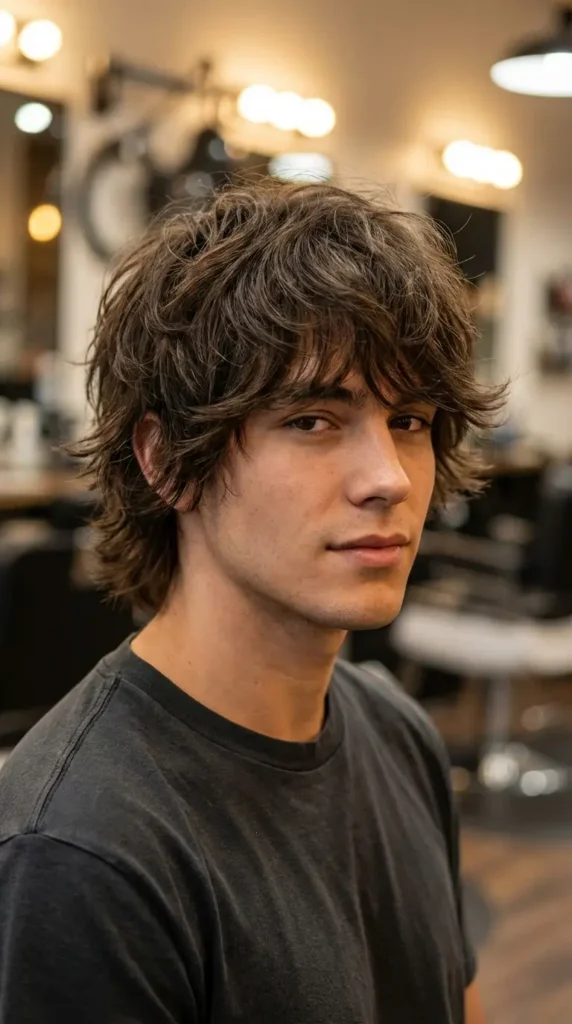
The shaggy wolf cut leans heavily into the shag heritage. Maximum feathering. Maximum texture. 70s rock star energy.
Layers are choppy and flipped. The finish feels vintage but relevant.
- Best for: Wavy or curly hair
- Face shape: Oval or heart
- How to style: Sea salt spray for gritty texture. Scrunch while air drying. Mousse for volume boost.
- Vibe: Effortless cool—David Bowie approved
Messy Wolf Cut
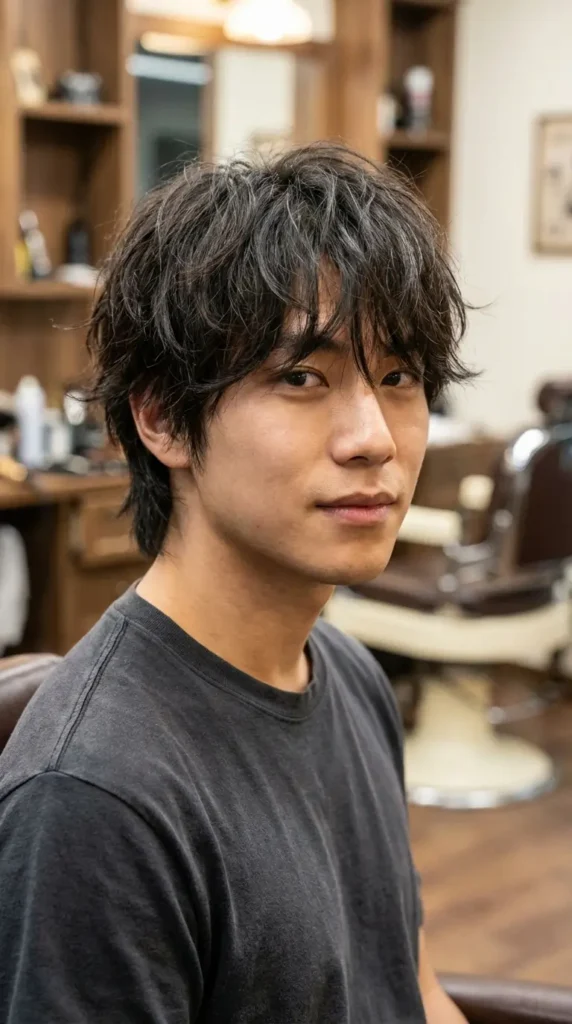
The messy wolf cut embraces chaos. Intentionally undone. Heavy crown layers. Tousled everything.
This version is laid-back and effortless. It looks like you just woke up—in the best way.
- Best for: Wavy or curly hair
- Face shape: Round, oval, or oblong
- How to style: Texture spray on dry hair. Finger-tousle aggressively. Styling cream to hold the mess.
- Vibe: Bedhead perfection—too cool to care
Textured Wolf Cut
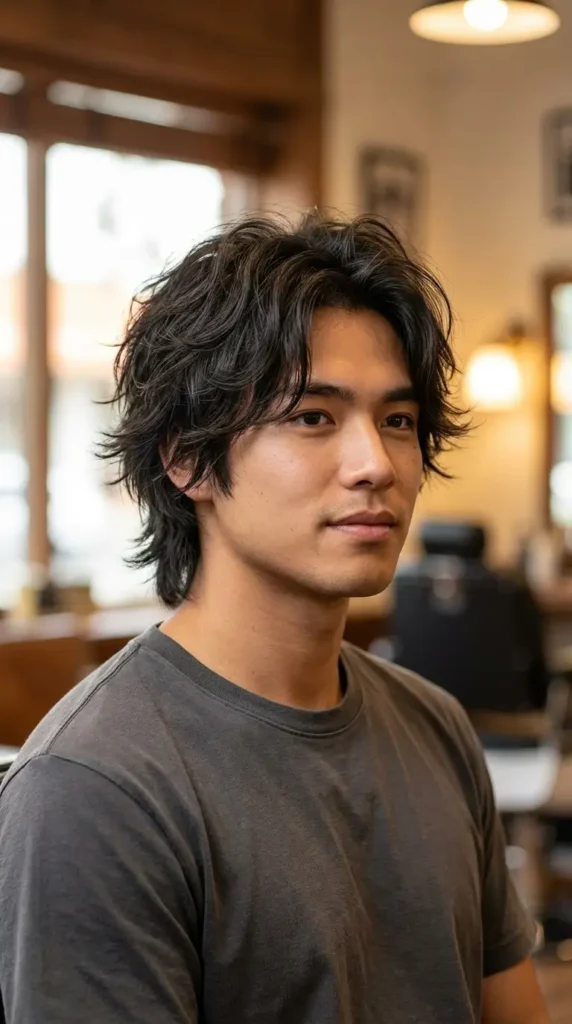
The textured wolf cut emphasizes movement and dimension. Choppy layers create defined separation.
Every strand has purpose. The texture is intentional and pronounced.
- Best for: Straight or wavy hair
- Face shape: Oval or heart
- How to style: Texturizing spray throughout. Blow-dry for height. Texture clay for control and separation.
- Vibe: Dimensional flow—every angle looks good
Fluffy Wolf Cut
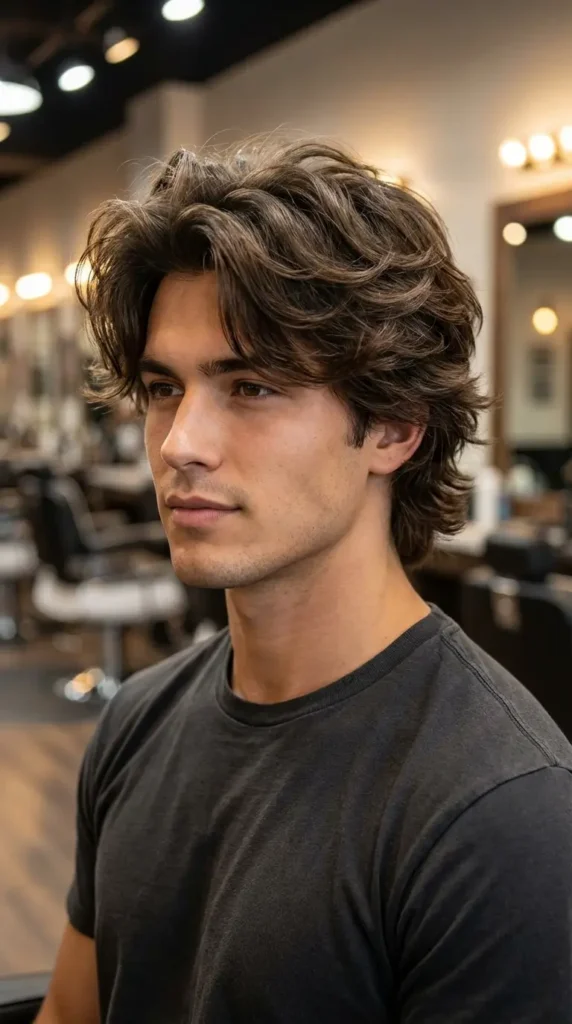
The fluffy wolf cut is soft and airy. Light bounce without stiffness. Cloud-like texture.
Layers add lift and bounce, especially around the crown and sides. It’s approachable and touchable.
- Best for: Fine or medium hair
- Face shape: Oval or diamond
- How to style: Volumizing mousse at roots. Diffuse while scrunching. Texture clay for feathered definition.
- Vibe: Cloud-like texture—soft but structured
Soft Wolf Cut
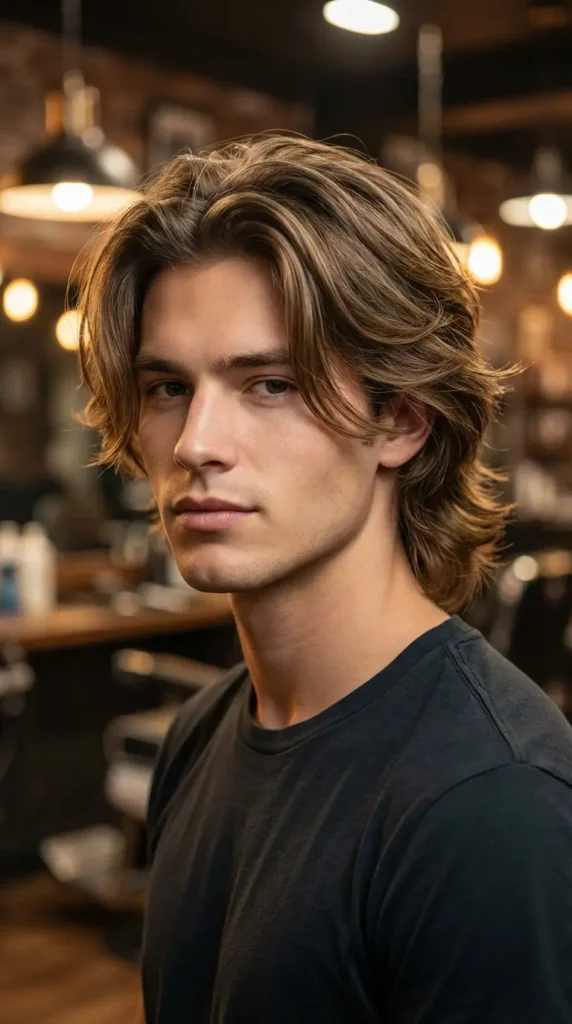
The soft wolf cut is the gentlest version. Blended layers. Smooth transitions. Minimal choppiness.
It’s wolf cut energy with a softer finish. Less edge, more flow.
- Best for: All hair types
- Face shape: All face shapes
- How to style: Argan oil for smoothness. Air dry for natural texture. Minimal products.
- Vibe: Relaxed elegance—sophisticated without trying
Choppy Wolf Cut
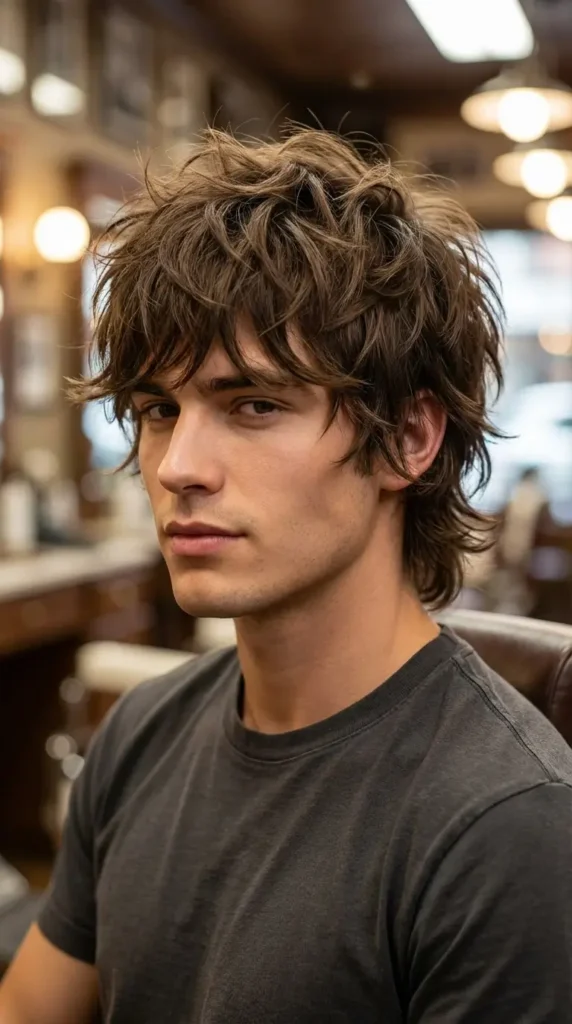
The choppy wolf cut is aggressive and wild. Uneven layers. Intentional roughness. Maximum attitude.
This version doesn’t apologize. It’s bold, daring, and in-your-face.
- Best for: Thick hair
- Face shape: Oval, round, or angular
- How to style: Texture clay for definition. Point-cutting technique for extra choppiness. Blow-dry with fingers.
- Vibe: Untamed energy—the wolf cut turned up to eleven
Below is the complete list of Color and Statement Wolf Cut styles to help you choose your boldest look.
Blonde Wolf Cut
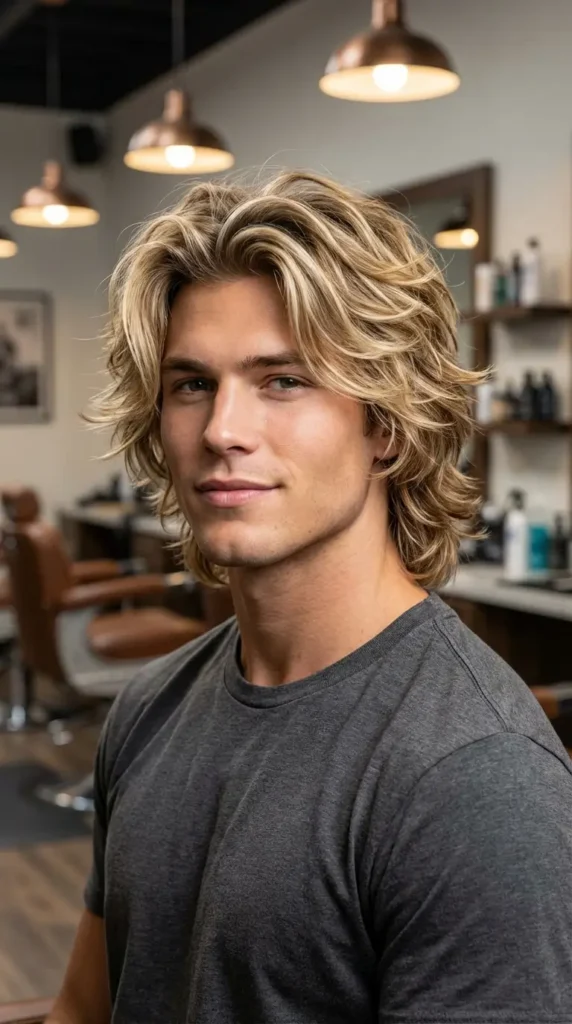
Blonde hair makes wolf cut layers pop. Light hair shows texture and dimension more visibly than dark hair.
Every layer, every feather, every movement becomes amplified.
- Best for: All hair types
- Face shape: Square, oval, or heart
- How to style: Purple shampoo to maintain cool tones. Texture spray for movement. Styling cream for flow.
- Maintenance: Color touch-ups every 4-6 weeks
- Vibe: Sun-kissed edge—California cool meets rock star
Two-Toned Wolf Cut
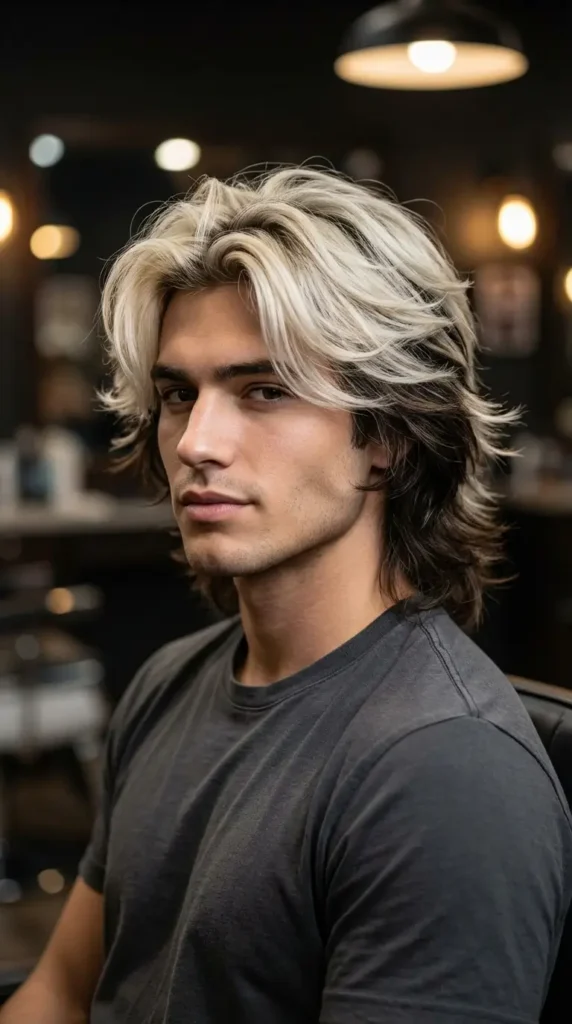
The two-toned wolf cut uses contrasting colors for dramatic effect. Dark roots with light ends. Black and platinum. The combinations are endless.
Color emphasizes the layers and creates visual depth.
- Best for: Thick hair
- Face shape: All face shapes
- How to style: Color-safe products only. Texture clay for definition. Let the color do the talking.
- Vibe: Artistic rebellion—wearable art
Wolf Cut with Highlights
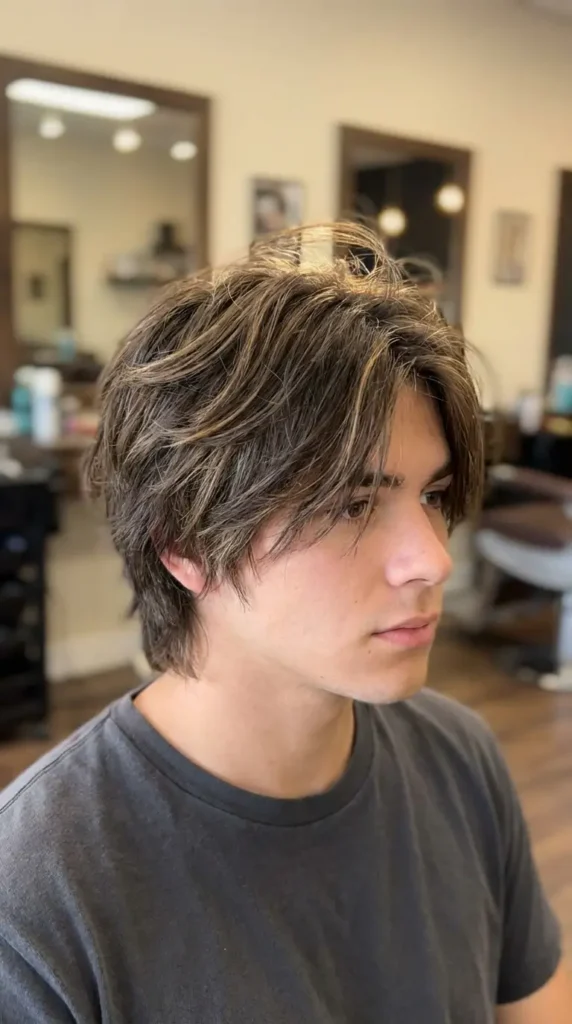
Strategic highlights add dimension without full commitment to color change. Placement emphasizes your layers.
It’s subtle enhancement that makes texture more visible.
- Best for: All hair types
- Face shape: All face shapes
- How to style: Color-protecting styling cream. Light texture products. Natural movement.
- Vibe: Enhanced texture—your natural look, elevated
Below is the complete list of Unique Wolf Cut variations to help you discover a standout style.
No-Mullet Wolf Cut
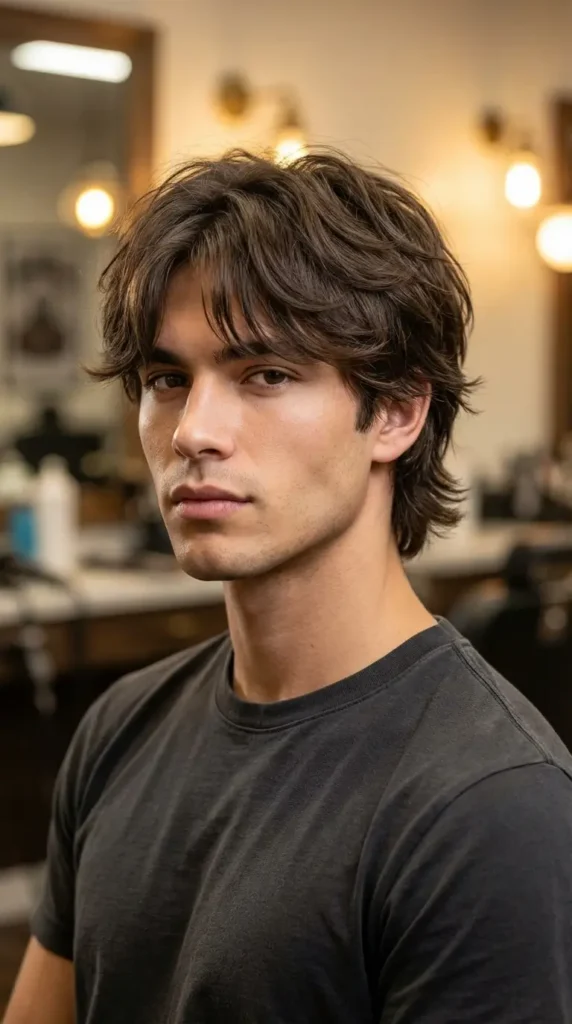
Not everyone wants the party in the back. The no-mullet wolf cut keeps wolf texture without extended back length.
You get the choppy layers and volume. But the length stays relatively even throughout.
- Best for: Professional settings
- Face shape: All face shapes
- How to style: Styling cream for shape. Tapered finish for neatness. Light texture products.
- Vibe: Tamed wildness—office-friendly edge
Jellyfish Wolf Cut
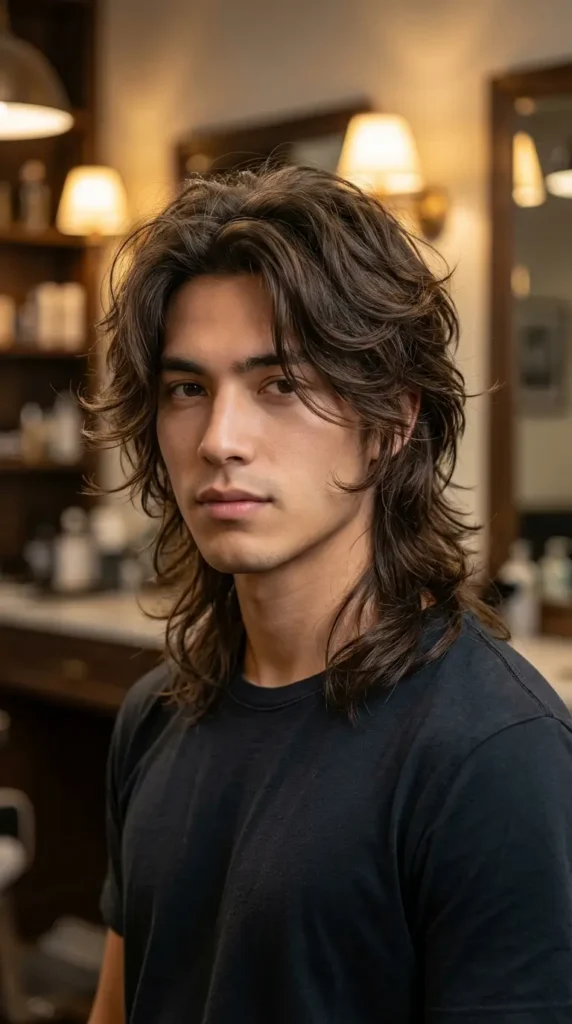
The jellyfish wolf cut is avant-garde. Short crown layers. Long underlayer that flows separately. Like a jellyfish with tentacles.
This version is bold and unusual. Not for everyone. But unforgettable.
- Best for: Thick hair, bold personalities
- Face shape: Oval, heart, or diamond
- How to style: Texture clay for the top. Molding paste for the underlayer. Blow-dry and finger-shape for volume.
- Vibe: Avant-garde edge—conversation starter guaranteed
Bowl Wolf Cut
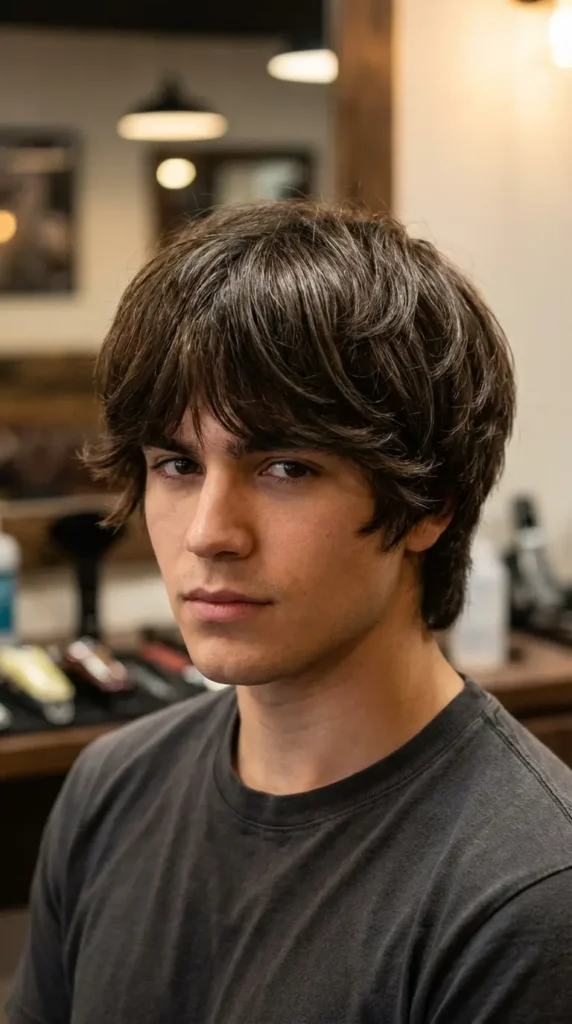
The bowl wolf cut combines bowl-cut shaping with wolf texture. A bowl-shaped crown meets wispy, flowing layers.
Popular in K-pop circles, it’s playful and youthful.
- Best for: Straight or fine hair
- Face shape: Oval or round
- How to style: Light wax for shape. Minimal product for that airy finish.
- Vibe: Playful precision—youthful and fun
Spiky Wolf Cut
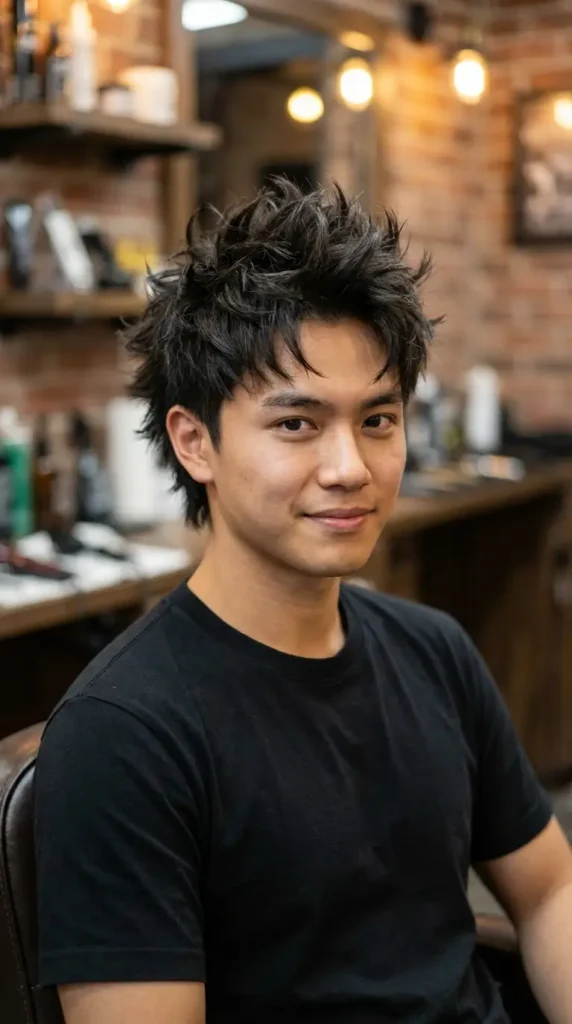
The spiky wolf cut blends 90s spikes with modern wolf texture. The crown points upward while the back flows.
It’s nostalgic with a modern twist.
- Best for: Thick or straight hair
- Face shape: Oval or heart
- How to style: Strong-hold gel for spikes. Texture powder at roots. Blow-dry while shaping upward.
- Vibe: High-energy edge—retro meets now
Wolf Cut with Beard
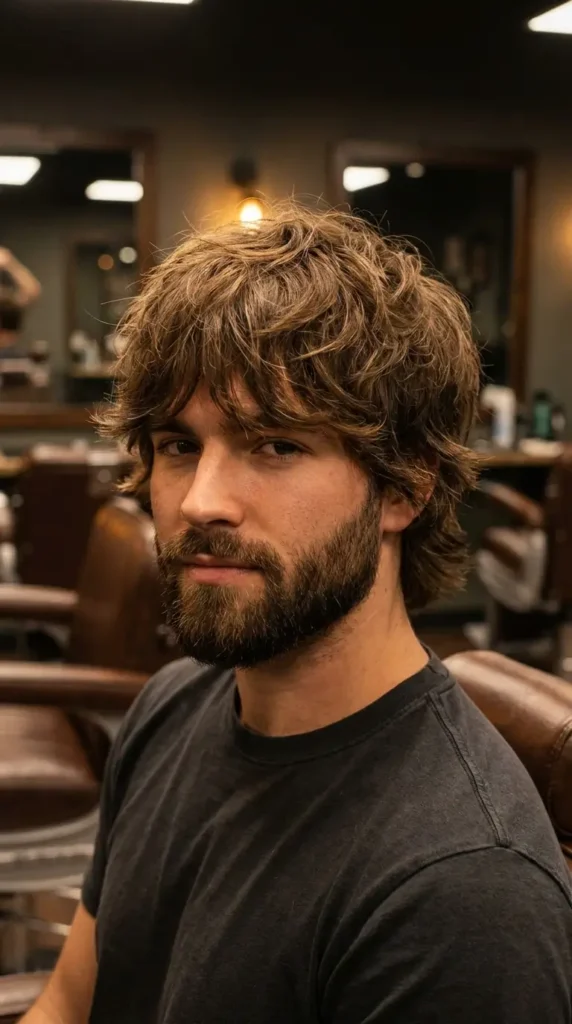
A wolf cut paired with facial hair creates balanced masculinity. The textured hair on top. A well-groomed beard below.
The combination is rugged and refined simultaneously.
- Best for: All face shapes
- Face shape: Works especially well for round faces (beard adds definition)
- How to style: Hair clay for the cut. Beard balm for facial hair. Coordinate your grooming routine.
- Vibe: Rugged refinement—man’s man meets style icon
Wolf Cut vs Other Hairstyles
Confused about the difference between similar styles? Here’s how the wolf cut compares to other popular haircuts.
Wolf Cut vs Mullet
| Feature | Wolf Cut | Mullet |
| Layers | Heavy throughout | Minimal layering |
| Sides | Textured, blended | Short or shaved |
| Texture | Messy, lived-in | Structured contrast |
| Overall vibe | Contemporary, edgy | Retro, rebellious |
| Maintenance | Low to medium | Low |
The bottom line: Wolf cuts are messier and more textured. Mullets have cleaner contrast between short and long sections.
Wolf Cut vs Shag
| Feature | Wolf Cut | Shag |
| Layers | More dramatic contrast | Softer, blended |
| Back length | Longer, mullet-influenced | Even throughout |
| Volume | Crown-focused | Evenly distributed |
| Overall vibe | Edgier, wilder | Softer, vintage |
The bottom line: Wolf cuts have more attitude. Shags are gentler and more vintage-feeling.
Wolf Cut vs Jellyfish Cut
The jellyfish cut takes disconnection to the extreme. Two distinct layers—a short top and a long underlayer—create a dramatic contrast.
Wolf cuts blend more smoothly. Jellyfish cuts disconnect deliberately.
How to Choose the Right Wolf Cut for Your Face Shape
Your face shape determines which wolf cut variation will flatter you most. Here’s the breakdown.
Wolf Cut for Round Face
Goal: Add vertical length to elongate your face
Best styles:
- Classic wolf cut with crown volume
- Layered wolf cut
- Short wolf cut (vertical layers elongate)
- Wolf cut with taper or fade
Tips:
- Focus volume at the crown, not the sides
- Longer top layers draw the eye upward
- Avoid too much width at the cheekbones
Wolf Cut for Oval Face
Goal: You have the most versatile face shape—almost anything works
Best styles:
- Any wolf cut variation
- Feel free to experiment
Tips:
- Try different bangs (curtain, side-swept, heavy fringe)
- Play with length and texture
- Your proportions can handle bold choices
Wolf Cut for Square Face
Goal: Soften strong jawlines and angular features
Best styles:
- Wolf cut with curtain bangs
- Soft wolf cut
- Wavy wolf cut
Tips:
- Wispy layers soften sharp angles
- Avoid blunt, harsh cuts
- Textured ends work better than clean lines
Wolf Cut for Heart Face
Goal: Balance a wider forehead with a narrower chin
Best styles:
- Curly wolf cut (adds volume at chin level)
- Wolf cut with heavy fringe (minimizes forehead)
- Medium wolf cut
Tips:
- Heaviest layers should fall around the chin
- Face-framing bangs balance the forehead
- Avoid too much volume at the crown
Wolf Cut for Oblong/Rectangular Face
Goal: Add width and reduce visual length
Best styles:
- Wolf cut with curtain bangs or heavy fringe
- Full wolf cut with side volume
- Shaggy wolf cut
Tips:
- Bangs shorten the face visually
- Side volume adds width
- Avoid too much height at the crown
Wolf Cut for Diamond Face
Goal: Balance cheekbones with forehead and chin
Best styles:
- Classic wolf cut
- Textured wolf cut
- Middle part wolf cut
Tips:
- Face-framing layers highlight your cheekbones
- Balanced layering works best
- Most wolf cut variations suit you well
How to Ask Your Barber for a Wolf Cut
Getting the perfect wolf cut starts with clear communication. Here’s how to make sure you and your barber are on the same page.
Bring Reference Images
Pictures speak louder than words. Save 3-5 photos before your appointment.
Choose images that show:
- Front view
- Side view
- Back view
- Similar hair texture to yours
Pro tip: Pick photos of people with your hair type. A wolf cut on curly hair looks different than on straight hair.
Use the Right Terminology
Speak your barber’s language. Here are key phrases to use:
- “Choppy layers at the crown” — For volume on top
- “Longer, feathered layers at the back” — For that signature flow
- “Face-framing texture” — For pieces around your face
- “Point cutting for wispy ends” — For soft, textured tips
- “Razor cutting for softness” — For extra movement in straight hair
Also specify:
- Fade vs taper vs natural sides
- Desired length (short, medium, long)
- Fringe style (curtain bangs, side-swept, none)
Communicate Your Preferences
Be specific about your lifestyle and styling willingness:
- “I want low-maintenance” — Your barber will adjust the cut accordingly
- “I work in a professional setting” — They’ll keep it workplace-appropriate
- “I’m willing to style it daily” — Opens up more dramatic options
Listen to Your Barber
Your barber knows hair. They understand:
- What works with your specific texture
- Which variations flatter your face shape
- Technical limitations of your hair type
Be open to their suggestions. They want you to look great too.
How to Style a Wolf Cut (Step-by-Step)
Styling a wolf cut is easier than it looks. The cut itself does most of the work. Here’s your daily routine.
Step 1: Wash and Prep
Start clean. Use a lightweight shampoo and conditioner.
After washing:
- Towel-dry until damp (not dripping wet)
- Detangle with a wide-tooth comb
- Section your hair if needed
Tip: Don’t wash your hair every day. Wolf cuts look better with a little natural oil. Every 2-3 days is ideal.
Step 2: Apply Pre-Styler
Pre-stylers build the foundation. Apply to damp hair.
Choose based on your hair type:
| Hair Type | Best Pre-Styler |
| Straight or fine | Volumizing mousse |
| Wavy | Sea salt spray |
| Curly | Curl-enhancing cream |
| Thick | Texture spray |
How to apply:
- Focus on mid-lengths and ends
- Work through with fingers
- Don’t overload—less is more
Step 3: Blow-Dry for Shape
Blow-drying creates volume and defines layers.
Technique:
- Use medium heat, low speed
- Lift at the roots with your fingers or a round brush
- Direct airflow away from your face
- For curly hair: Use a diffuser attachment
Tips:
- Don’t over-dry—stop while slightly damp
- Blast cool air at the end to set the style
Step 4: Apply Finishing Product
Finishing products add definition and hold.
Choose based on desired finish:
| Desired Finish | Best Product |
| Matte, textured | Texture clay or matte pomade |
| Natural, soft | Styling cream |
| Defined, separated | Molding paste |
| Lightweight lift | Texture powder |
How to apply:
- Warm product between palms
- Work through mid-lengths and ends
- Scrunch for texture
- Less is more—you can always add more
Step 5: Final Touches
Lock in your look.
The “Wolf Shake”:
- Tilt your head forward
- Shake gently from the roots
- This adds natural, effortless volume
Optional: Light-hold hairspray for all-day staying power. Don’t overdo it—wolf cuts should move.
How to Maintain a Wolf Cut
A wolf cut needs regular maintenance to stay sharp. Here’s your care schedule.
Trim Schedule
Regular trims keep your layers defined.
| Wolf Cut Length | Trim Frequency |
| Short wolf cut | Every 4-6 weeks |
| Medium wolf cut | Every 6-8 weeks |
| Long wolf cut | Every 8-10 weeks |
What to tell your barber:
- “Just a shape-up”
- “Maintain the layers”
- “Keep the length, clean up the shape”
Daily Care Routine
Every morning:
- Brush to separate layers
- Refresh with dry shampoo if needed (between washes)
- Quick finger-style or light product touch-up
Washing days:
- Don’t over-wash (2-3 times per week max)
- Use leave-in conditioner for dry ends
- Deep condition weekly if you have dry or curly hair
Dealing with the Awkward Growth Phase
Growing into a wolf cut takes patience. Here’s what to expect:
Months 1-2:
- Keep sides trimmed
- Let the top grow
- It might look uneven—that’s normal
Months 3-4:
- Add light layers at the crown
- Shape starts forming
- Still in transition
Months 5-6:
- Full wolf cut achievable
- Layers are visible
- Time to refine the shape
Key tip: Communicate your growth goals to your barber. They can trim strategically to help you grow into the style.
Best Products for Styling a Wolf Cut
The right products make all the difference. Here’s what to stock in your bathroom.
| Product | Best For | How to Use |
| Sea salt spray | Wavy texture, beachy finish | Spray on damp hair, scrunch, air dry |
| Texture spray | All hair types, lightweight volume | Spray on dry hair at roots |
| Texture clay | Definition, matte hold | Work through mid-lengths and ends |
| Texture powder | Root lift, fine hair | Apply at roots, massage in |
| Molding paste | Flexible shaping | Warm in hands, distribute evenly |
| Styling cream | Soft hold, frizz control | Apply to damp hair |
| Volumizing mousse | Fine or thin hair | Apply to damp roots |
| Matte pomade | Natural finish, medium hold | Work through styled hair |
| Argan oil | Dry ends, shine | Few drops on ends only |
| Light-hold hairspray | Locking style | Light mist from distance |
| Curl-enhancing cream | Curly hair definition | Apply to wet curls, scrunch |
| Leave-in conditioner | Dry or damaged hair | Apply to damp ends |
Budget tip: You don’t need everything. Start with a pre-styler (sea salt spray or mousse) and a finishing product (texture clay or styling cream). Add more as needed.
FAQs About Wolf Cuts for Men
What exactly is a wolf cut?
A wolf cut combines two classic styles: the mullet and the shag. It features choppy layers at the crown with longer, feathered hair at the back and sides. The result is textured, voluminous, and intentionally messy.
Is a wolf cut good for men?
Absolutely. Wolf cuts work beautifully with masculine features. The layers add movement and dimension. The style flatters most face shapes. And it’s versatile enough for casual or professional settings (depending on the variation).
What face shape suits a wolf cut best?
All face shapes can rock a wolf cut with the right variation. Oval faces are most versatile. Round faces benefit from crown volume and longer layers. Square faces look great with curtain bangs and softer textures.
Does a wolf cut work on straight hair?
Yes. Straight hair needs more texturizing products and razor-cutting techniques to create movement. But with the right cut and styling, it looks amazing.
Is a wolf cut high-maintenance?
Not really. Wolf cuts are designed to look effortlessly messy. Minimal styling works. The cut itself does most of the work. Just regular trims to maintain the shape.
How long does my hair need to be for a wolf cut?
Minimum 3-4 inches on top for a short wolf cut. Medium length (5-7 inches) is ideal for most variations. Longer wolf cuts need 8+ inches.
What’s the difference between a wolf cut and a mullet?
Wolf cuts have heavy layers throughout and a messy, textured finish. Mullets have minimal layering with clean contrast between short and long sections. Wolf cuts are messier; mullets are more structured.
Can I get a wolf cut with thin hair?
Yes. Strategic layering creates the illusion of thickness. Shorter layers on top add volume. Texture powder at the roots boosts lift. The wolf cut is actually great for thin hair.
How do I ask my barber for a wolf cut?
Bring reference photos showing front, side, and back views. Ask for “choppy layers at the crown” and “longer, feathered layers at the back.” Specify your desired length and whether you want bangs.
How often should I trim my wolf cut?
Every 6-8 weeks for most wolf cuts. Short versions need trims every 4-6 weeks. Long versions can go 8-10 weeks. Regular trims maintain the layer shape.
What products work best for wolf cuts?
Sea salt spray for texture. Texture clay for definition. Styling cream for softer hold. Start with these three and add more based on your specific hair type.
Can I style a wolf cut without heat?
Yes. Air drying works great, especially for wavy or curly hair. Apply your pre-styler, scrunch, and let nature do the work. Heat just speeds up the process and adds more volume.
Are wolf cuts still in style?
Wolf cuts remain one of the most popular men’s hairstyles. The trend started around 2020 and shows no signs of slowing down. Its versatility keeps it relevant year after year.
The wolf cut gives you edge, texture, and personality in one haircut. Whether you choose a short, low-maintenance version or a long, dramatic flow, you’re joining a style movement that celebrates individuality.
Find your variation. Talk to your barber. And unleash your inner wolf.